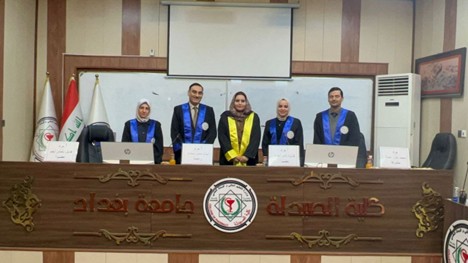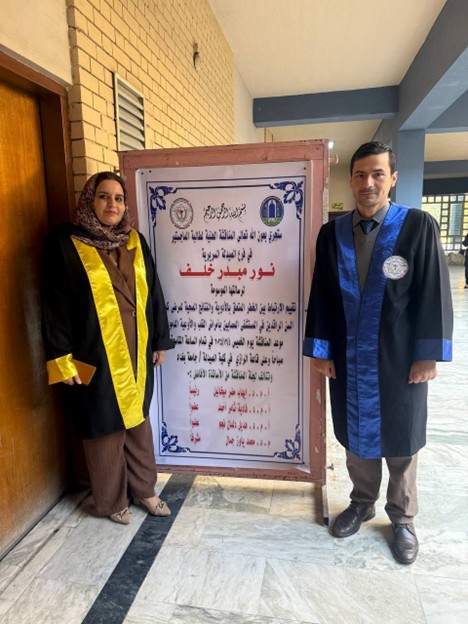
The College of Pharmacy discussed the MSc thesis entitled “Evaluating the Association between Medication-Related Risk and Health Outcomes in Hospitalized Older Patients with Cardiovascular Disease” by the student Noor Mubder Khalf and her supervisor, Lecturer Dr. Mohammed Yawuz Jamal in the Clinical Pharmacy Department.
The study aimed to explore medication-related risk factors among a group of older patients and their association with health outcomes. In addition, to evaluate frailty status and investigate its association with in-hospital outcomes among patients admitted with acute cardiovascular conditions.
The study included hospitalized older patients attending the Cardiac Care Unit of Baaquba Teaching Hospital in Diyala province from December 2024 through March 2025. Risk factors were estimated through the validated Medication Risk Questionnaire (MRQ), and patients were classified into two groups (high- vs. low- risk). Frailty was assessed by the validated tool Clinical Frailty Scale (CFS). In-hospital mortality, unscheduled 30-day readmission, length of hospital stay, and medications cost were the main outcomes measured.
The results showed that upon stratification according to the medication risk score, 113 patients met the criteria for the high-risk group. Patients in this group were more likely to have unplanned 30-day hospital readmission compared to their counterparts. Of the cohort, 117 patients were considered as frail, according to the CFS, giving a prevalence of (58.5%). Frailty was independent predictor of in-hospital death irrespective of adjusting some potential confounders.
The study recommended that substantial efforts are needed to address modifiable risk factors for DRPs in the management of CVDs. These including periodic structured medication review, medication reconciliation, and applying de-prescribing practices to avoid problematic polypharmacy and reduce avoidable healthcare utilization. Moreover, incorporates simple and validated tools like CFS, in the routine assessment of older adults in hospital settings to recognize individuals at risk for negative health outcomes.