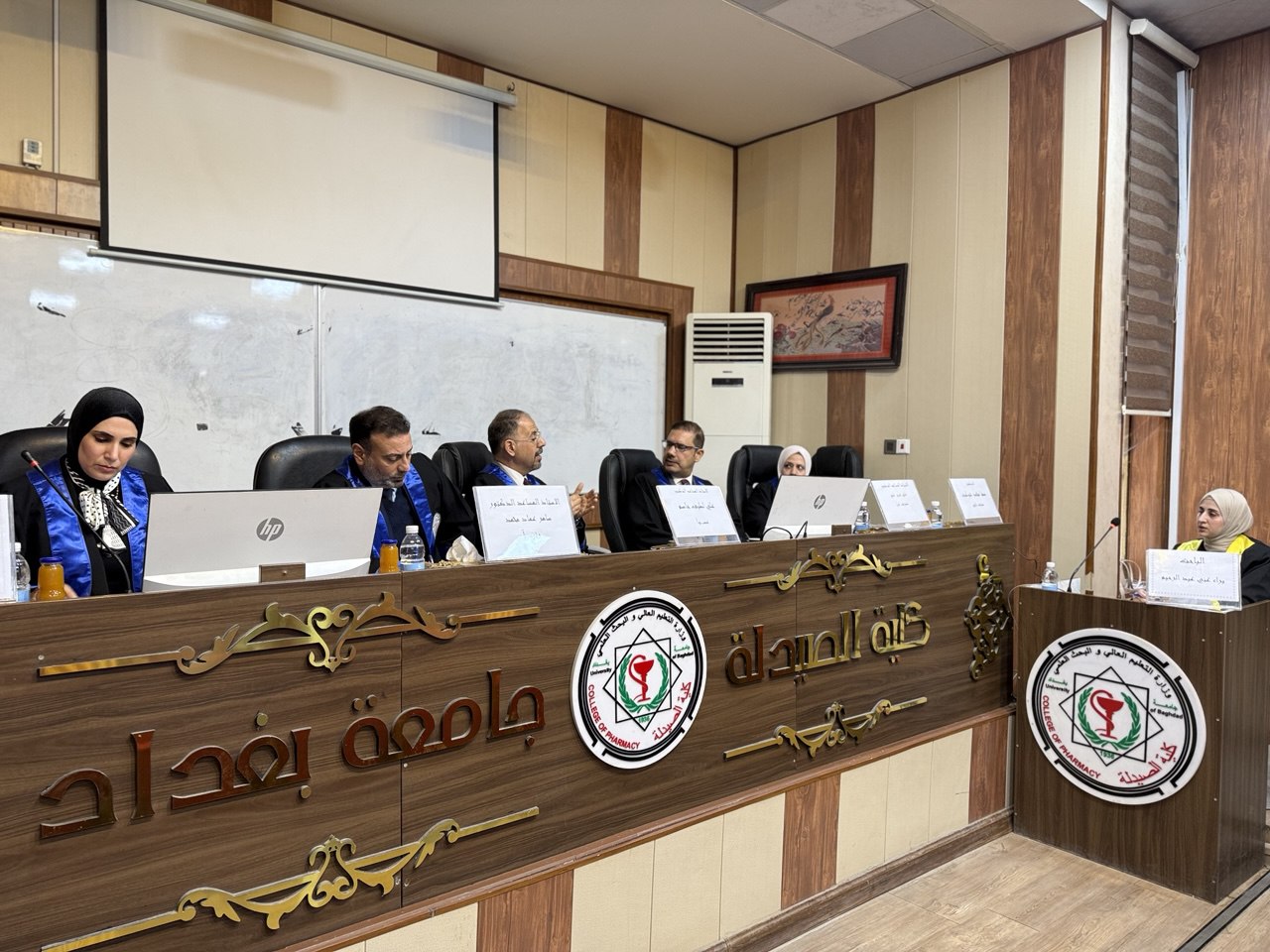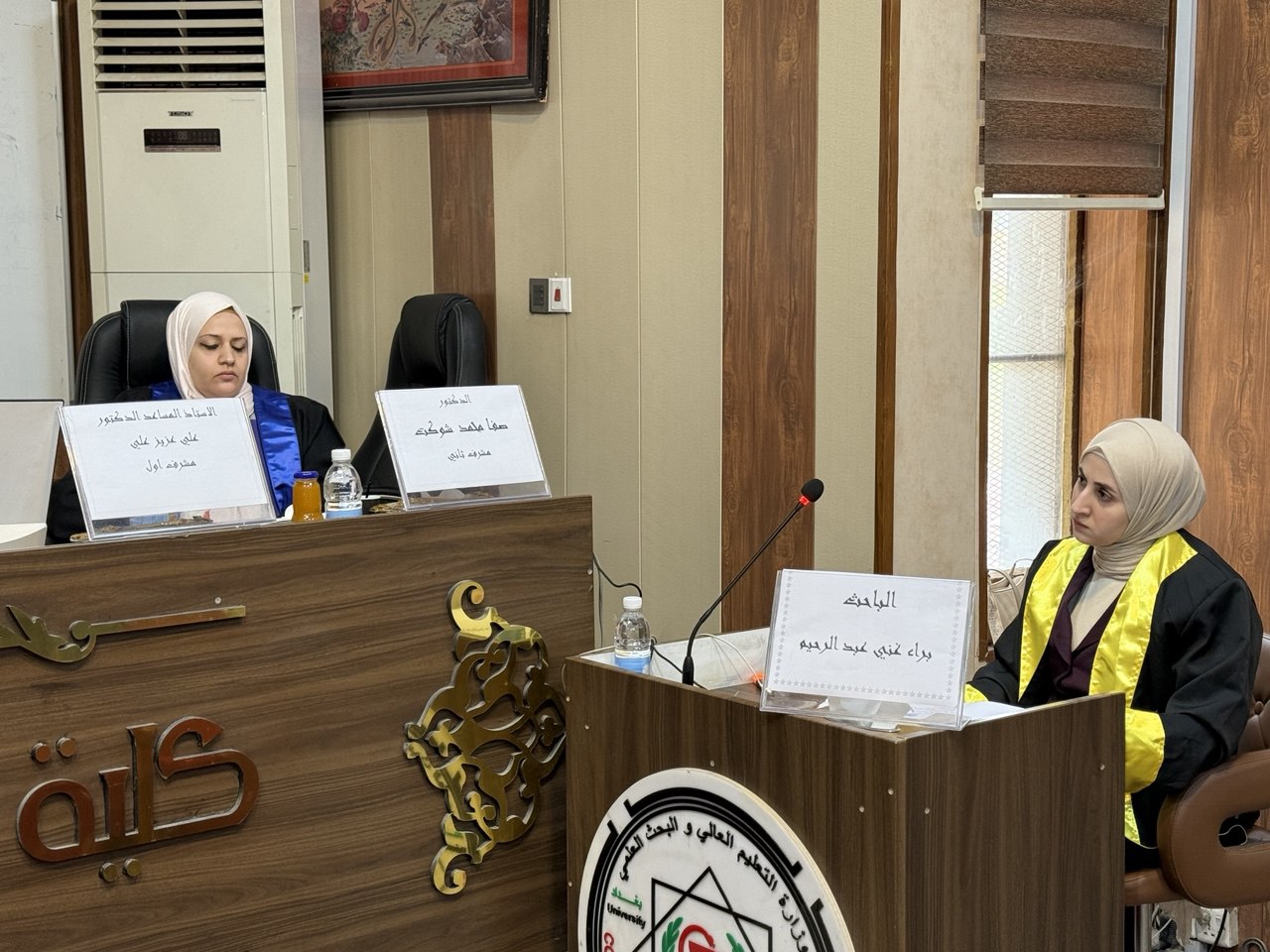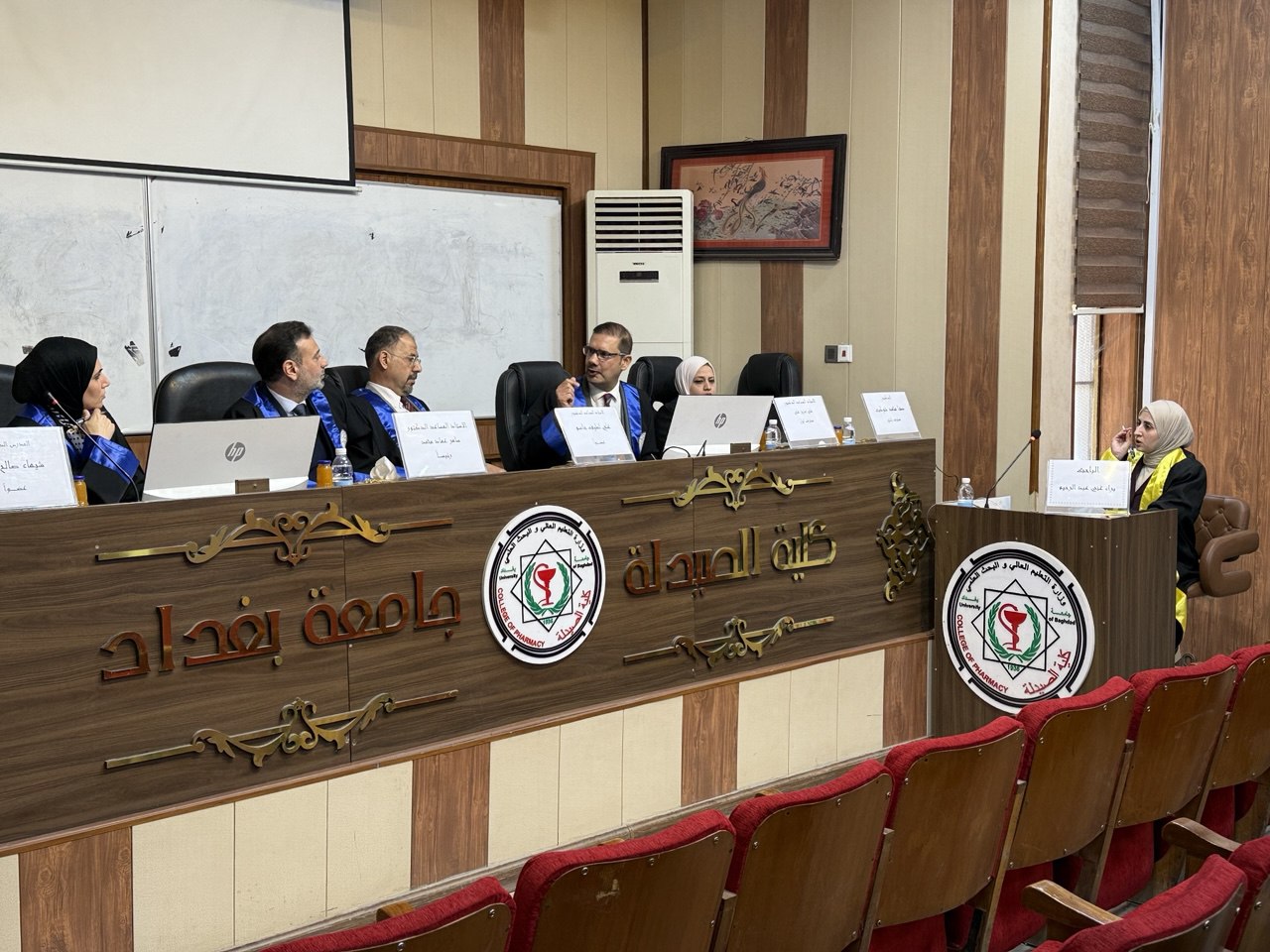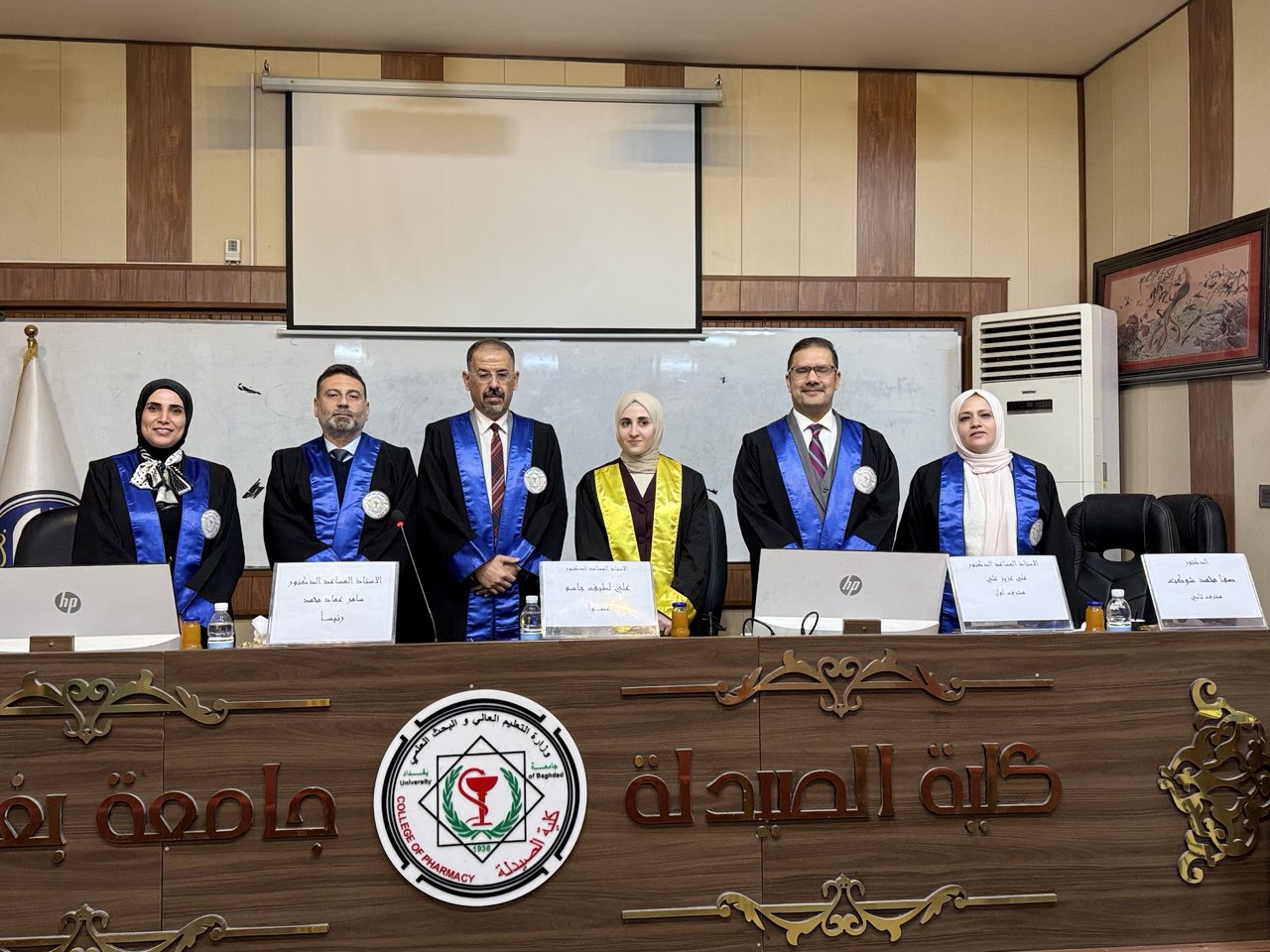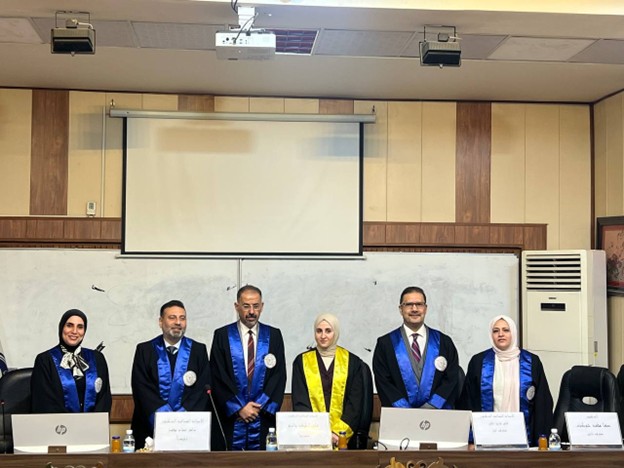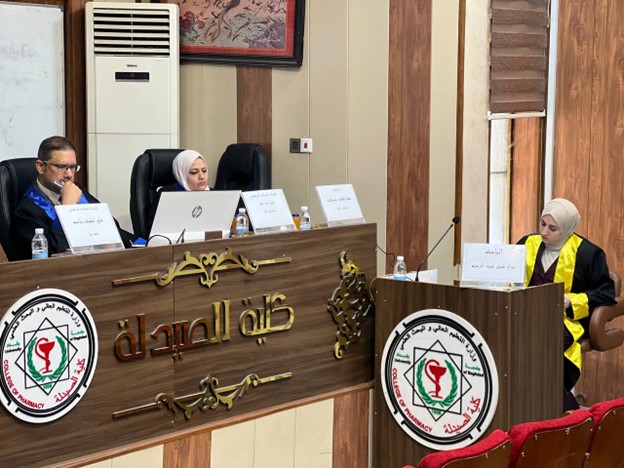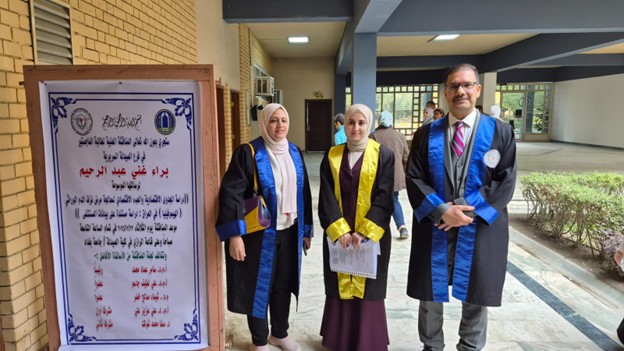
The College of Pharmacy discussed the MSc thesis entitled “Cost-Effectiveness Analysis and Economic Burden of Hemophilia Treatment Regimens in Iraq: A Hospital-based Study“ by the student Baraa Ghani Abdulraheem and her supervisors, Assistant Professor Dr. Ali Azeez Ali in the Clinical Pharmacy Department and Dr. Safa Mohammed Shaukat, Hematologist/Children welfare Teaching Hospital/ Medical City.
The study aimed to comprehensively evaluate the economic burden of hemophilia from both governmental and patient perspectives by assessing direct medical, direct non-medical, and indirect costs, as well as the burden experienced by caregivers of hemophilia patients, and to determine the cost-effectiveness of newer prophylactic therapy by comparing emicizumab with on-demand recombinant activated factor VII (rFVIIa) in severe hemophilia A patients with inhibitors and with factor VIII in hemophilia A patients without inhibitors.
The study included three phases: a retrospective cost-of-illness analysis evaluating the economic burden of hemophilia A, B, and hemophilia A with inhibitors, including direct medical, non-medical, and indirect costs from governmental and patient perspectives; a cross-sectional survey assessing caregiver burden using the validated Arabic version of the ZBI-12; and a cost-effectiveness analysis comparing pre- and post-switch outcomes in hemophilia A patients with or without inhibitors who transitioned from rFVIIa or factor VIII to emicizumab, with outcomes measured by annual bleeding rate (ABR), emergency hospital visits, and quality-adjusted life years (QALYs).
The study concluded that clotting-factor replacement remains the primary cost driver in hemophilia care, with inhibitors significantly increasing expenditures. Non-medical and indirect costs add to the overall burden, underscoring the need for prophylaxis and access to innovative therapies. The Zarit Burden Interview revealed a high caregiver burden, especially due to emotional strain, the stress of balancing responsibilities, and health challenges. Emicizumab demonstrated substantial clinical and economic advantages over rFVIIa, improving quality of life while reducing treatment-related costs, making it a cost-effective option for patients with hemophilia A and inhibitors in resource-limited settings. Although emicizumab significantly improved the quality of life for patients without inhibitors, its markedly higher cost compared with factor VIII renders it a clinically valuable but economically intensive option.
The study recommended increasing budget allocation for hemophilia to ensure sustainable access to clotting factors, integrating cost-of-illness (COI) findings into national health policy, developing a national health data system that includes patient registries and electronic medical records, providing financial and social support such as caregiver allowances to reduce the economic and emotional burden on families, and prioritizing the use of emicizumab for patients with inhibitors.