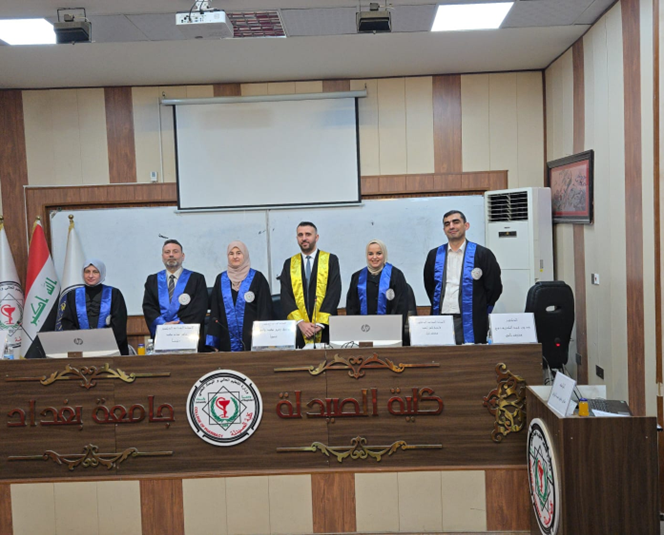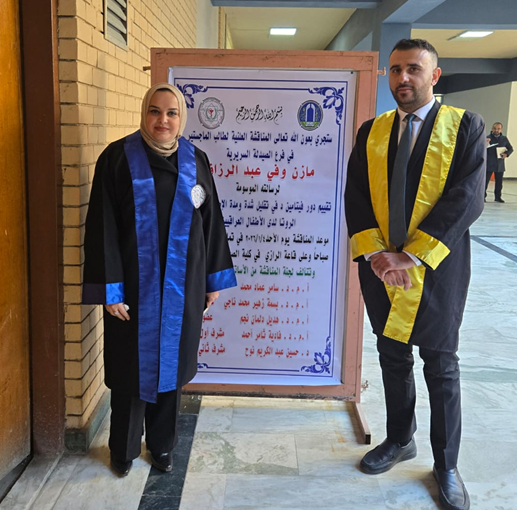
The College of Pharmacy discussed the MSc thesis entitled “Evaluation of The Role of Vitamin D in Reducing the Severity and Duration of Hospitalization of Rotavirus Infection in Iraqi Children” by the student Mazin Wafi Abdulrazzaq and the supervisor, Assistant Professor Dr. Fadia Thamir Ahmed, at the Clinical Pharmacy Department.
This study aimed to evaluate the role of vitamin D in improving clinical outcomes of children with gastroenteritis caused by rotavirus, in terms of reducing symptom severity and duration of illness, as well as assessing its anti-inflammatory effect.
The study involved a prospective, non-randomized clinical trial with 60 children under five years of age who were infected with rotavirus and deficient in vitamin D, presented at Martyr Mohammed Baqir Al-Hakim Hospital. Rotavirus infection was confirmed using a rapid test, and participants were equally divided into two groups: a control group (30 children) that received conventional treatment only, and a treatment group (30 children) that received conventional treatment plus a single dose of vitamin D according to the high-dose (Stoss therapy) protocol. Serum vitamin D levels were measured at baseline and after 7 days. Moreover, clinical and inflammatory parameters were assessed at baseline, after 4 days, and after 7 days.
The results showed that vitamin D supplementation in children with rotavirus infection significantly decreased duration of hospitalization and improved clinical outcomes, including the severity and duration of diarrhea and vomiting, hydration status, and temperature. Furthermore, inflammatory markers were improved, including C-reactive protein (CRP), lymphocyte-to-monocyte ratio (LMR), mean platelet volume (MPV), neutrophil-to-lymphocyte ratio (NLR), and platelet-to-lymphocyte ratio (PLR). Taken together, these findings suggest that adding vitamin D to conventional treatment can effectively accelerate clinical recovery and enhance the immune response, reinforcing its potential role as a supportive therapy in children with rotavirus infection.
The study recommended that future research should focus on large multicenter studies to enhance generalizability, with longer follow-up to assess sustained immunological and clinical effects of vitamin D, and to compare different dosing regimens and administration methods to determine the most effective and practical supplementation strategy.