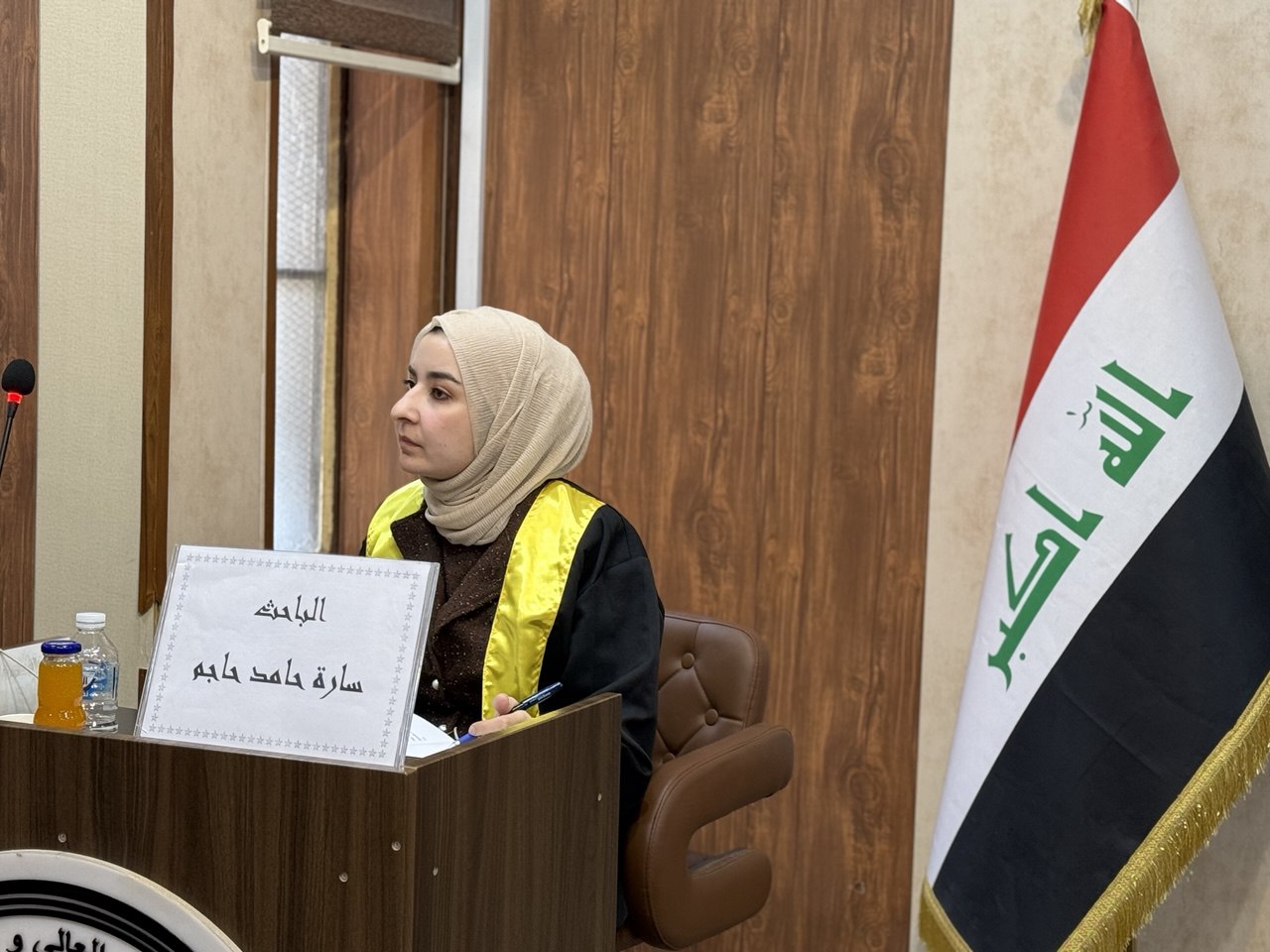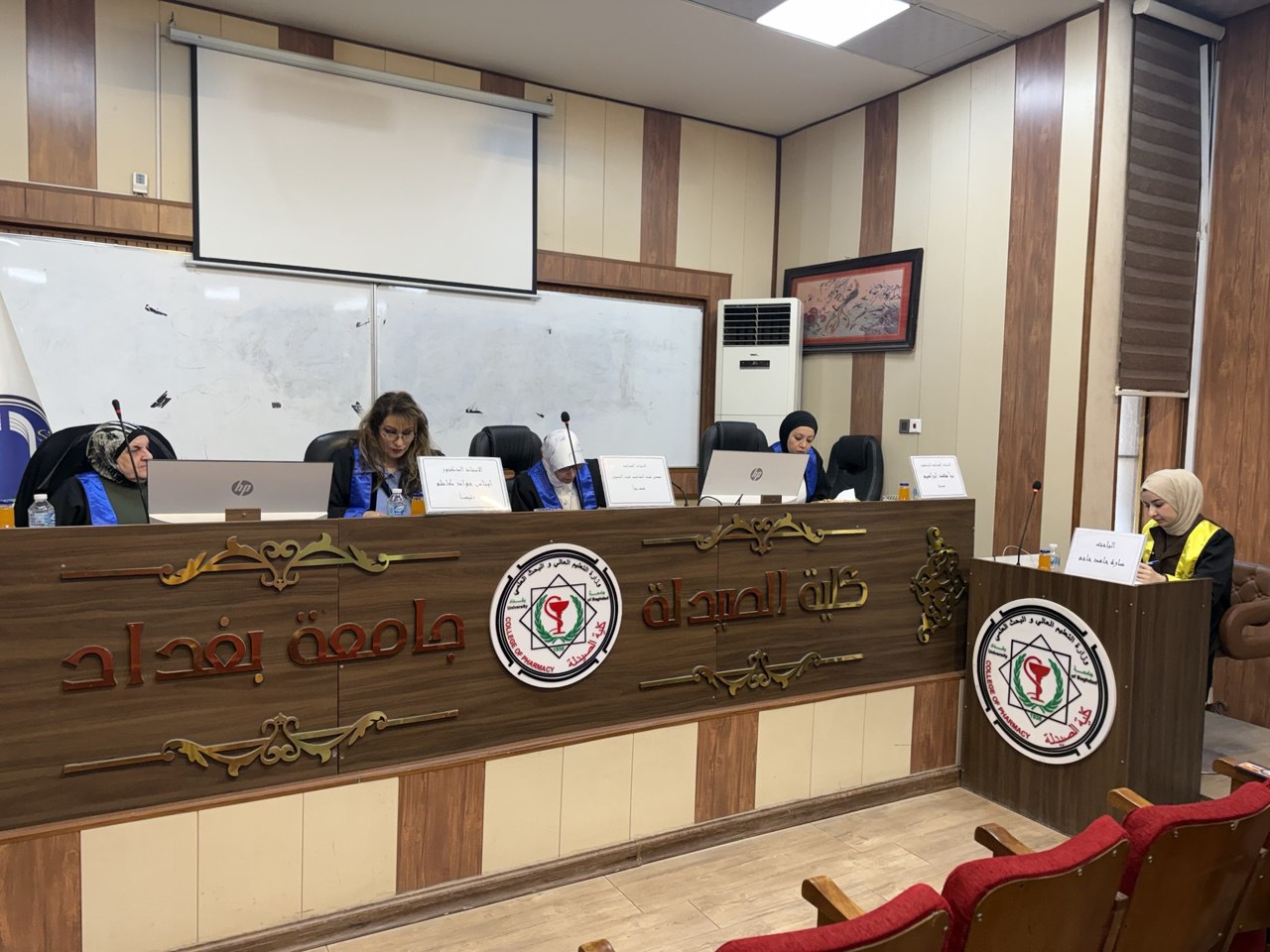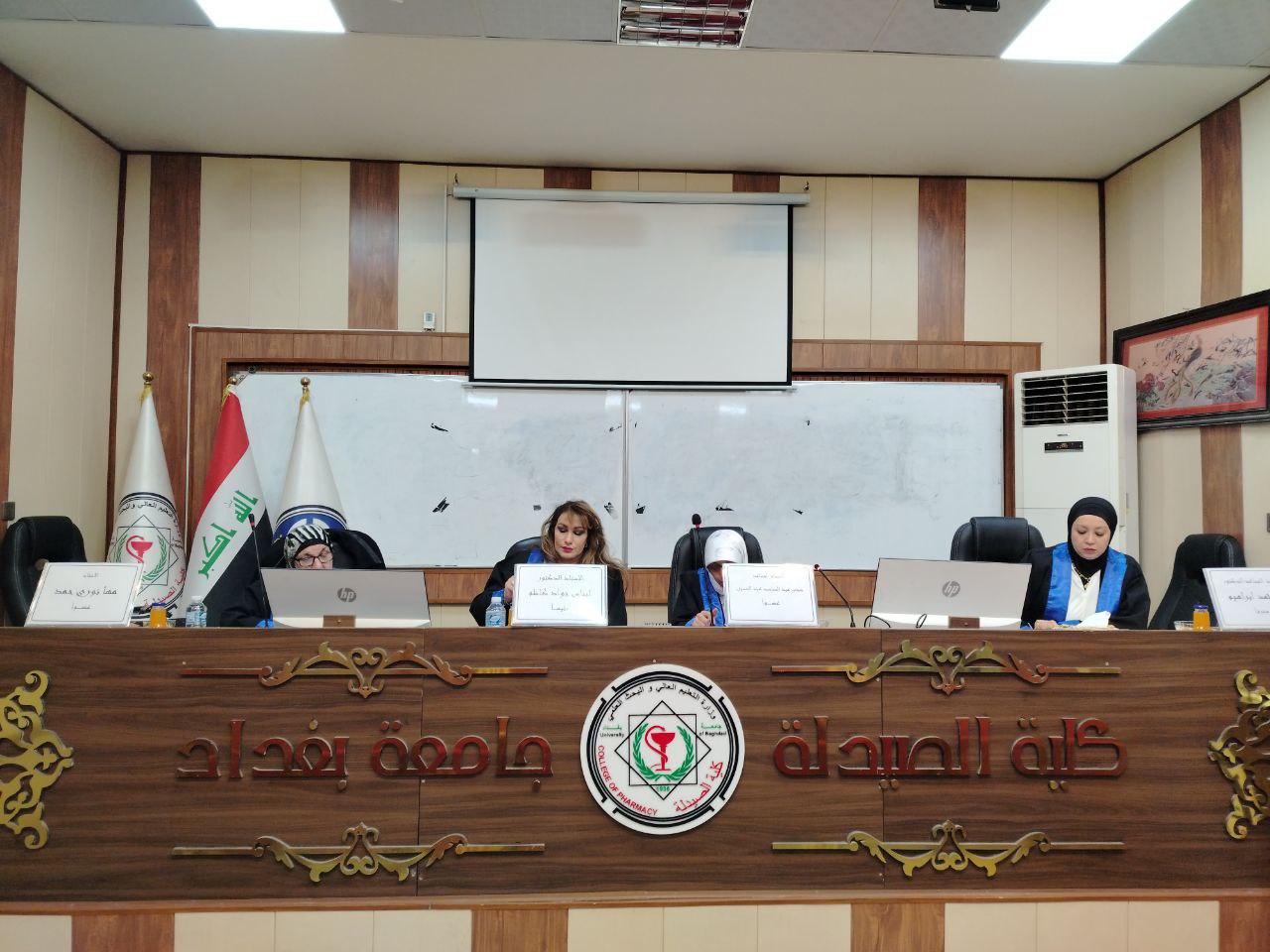
The College of Pharmacy discussed the MSc thesis entitled “Phytochemical Investigation of Basella alba (Basellaceae) Cultivated in Iraq and Assessment of Its Antileishmanial Activity” by the student Sara Hamid Hachim and the supervisor, Assistant Professor Dr. Nabaa Mohammed Ibrahim, at the Pharmacognosy and Medicinal Plant Department.
The study aimed to characterize the phytochemical constituents of Basella alba cultivated in Iraq and to evaluate the antileishmanial activity of the petroleum ether fraction.
The study included defatting of the plant material using n-hexane, followed by Soxhlet extraction and successive solvent fractionation based on polarity. Phytochemical characterization of the obtained fractions was performed using thin-layer chromatography (TLC), high-performance liquid chromatography (HPLC), liquid chromatography–mass spectrometry (LC–MS), gas chromatography–mass spectrometry (GC–MS), proton nuclear magnetic resonance (^1H NMR), and Fourier-transform infrared spectroscopy (FT-IR). The antileishmanial activity of the petroleum ether fraction was assessed using the MTT assay, with Pentostam serving as the positive control.
The results showed that phytochemical analysis confirmed the presence of alkaloids, lupeol, β-sitosterol, and a variety of phenolic and flavonoid compounds. In addition, the petroleum ether fraction demonstrated a significant, dose-dependent antileishmanial activity against Leishmania tropica, as evidenced by the MTT assay results.
The study recommended that Iraqi Basella alba represents a potential source of bioactive phytochemicals with antileishmanial activity, supporting its possible application in pharmaceutical and drug-development research.