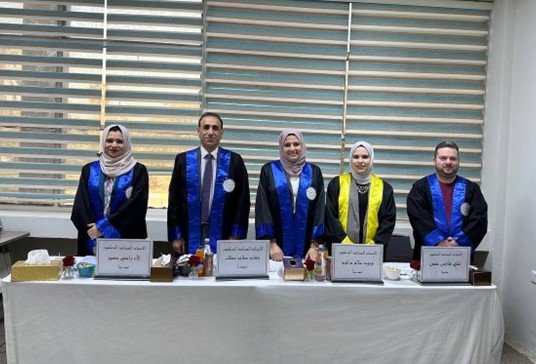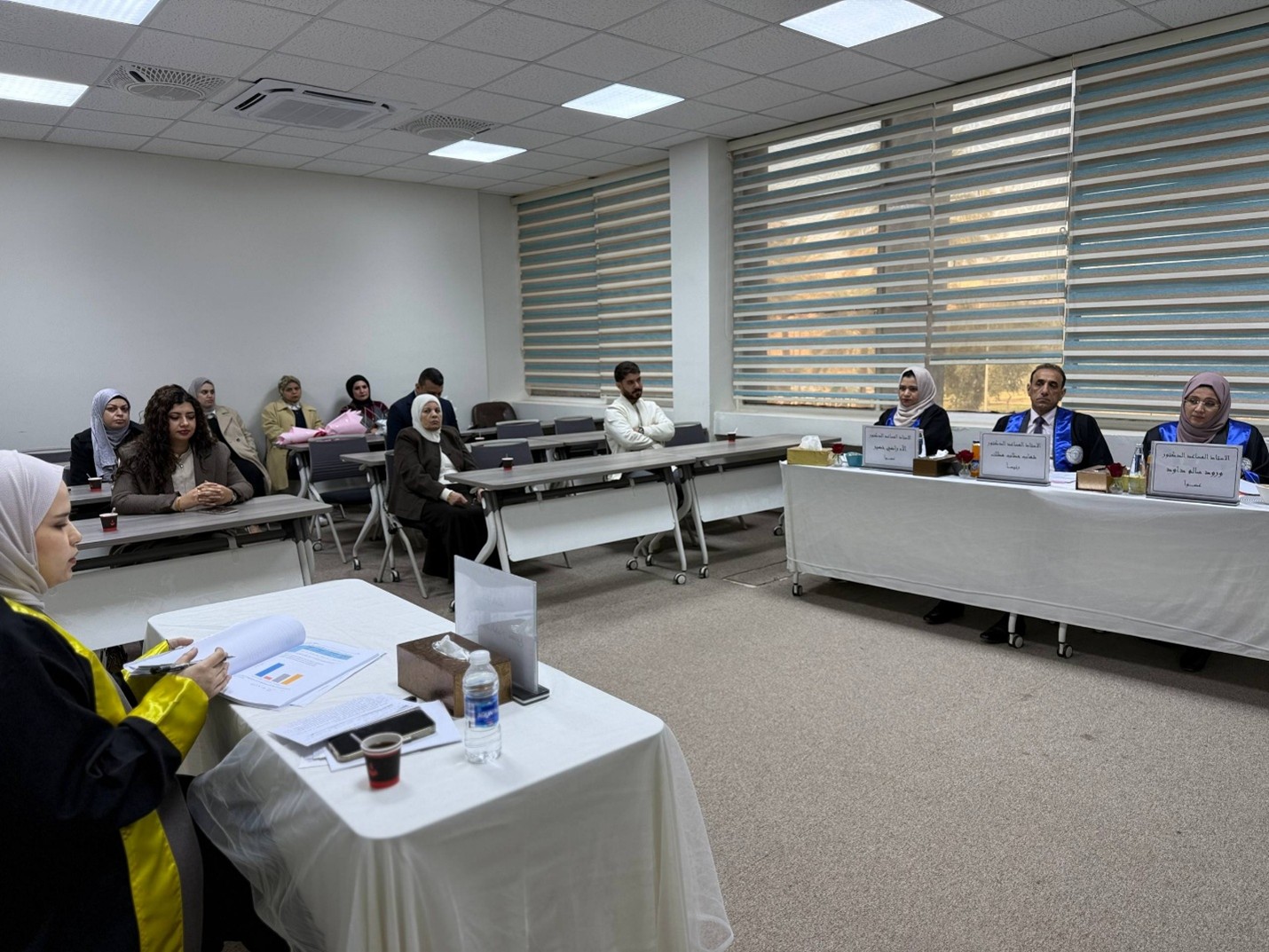
The College of Pharmacy discussed the MSc thesis entitled “Comparison of the Protective Effect of Dapagliflozin and Empagliflozin on Cisplatin-Induced Ovarian Toxicity in Female Rats” by the student Sarah Abduljabbar Sabeeh and the supervisor, Assistant Professor Dr. Ali Faris Hassan, at the Pharmacology and Toxicology Department.
The study aimed to evaluate and compare the protective effects of dapagliflozin and empagliflozin against cisplatin-induced ovarian toxicity in female rats by assessing oxidative stress, inflammation, apoptosis, ovarian hormonal function, and histological integrity, with the goal of preserving ovarian structure, function, and reserve.
The study included twenty-four adult female rats divided into four groups: a negative control group receiving 2% DMSO; a cisplatin-treated group receiving cisplatin (7 mg/kg); a dapagliflozin-treated group receiving dapagliflozin (1 mg/kg) in combination with cisplatin (7 mg/kg); and an empagliflozin-treated group receiving empagliflozin (10 mg/kg) in combination with cisplatin (7 mg/kg). Dapagliflozin or empagliflozin was administered orally for 14 consecutive days, followed by a single intraperitoneal injection of cisplatin on day 14. The methodology involved measurement of oxidative stress markers (MDA and GSH), reproductive hormones, inflammatory gene expression (TNF-α and IL-6), caspase-3 protein levels, and histopathological examination of ovarian tissue.
The study results showed that cisplatin induced marked ovarian damage characterized by increased oxidative stress, hormonal disruption, elevated inflammatory cytokines, activation of apoptotic pathways, and severe histopathological alterations. Pretreatment with dapagliflozin or empagliflozin significantly ameliorated these changes, reduced inflammation and apoptosis, and preserved ovarian architecture, with empagliflozin demonstrating relatively greater protective effects across most evaluated parameters.
The study recommended conducting large-scale experimental studies with longer follow-up periods, further molecular investigations to elucidate signaling pathways involved, and exploring the potential clinical application of SGLT2 inhibitors as adjuvant agents for fertility preservation during cisplatin-based chemotherapy.