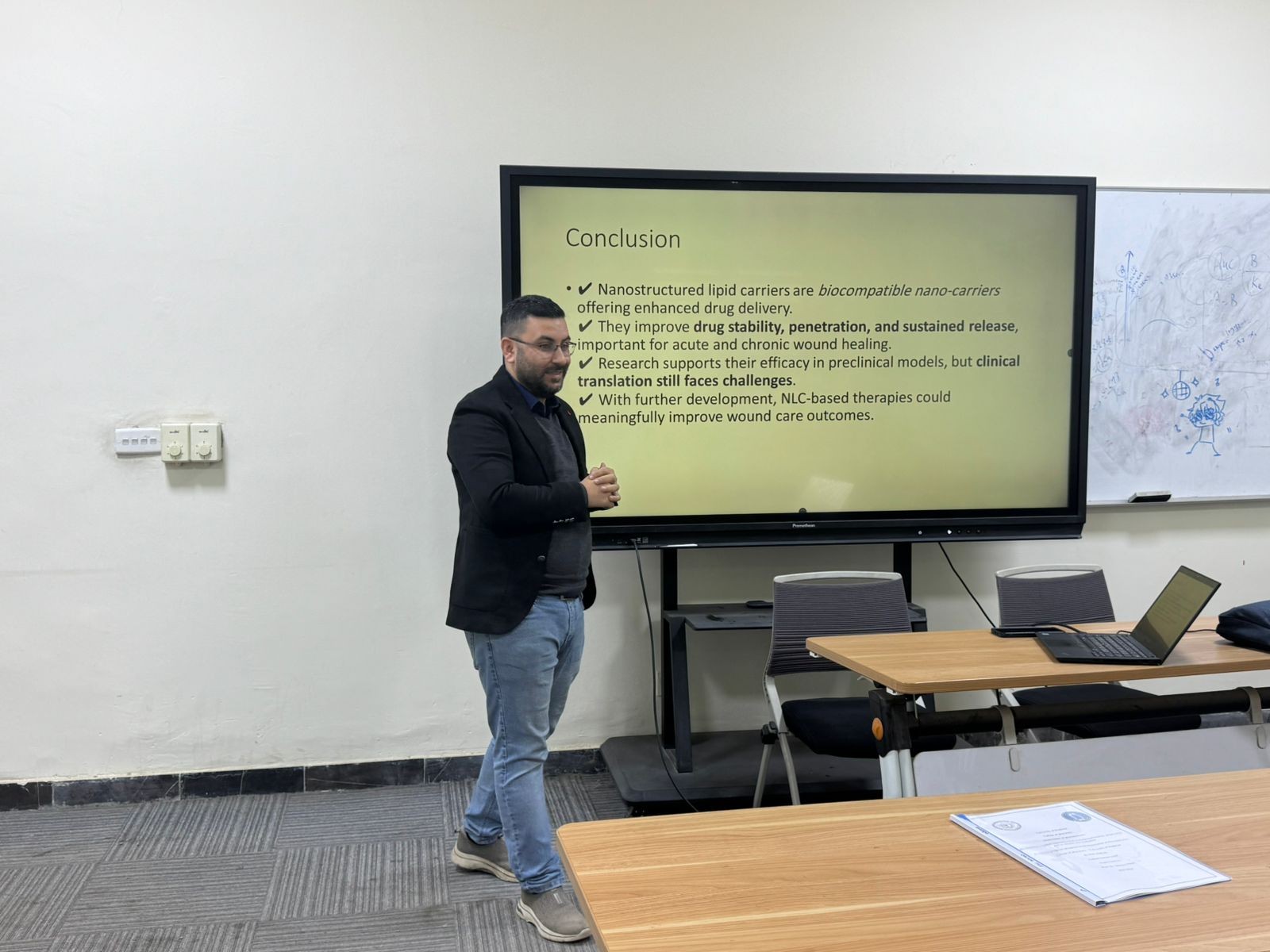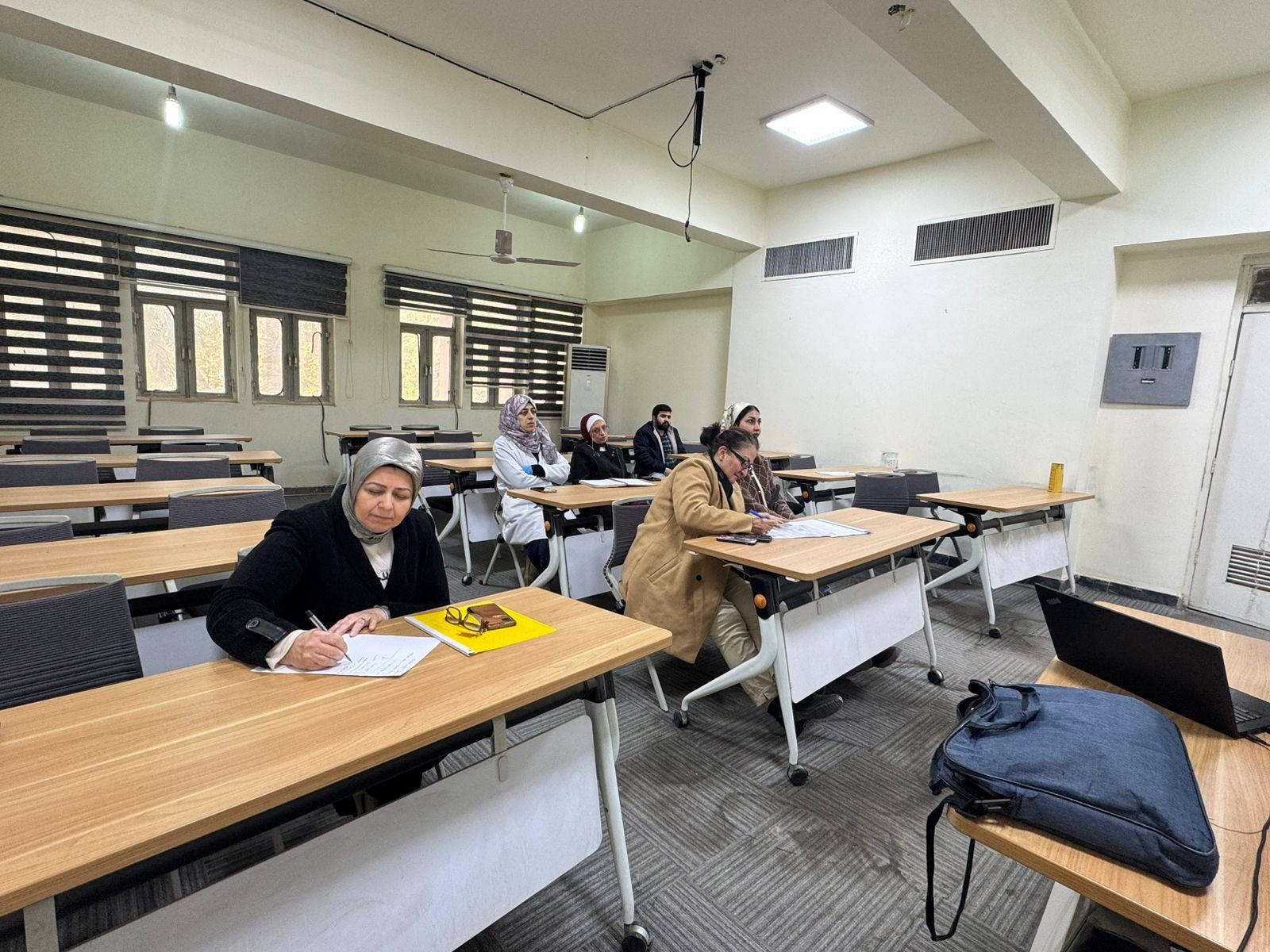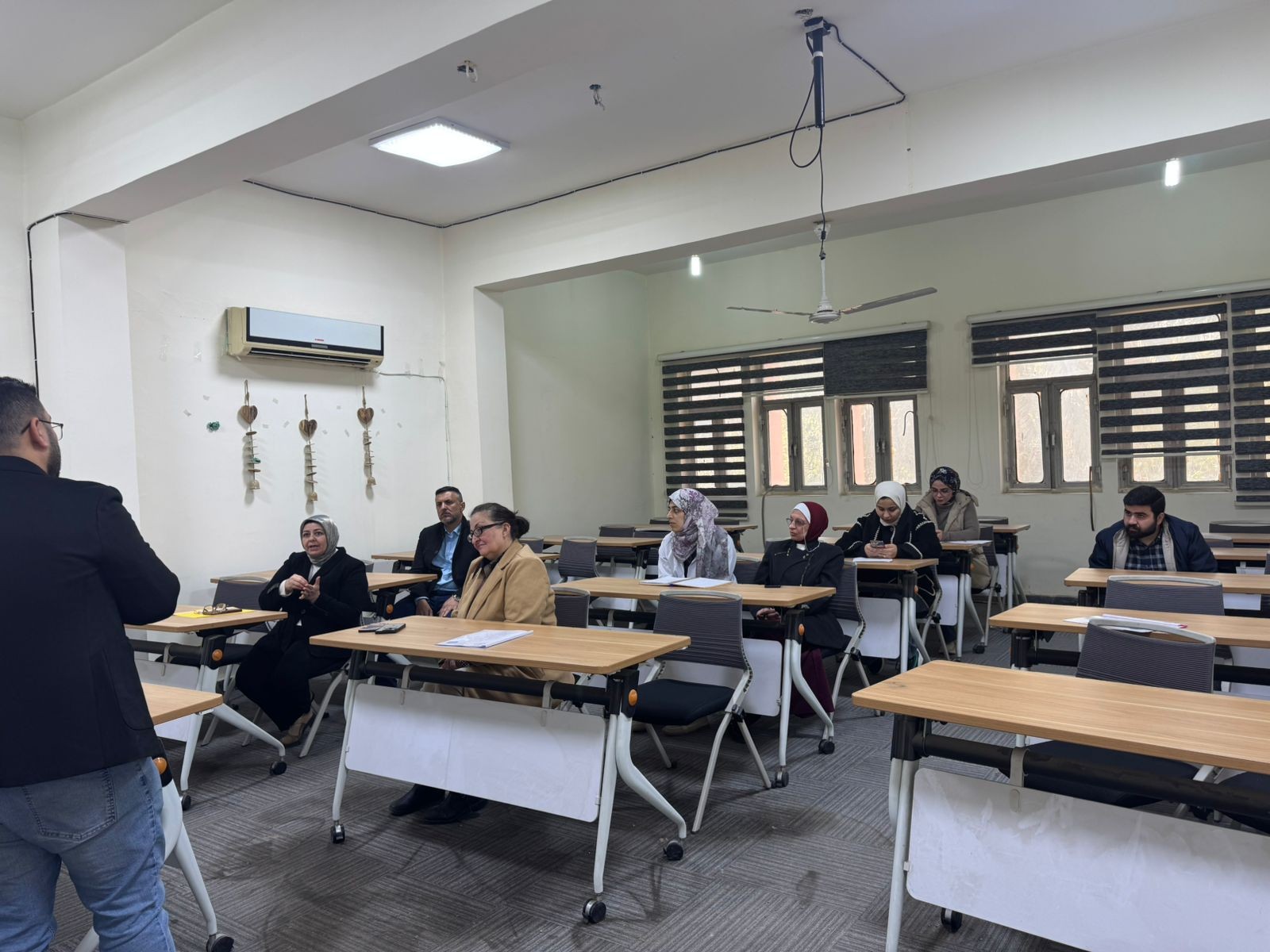

Under the supervision of the Dean of the College of Pharmacy, Professor Dr. Sarmed H. Kathem Alkhateeb, the the Scientific Affairs Division at the College at the College of Pharmacy/University of Baghdad held an in-person a Discussion panel entitled “Lipid-Based Nanocarriers: Unlocking Targeted Therapy in Treatment of Wound Infections”, delivered by Pharmacist Taha Abdul Qadir Basheer, the PhD student at the Pharmaceutics Department.
The workshop aimed to highlight the challenges associated with wound healing, particularly chronic and non-healing wounds, and to clarify the limitations of conventional therapies, with a focus on the advanced role of lipid-based nanocarriers.
The workshop included several topics, including an overview of the wound-healing process and its main phases, as well as factors that contribute to delayed healing, such as poor blood supply, chronic inflammation, and infection. Moreover, the challenges related to drug delivery using conventional treatments were discussed, particularly poor penetration and short drug residence time at the wound site. In addition, the workshop introduced lipid-based nanocarriers in terms of their composition and mechanism of action, and highlighted their advantages in enhancing drug bioavailability, protecting active compounds from degradation, and enabling controlled and sustained drug release. Furthermore, the challenges associated with the clinical application of these systems, including large-scale manufacturing, stability, regulatory requirements, and cost, were addressed.
The workshop concluded by emphasizing that lipid-based nanocarriers are promising, biocompatible drug delivery systems with significant potential to enhance the effectiveness of topical therapies and accelerate wound healing. Nevertheless, further research and development are required to support their successful clinical application.