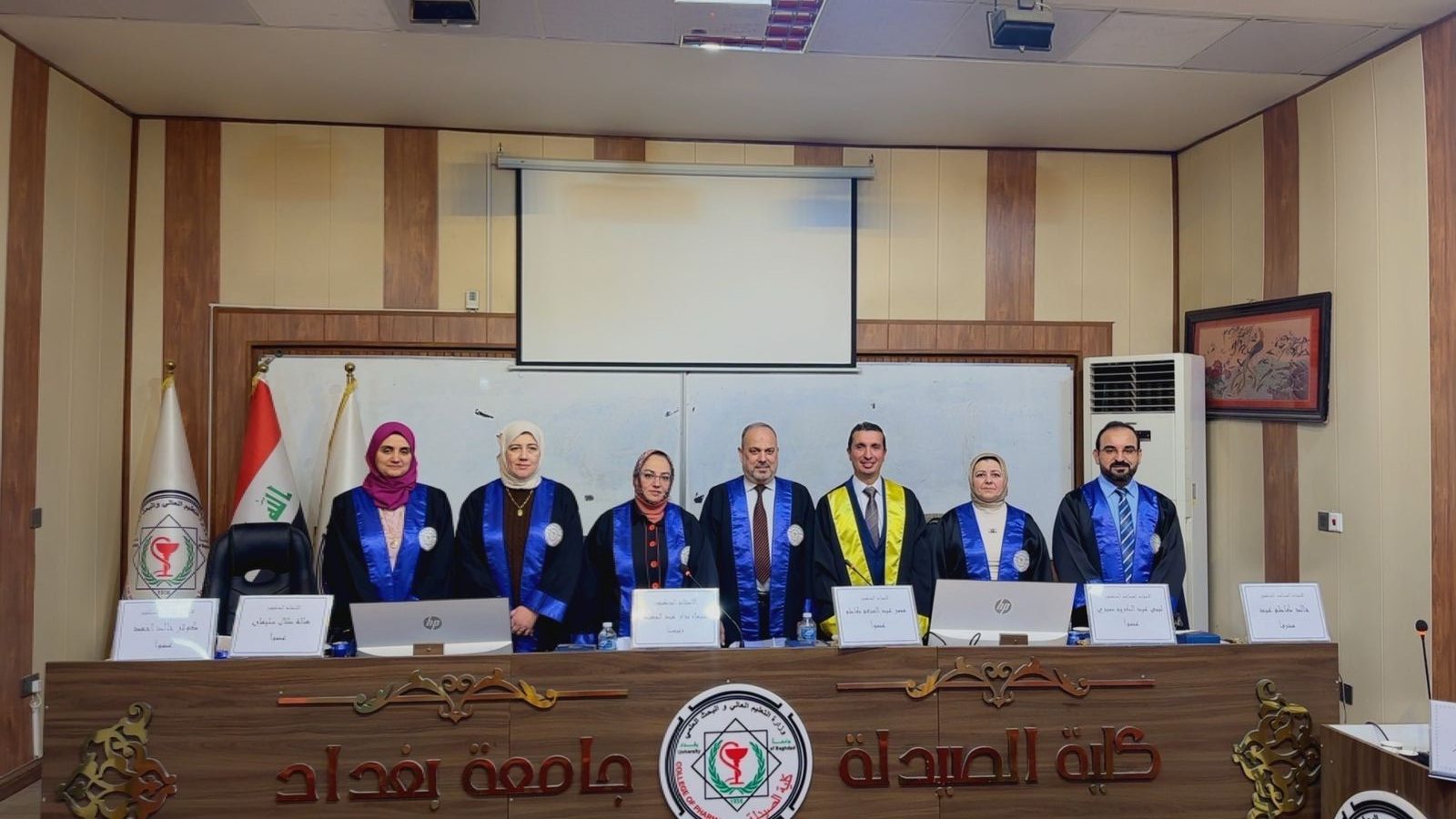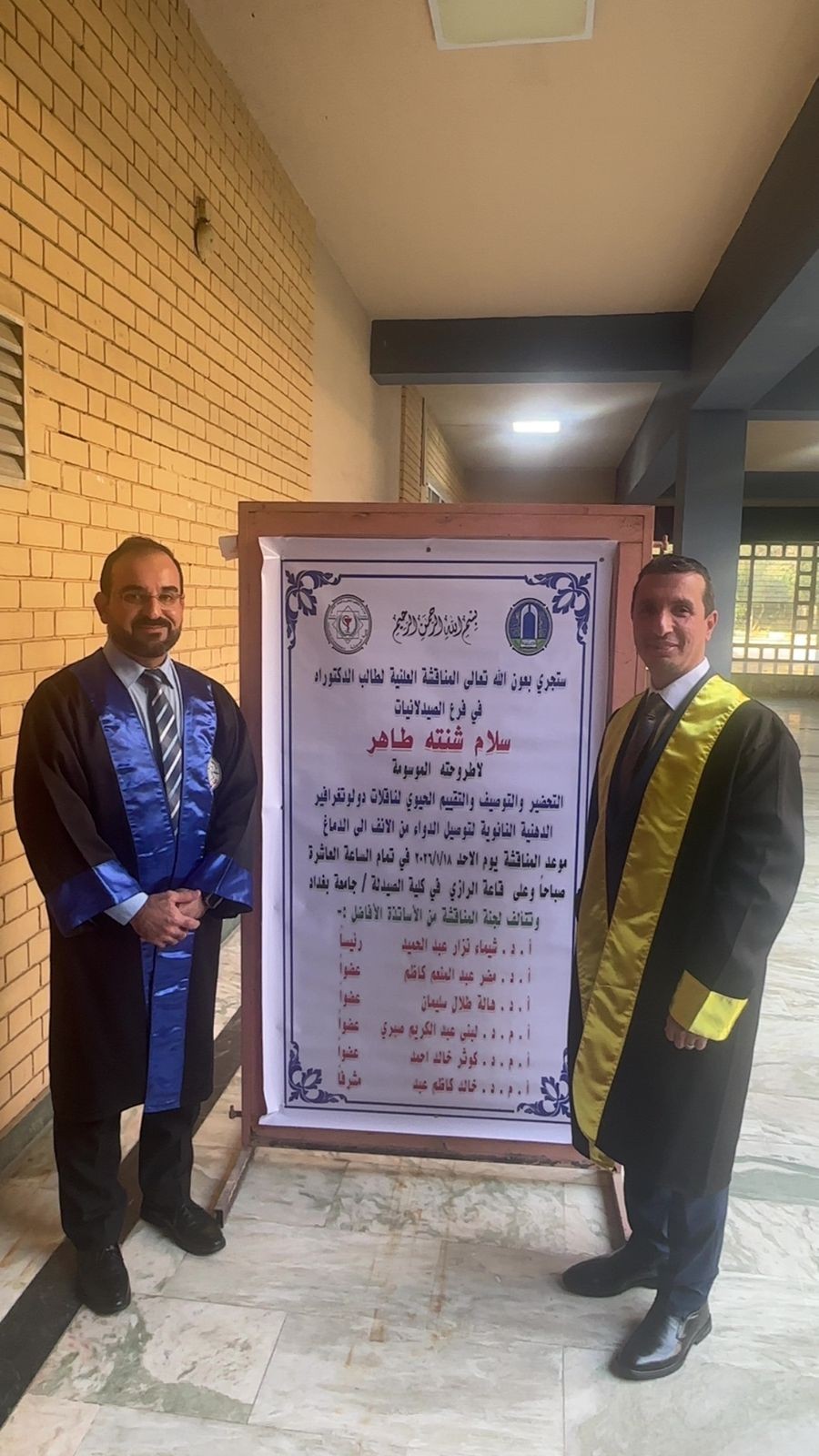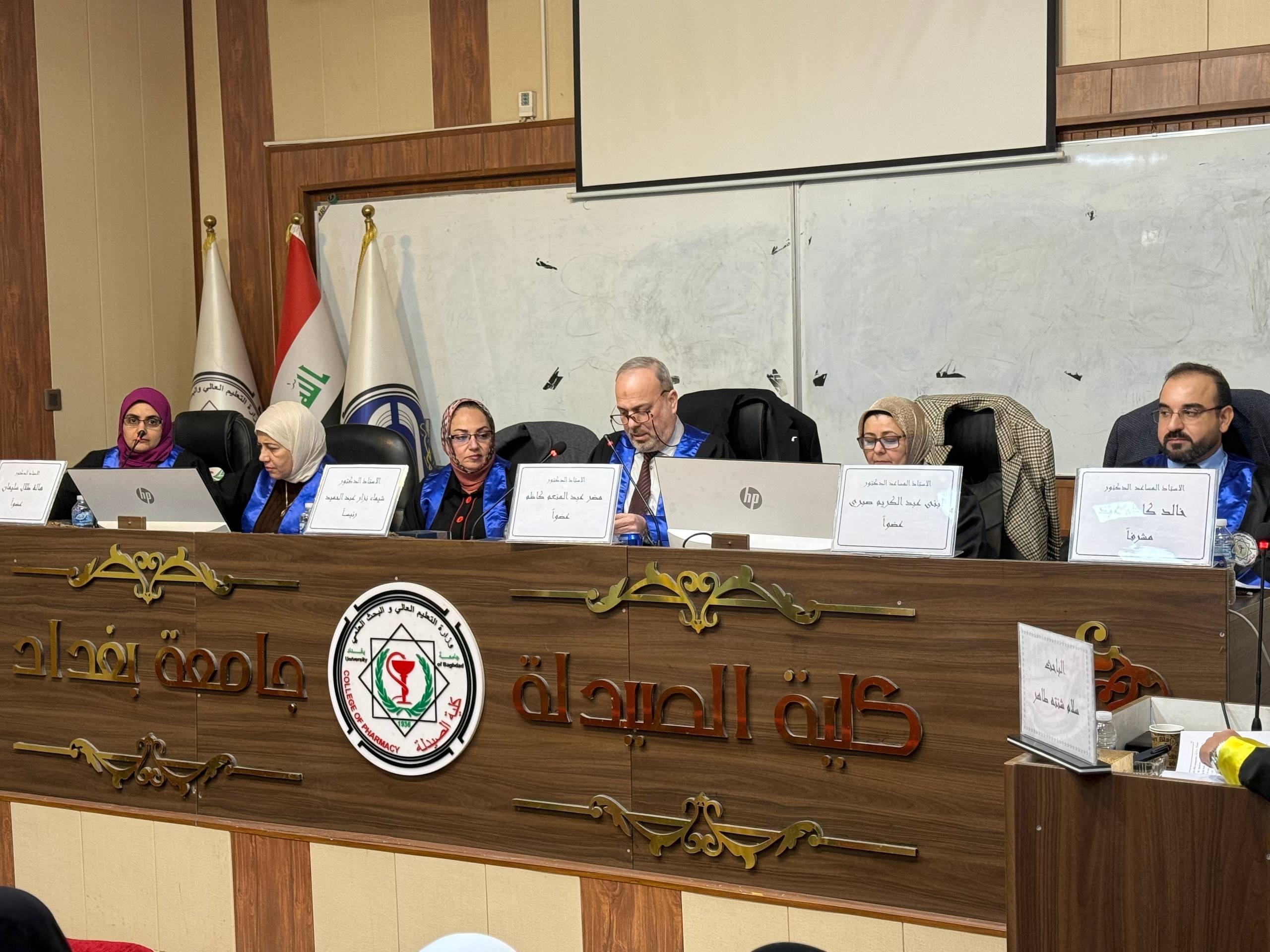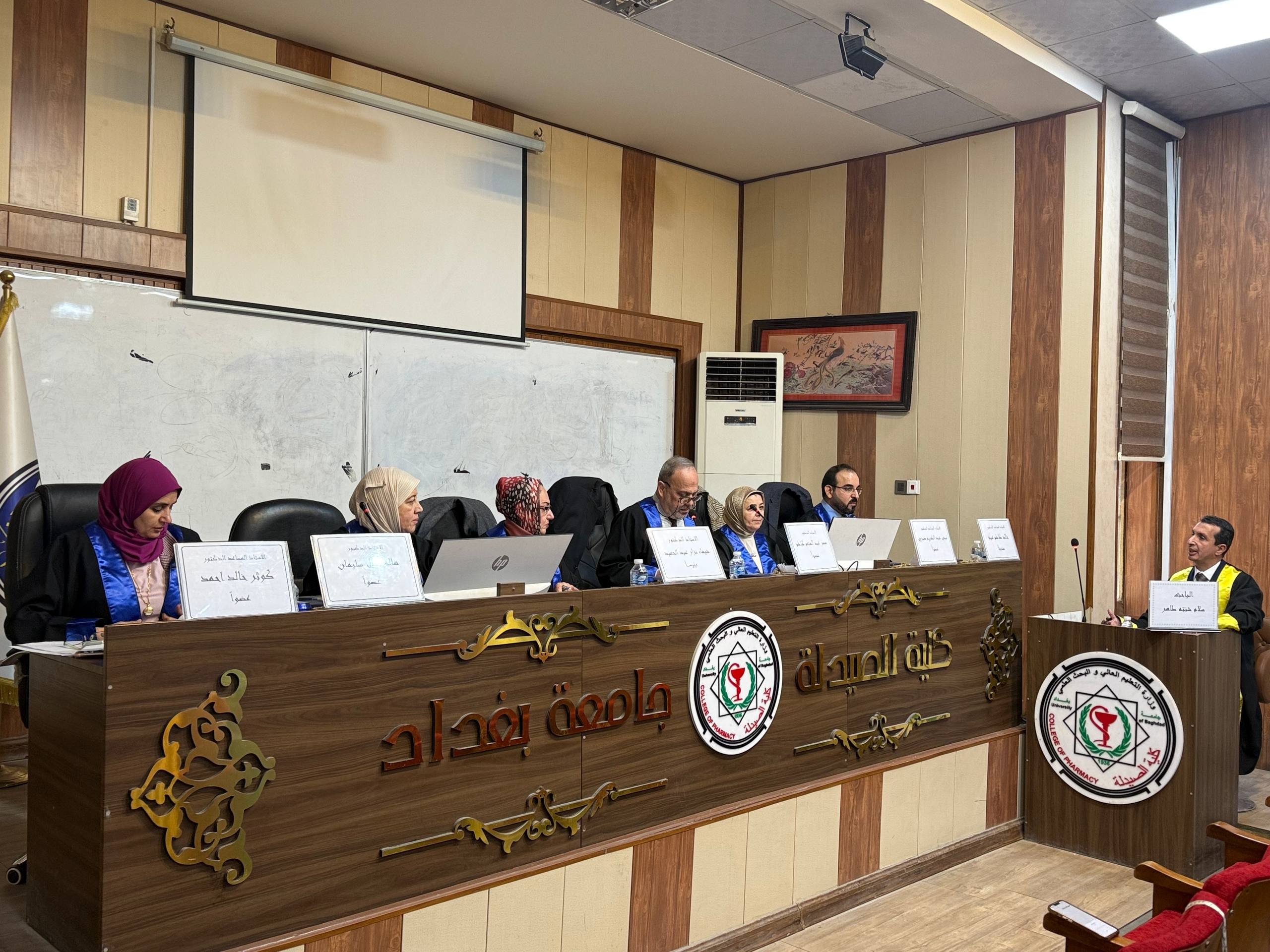
The College of Pharmacy discussed the PhD dissertation entitled “Preparation, Characterization, and In Vivo Evaluation of Nose-to-Brain Delivery of Dolutegravir-Loaded Nanostructured Lipid Carriers” by the student Salam Shanta Taher and the supervisor, Assistant Professor Dr. Khalid Kadhem Al-Kinani, at the Pharmaceutics Department.
The study aimed to develop and optimize an intranasal nanostructured lipid carrier system for dolutegravir sodium to enhance direct brain delivery and improve treatment of the neurological complications of AIDS.
The study included the preparation of dolutegravir-loaded nanostructured lipid carriers using the emulsification–ultrasonication method and their optimization via a three-level factorial design. Thereafter, the optimized nanostructured lipid carriers were incorporated into a thermosensitive intranasal in situ gel, and a comprehensive evaluation was performed, including physicochemical characterization, morphological analysis, drug–excipient compatibility studies, in vitro drug release, safety assessments, and in vivo pharmacokinetic and biodistribution studies in laboratory animals.
The results showed successful preparation of the optimized nanostructured lipid carriers, with particle sizes below 100 nm and drug entrapment efficiencies exceeding 80%. Moreover, when the optimized nanostructured lipid carriers were incorporated into the intranasal in situ gel system, they improved the drug’s properties and demonstrated good compatibility for intranasal administration without affecting nasal physiology. Also, the optimized formulation demonstrated high brain-targeting efficiency, with significant improvements in pharmacokinetic parameters, indicating its potential as a non-invasive delivery system for anti-HIV drugs to the brain.
The study recommended further long-term and clinical studies to confirm its applicability in humans and to explore the potential of this nanosystem to deliver other drugs to the brain via the nasal route to treat various neurological diseases.