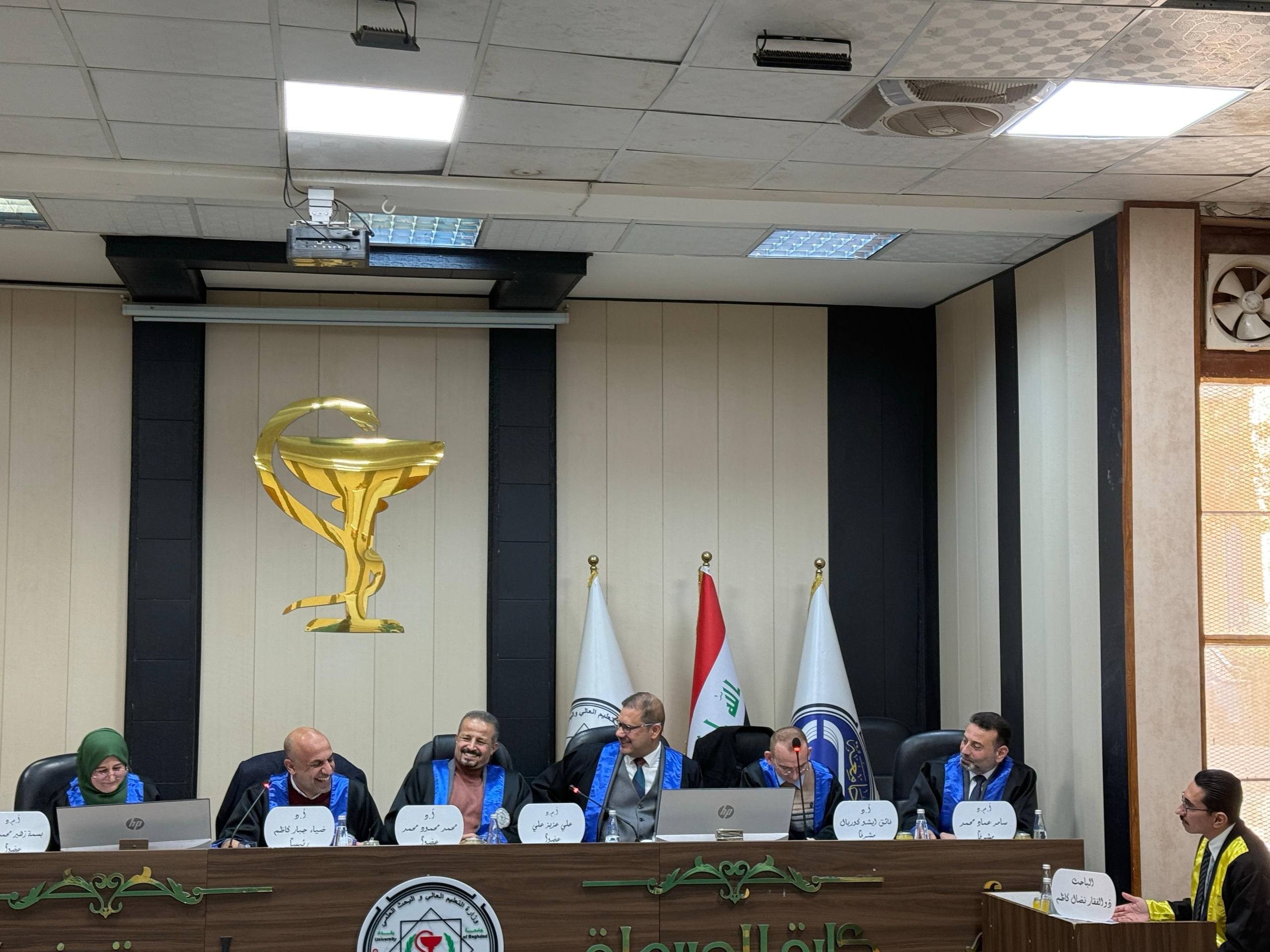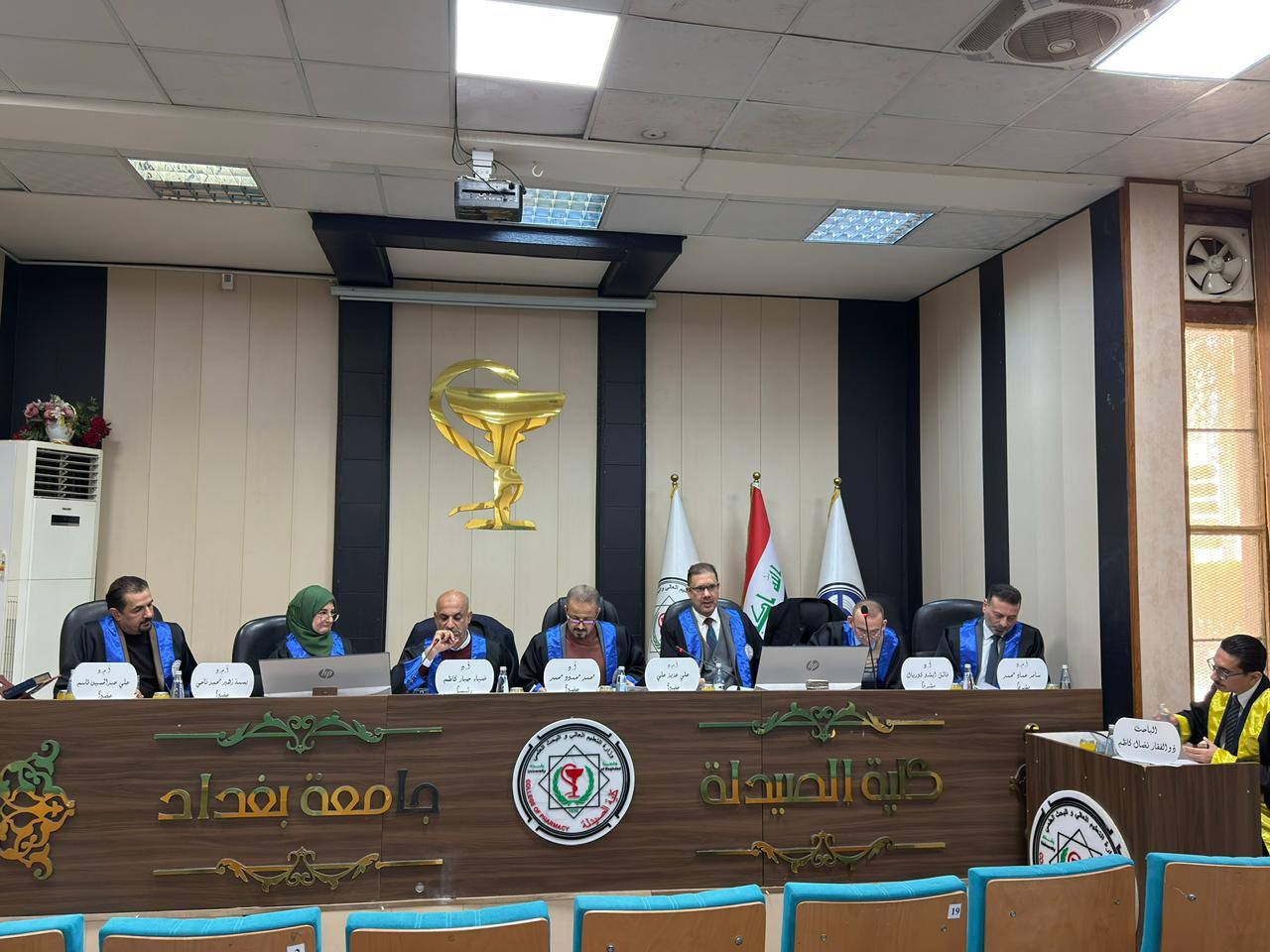
The College of Pharmacy discussed the PhD dissertation entitled “The Potential Association Between Interleukin-6 and Interleukin-10 Gene Polymorphisms with Response to Etanercept in Iraqi Patients with Rheumatoid Arthritis” by the student Dhulfiqar Nidhal Kadhim and the supervisor , Assistant Professor Dr. Samer Emad Mohammed at the Clinical Pharmacy Department, with Professor Dr. Faiq Isho Gorial Professor of Internal Medicine at the College of Medicine as the second supervisor.
The study aimed to identify genetic and immunological markers that predict the response to Etanercept in Iraqi patients with Rheumatoid Arthritis (RA), while exploring the barriers to implementing pharmacogenetics in Iraq.
The study included 90 patients receiving Etanercept treatment for a period of six months. Disease activity was assessed, and plasma concentrations of IL-6 and IL-10 were measured. Additionally, genetic polymorphisms in the promoter regions of both IL-6 and IL-10 genes were identified using Sanger sequencing. The study aimed to explore genetic and immunological markers that may predict patient response to treatment, ultimately seeking to improve management strategies for Rheumatoid Arthritis in Iraq.
The results showed that a more pronounced clinical improvement in responders compared to non-responders. The C allele of the IL-6 rs1800795 gene was associated with an increased likelihood of non-response, whereas the G allele of the IL-10 rs1800896 gene showed a potential protective effect against non-response. Qualitatively, structured interviews with rheumatologists supported the principles of pharmacogenetics, while highlighting key barriers including cost, inadequate laboratory infrastructure, and a lack of specialized training.
The study recommended that integrating targeted genetic analysis with the measurement of IL-6 and IL-10 levels could enhance personalized treatment for Rheumatoid Arthritis (RA) patients, as the results demonstrated the ability to predict treatment response with greater accuracy. The researchers emphasized that this approach opens new horizons for developing tailored therapeutic strategies for each patient, potentially improving clinical outcomes and reducing side effects. However, the clinical application of these strategies in Iraq remains limited due to systemic and financial challenges, infrastructure deficiencies, and a lack of specialized training, this necessitates the support of health policies and the strengthening of both laboratory and clinical capacities.