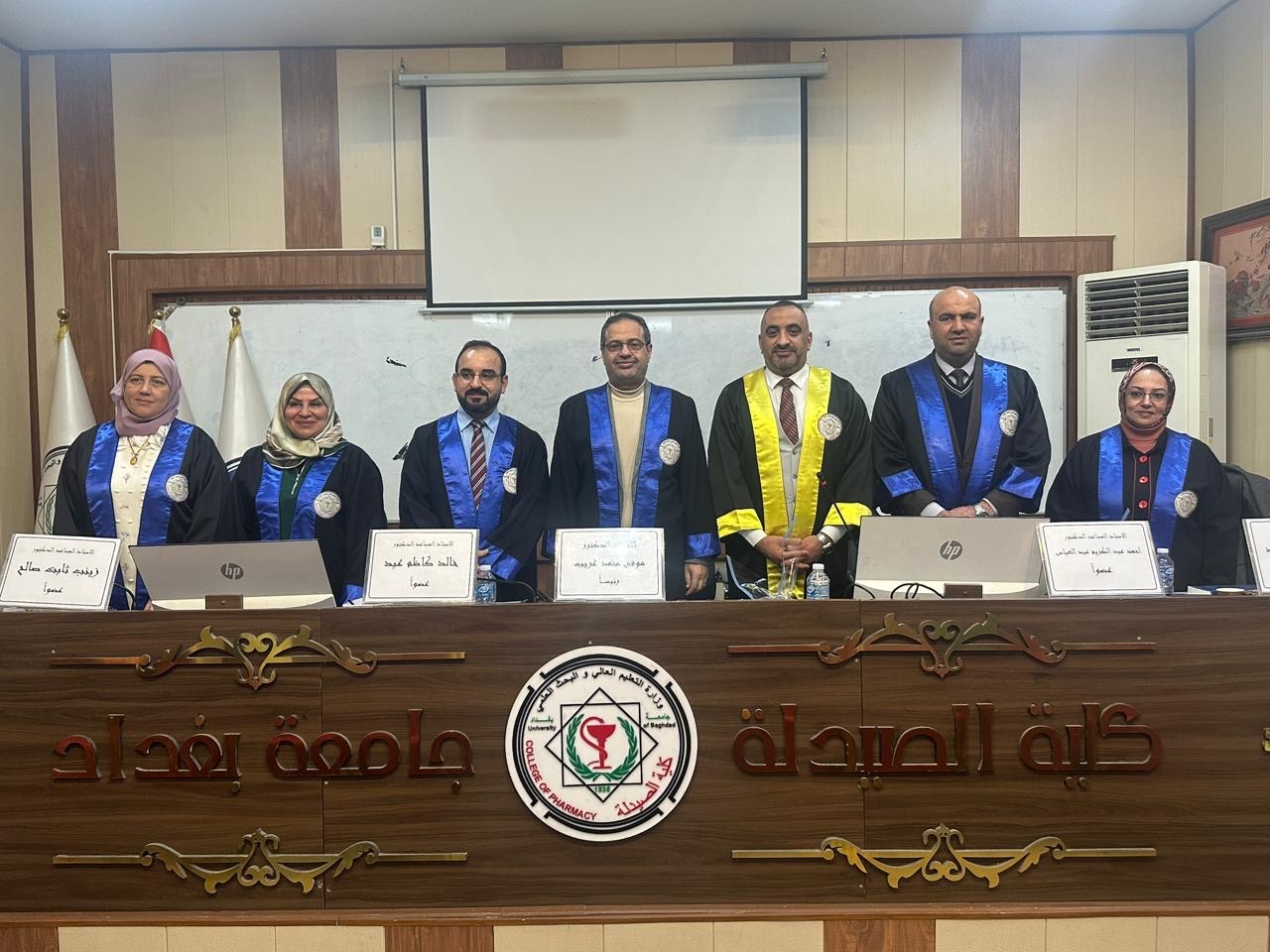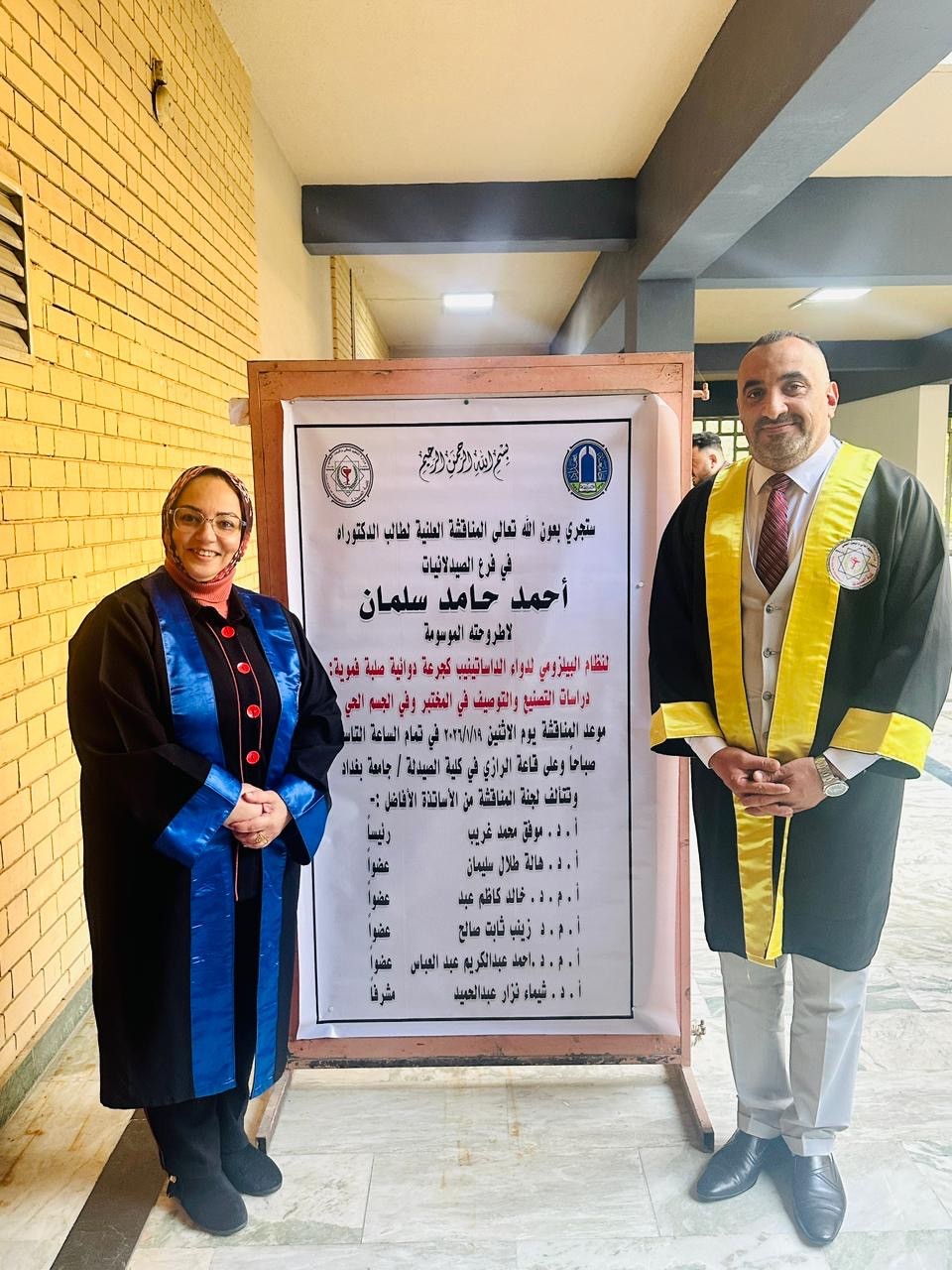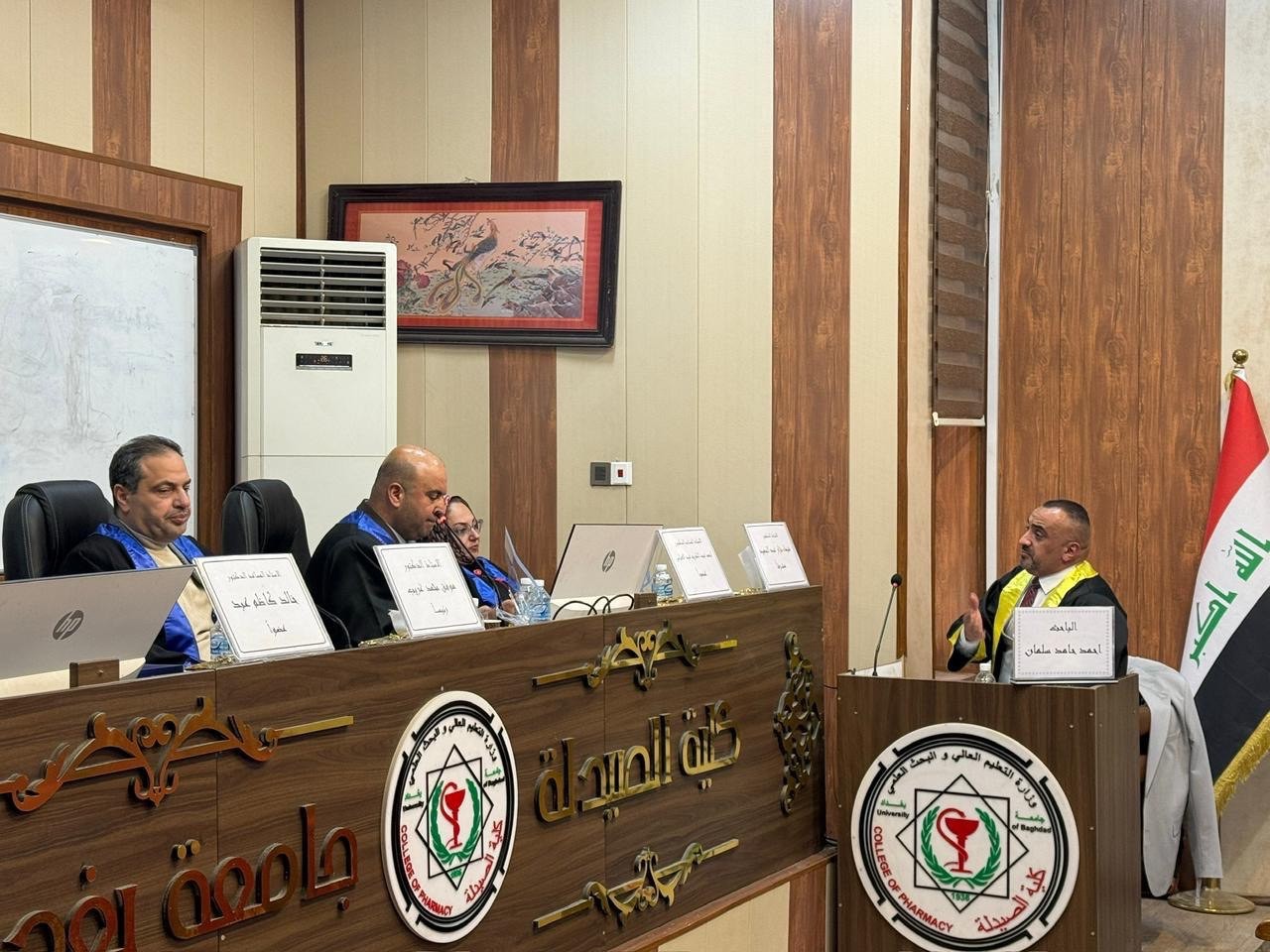
The College of Pharmacy discussed the PhD dissertation entitled “Bilosomal System of Dasatinib as Solid Oral Dosage Form: Formulation and In Vitro/In-Vivo Characterization Studies” by the student Ahmed Hamed Salman and the supervisor, Professor Dr. Shaimaa Nazar Abd Alhammid, at the Pharmaceutics Department.
The study aimed to design, formulate and optimize dasatinib-loaded bilosomes, as well as to characterize the optimal bilosomal formulation to enhance the bioavailability of dasatinib.
The study included DST-containing bilosomes that were developed following the Box-Behnken design. Characterizations were done in terms of particle size, polydispersity index (PDI), zeta potential, encapsulation efficiency, and surface morphology. The solid-state properties were studied by differential scanning calorimetry (DSC) and X-ray diffraction (XRD).
The results showed that the optimal bilosome formulation exhibited a zeta potential of (-22.36 mV), a PDI value of (0.109), and an encapsulation efficiency rate of (81.02%). Particle size (113.2 nm) showed in vitro release kinetics that were non-Fickian but were stable at various pH values.
The study recommended that dasatinib-loaded bilosomes represent a promising platform for practical drug delivery, with further opportunities to enhance release control and formulation stability through optimization of excipient ratios and vesicle composition. It also suggested that investigating alternative nanocarrier systems, such as solid lipid nanoparticles or self-nanoemulsifying drug delivery systems, may lead to improved performance alongside greater cost-efficiency. From a clinical perspective, the reliable release profile and enhanced drug absorption indicate that bilosomes could reduce dosing frequency and prolong systemic drug exposure, supporting the need for future evaluation in larger animal models and clinical studies, particularly in patients with gastric pH disturbances or those receiving acid-lowering therapy.