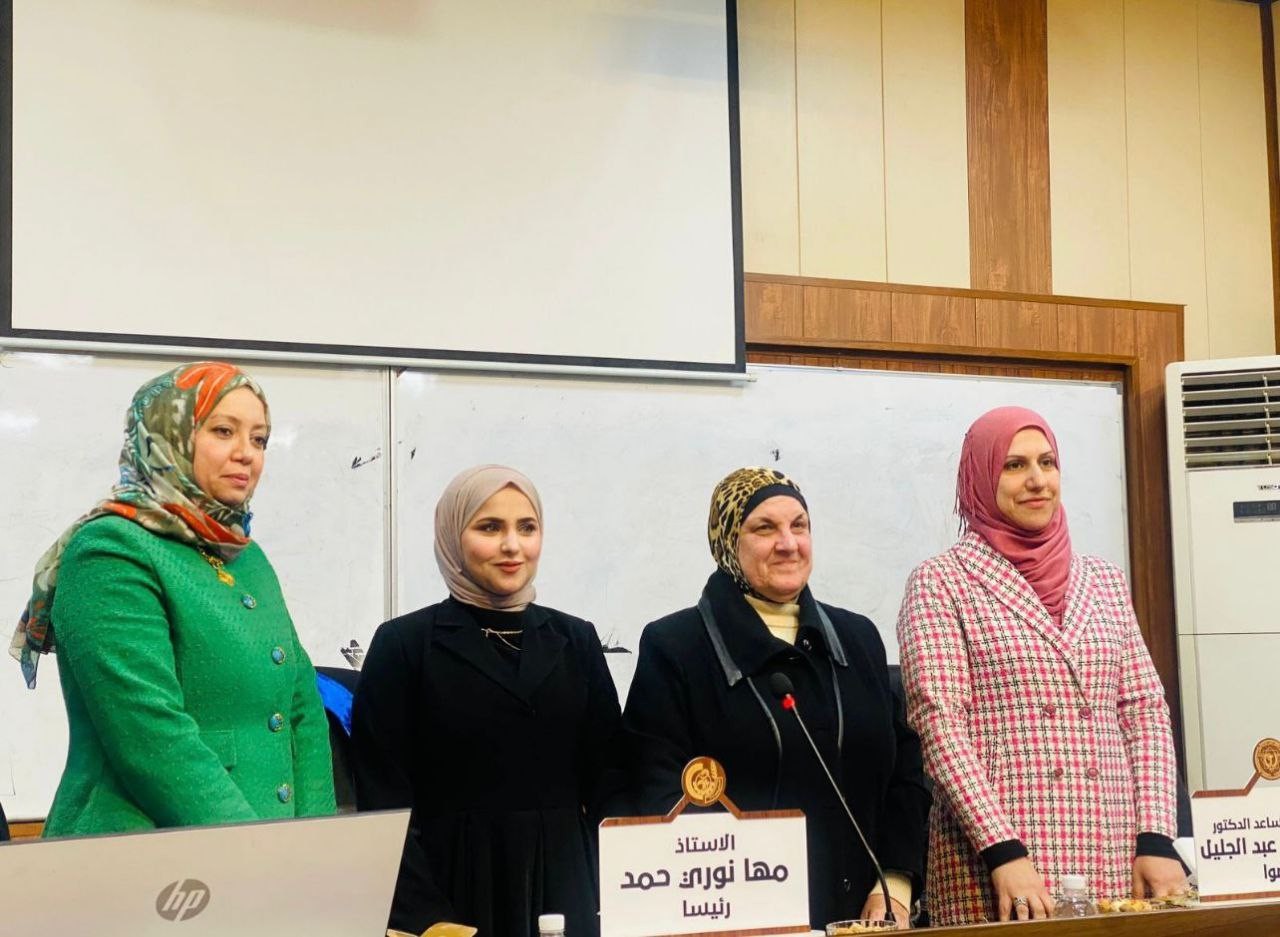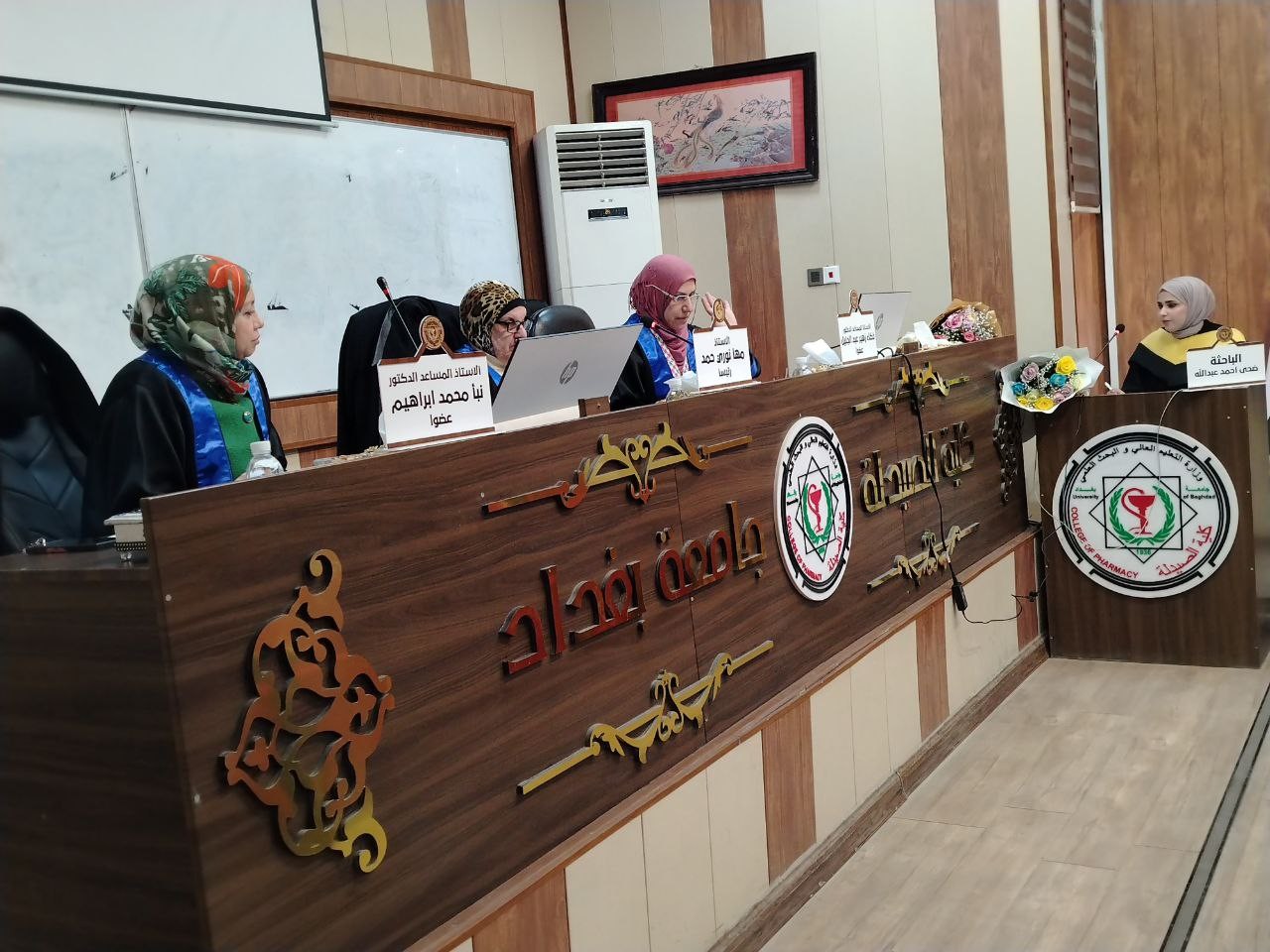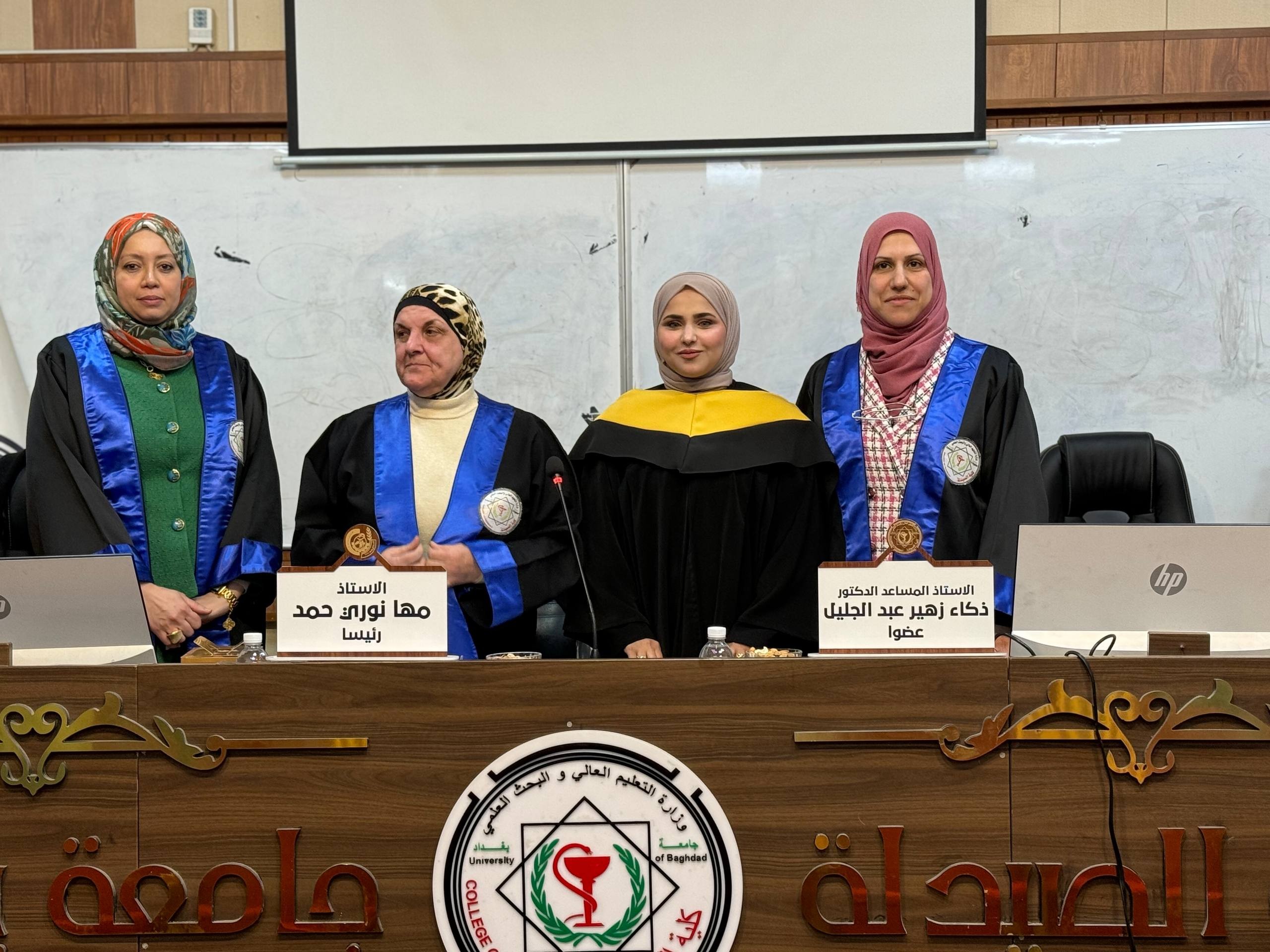
The College of Pharmacy discussed the MSc thesis entitled “Phytochemical Investigation & Evaluation of Gastric Anti-ulcer Activity of Pterospermum acerifolium (L) (Sterculiaceae family) Cultivated in Iraq” by the student Duha Ahmed Abdullah and the supervisor Assistant Professor Dr. Amjed Haseeb Khamees at the Pharmacognosy and Medicinal Plants Department.
The study aimed to investigate the phytochemical constituents of the Pterospermum acerifolium plant and to evaluate its anti-ulcer activity against aspirin-induced gastric ulcers in mice.
The study included extracting the fats from the plant Pterospermum acerifolium using n-hexane, followed by the extraction of active constituents using a Soxhlet apparatus with 85% methanol. The compounds were analyzed using techniques such as TLC, HPLC, and GC/MS. Five compounds were isolated using modified HPLC, and two additional compounds were isolated using PLC. The anti-ulcer activity of the ethyl acetate fraction was evaluated in mice with aspirin-induced gastric ulcers. The mice were divided into four groups to receive different treatments, and gastric tissue samples were analyzed to assess the effect of the treatment.
The results showed that several biologically active compounds have been isolated from different parts of the plant, including luteolin, lupeol, gallic acid, vanillic acid, and protocatechuic acid, in addition to two unidentified compounds. The evaluation of the plant extracts demonstrated a protective effect against aspirin-induced gastric ulcers, as they reduced ulcer size and improved tissue integrity compared to omeprazole treatment, thereby supporting the efficacy of the extract in safeguarding the mucosal lining.
The study recommended the potential of the plant as a promising natural source of anti-ulcer compounds and suggested conducting broader future studies to further evaluate its therapeutic efficacy, as well as exploring its potential for developing natural pharmaceutical formulations in the future.