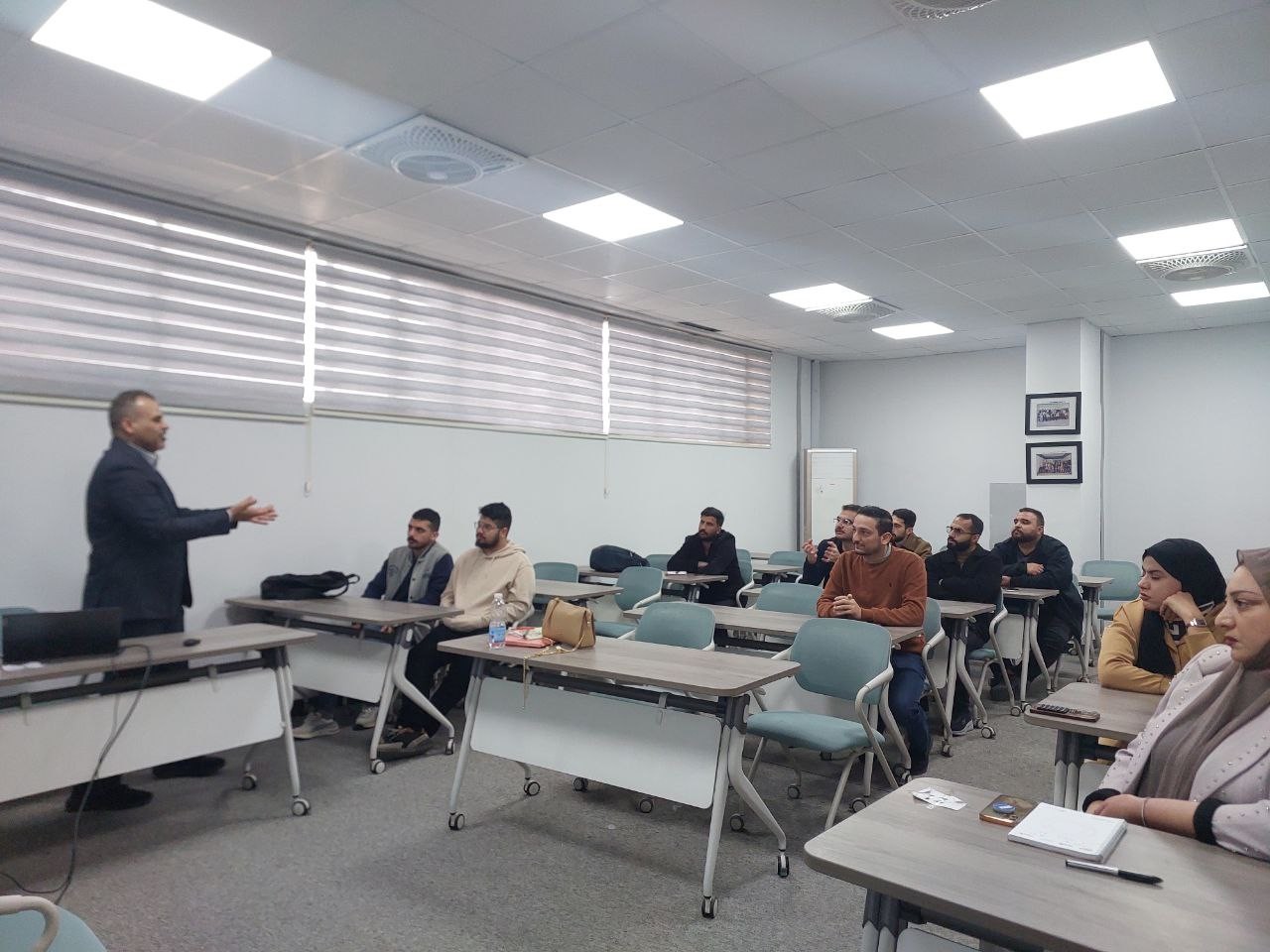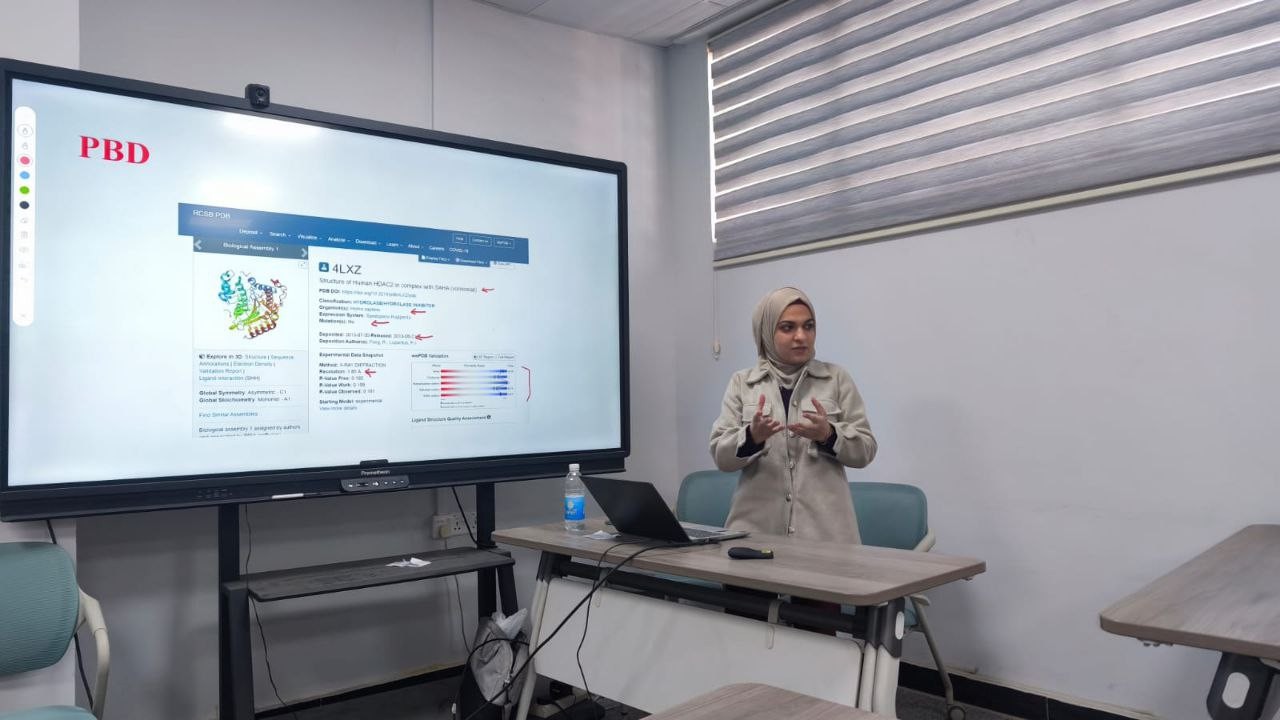

Under the supervision of the Dean of the College of Pharmacy, Professor Dr. Sarmed H. Kathem Alkhateeb, the Scientific Affairs Unit at the University of Baghdad/College of Pharmacy held an in-person workshop entitled “Principle of Computer-Aided Drug Design” delivered by Assistant Professor Dr. Ayad Abdul Ali Chiad, Assistant Lecturer Rusul Mohammed Hassan Ali, Assistant Lecturer Mazen Mohammed Jwaid, and Assistant Lecturer Hala Abdul Sahib Abdul Hadi, a faculty member at the Pharmaceutical Chemistry Department.
The workshop aimed to enhance the competencies of fifth-year students in utilizing molecular modeling software (Schrödinger) through hands-on practical training on molecular docking, absorption, distribution, metabolism, and excretion (ADME) analysis, and molecular dynamics (MD) simulations, while highlighting the pivotal role of these computational approaches in accelerating the drug discovery process and reducing the time and cost associated with drug development.
The workshop included several topics, including an introduction to molecular docking and its role in studying interactions between proteins and drug compounds. The workshop also addressed the fundamental steps of protein preparation, ensuring protein readiness for computational simulation processes, in addition to ligand preparation in accordance with established standards to ensure result accuracy. Furthermore, the workshop highlighted the mechanisms for analyzing and scientifically interpreting molecular docking results, emphasizing the importance of the docking score in screening and selecting the most suitable and effective compounds from among thousands of potential candidates. The workshop also included a discussion of ADMET studies and their pivotal role in predicting pharmacokinetic behavior, safety profiles, and biological efficacy of candidate compounds during the early stages of drug discovery.
The workshop concluded by equipping participants with the practical knowledge required to utilize the Schrödinger software suite for advanced research applications, particularly in the field of computer-aided drug design. It also focused on enhancing researchers’ ability to systematically analyze and interpret the generated data, thereby supporting its effective use in publication within reputable international scientific journals. Furthermore, the workshop emphasized the pivotal role of computational tools in streamlining and accelerating lead optimization and preclinical stages, ultimately improving the efficiency of the drug discovery and development process.