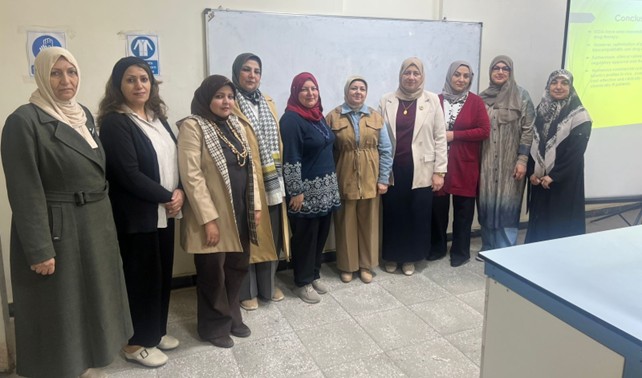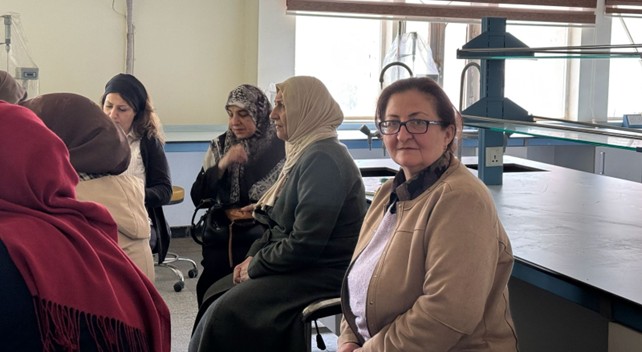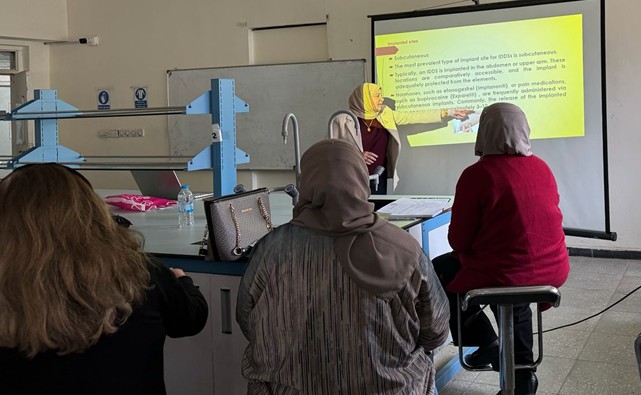
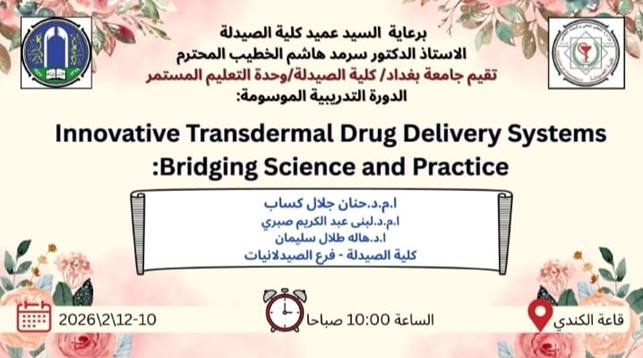
Under the supervision of the Dean of the College of Pharmacy, Professor Dr. Sarmed H. Kathem Alkhateeb, the Continuing Education Unit at the College of Pharmacy/University of Baghdad organized a three-day scientific training course from 10 to 12 Feb. 2026 entitled “Innovative Transdermal Drug Delivery Systems: Bridging Science and Practice,” delivered by a group of faculty members from the Pharmaceutics Department: Assistant Professor Dr. Hanan Jalal Kassab (Head of the Department), Assistant Professor Dr. Lubna AbdalKarim Sabri, and Professor Dr. Halah Talal Suleiman. The program was specifically designed for a group of researchers from the Industrial Research and Development Authority at the Ministry of Industry and Minerals. The course aimed to strengthen both scientific understanding and practical competencies in advanced transdermal drug delivery technologies, including microneedles, transdermal patches, topical sprays, and implantable systems, with emphasis on scientific principles, formulation design, and industrial pharmaceutical applications. The course included scientific lectures microneedles as an innovative approach for transdermal delivery of drugs and vaccines. In addition, the course reviewed film-forming systems, transdermal patches, topical sprays, and smart drug-loaded platforms, as well as implantable systems designed for controlled and sustained drug release over extended periods. The program further incorporated an interactive practical component, during which participants were trained to calculate appropriate concentrations and quantities of active pharmaceutical ingredients and excipients required for the preparation of patches and implants. Participants also conducted essential tests to evaluate the physical and chemical properties of these dosage forms. The course concluded with an assessment test to measure the achievement of its training objectives. This course forms part of the scientific program adopted by the Department of Pharmaceutics to strengthen effective collaboration between the College of Pharmacy and governmental institutions, promote the transfer of applied knowledge, align academic outcomes with labor market requirements, and support the advancement of the national pharmaceutical industry.