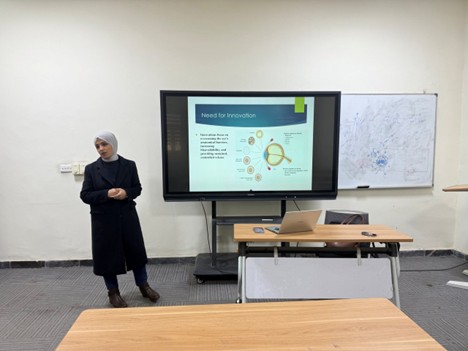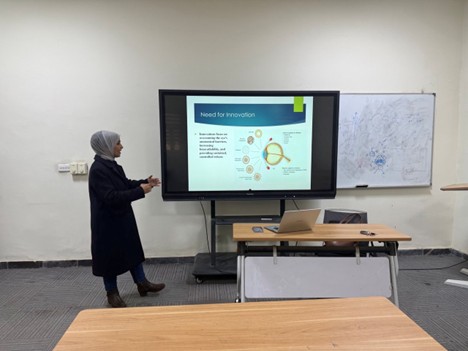
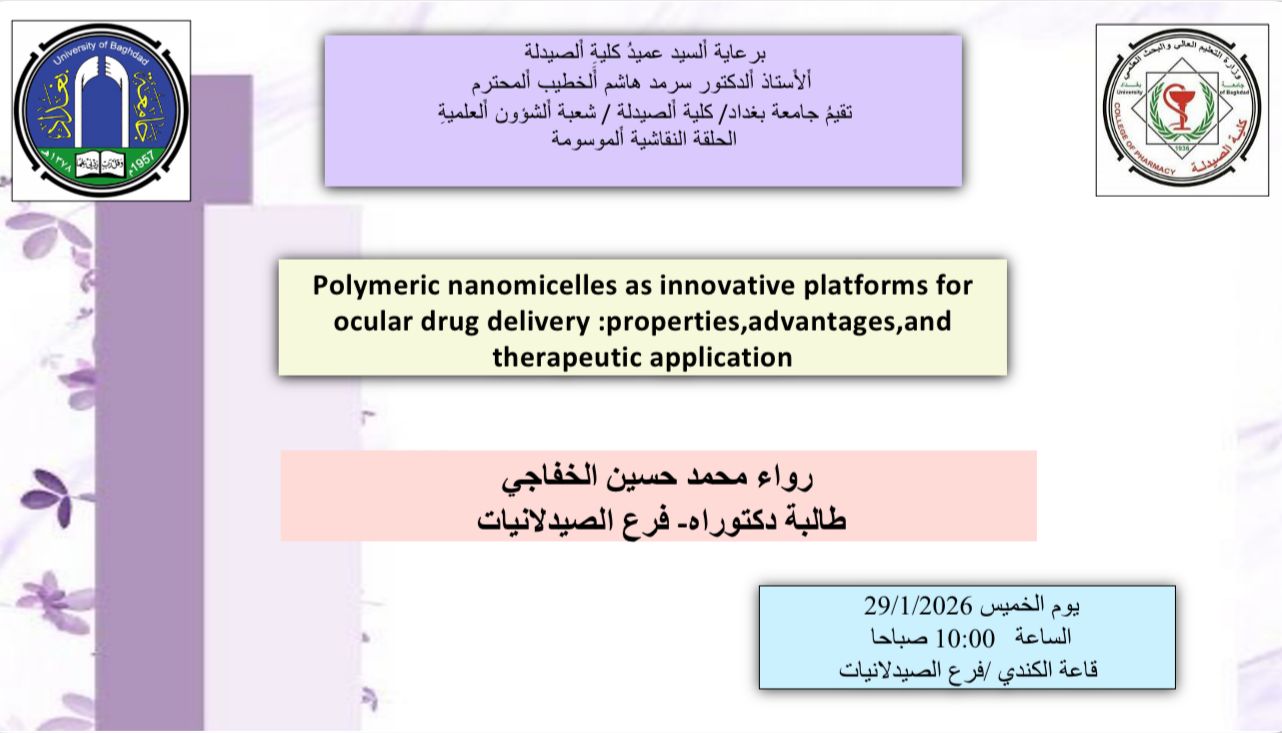
Under the supervision of the Dean of the College of Pharmacy, Professor Dr. Sarmed H. Kathem Alkhateeb, the Scientific Affairs Unit at the University of Baghdad/College of Pharmacy, held an in-person workshop entitled “Polymeric Nanomicelles as Innovative Platforms for Ocular Drug Delivery”, delivered by Pharmacist Rawaa Mohammed Hussien, the PhD student at the Pharmaceutics Department.
The workshop aimed to highlight polymeric nanomicelles as innovative and advanced platforms for delivering drugs to the eye, while explaining their physicochemical properties and their role in overcoming the anatomical and physiological barriers of the eye that limit the efficiency of traditional drug delivery.
The workshop included several topics, including an overview of ocular structure and drug absorption pathways, as well as the challenges associated with low bioavailability and short precorneal residence time. Also, the mechanism of formation of polymeric nanomicelles from amphiphilic block copolymers was discussed, along with their fundamental characteristics, such as nanoscale size, stability, high drug-loading capacity, and controlled drug release. In addition, the role of surface charge and polymer composition in enhancing corneal penetration and adhesion to ocular tissues was highlighted. Furthermore, the workshop addressed the therapeutic advantages of polymeric nanomicelles in delivering drugs to both the anterior and posterior segments of the eye, including prolonged precorneal retention, reduced systemic absorption, and improved biocompatibility and safety, which ultimately enhance patient compliance.
The workshop concluded that polymeric nanomicelles represent a promising and effective strategy for ocular drug delivery, particularly for the treatment of ocular conditions such as dry eye disease, ocular infections, glaucoma, diabetic retinopathy, and age-related macular degeneration. Moreover, emphasis was placed on the importance of continued development and clinical evaluation of these systems to support innovation and improve the quality of ocular healthcare.