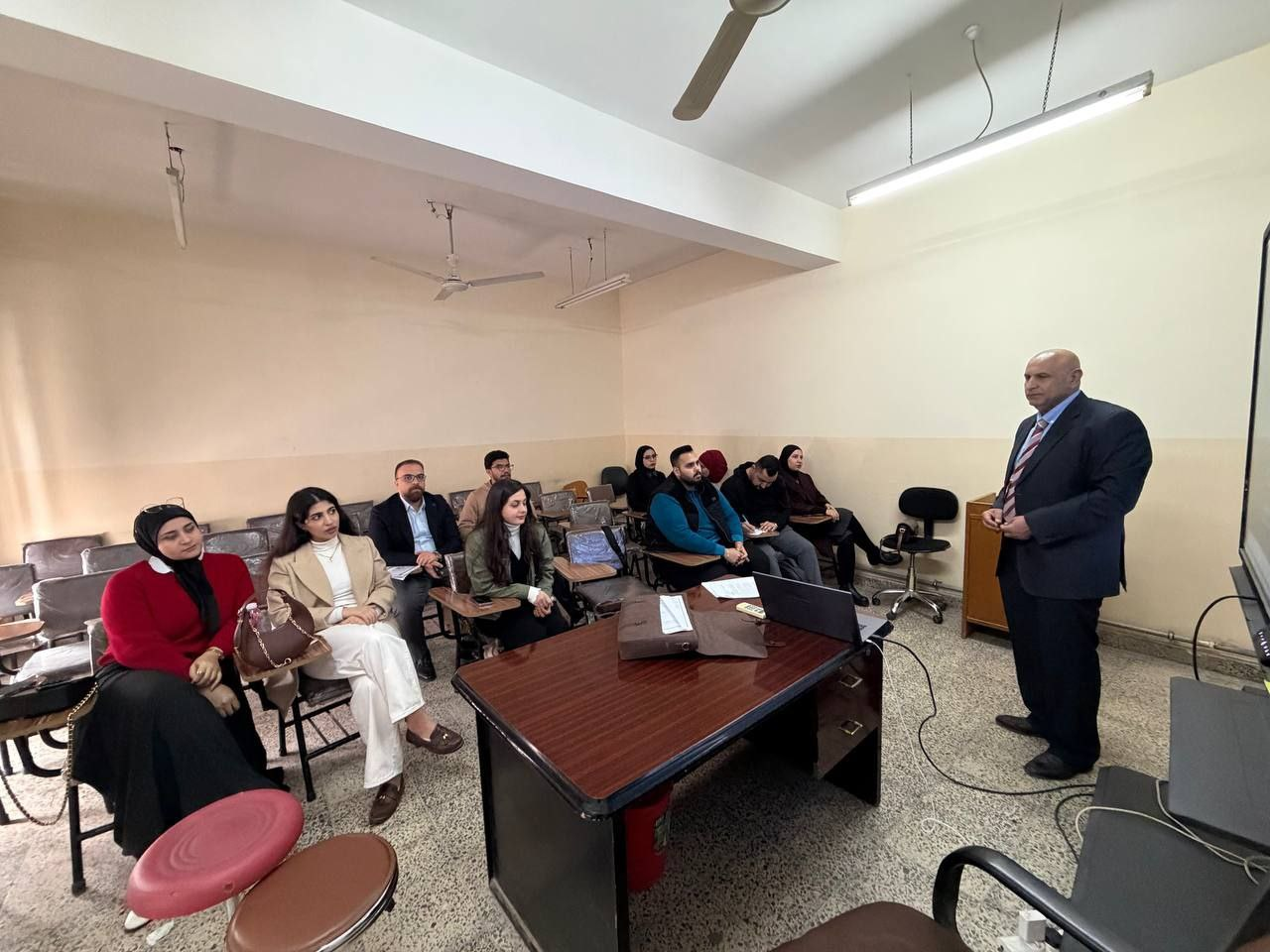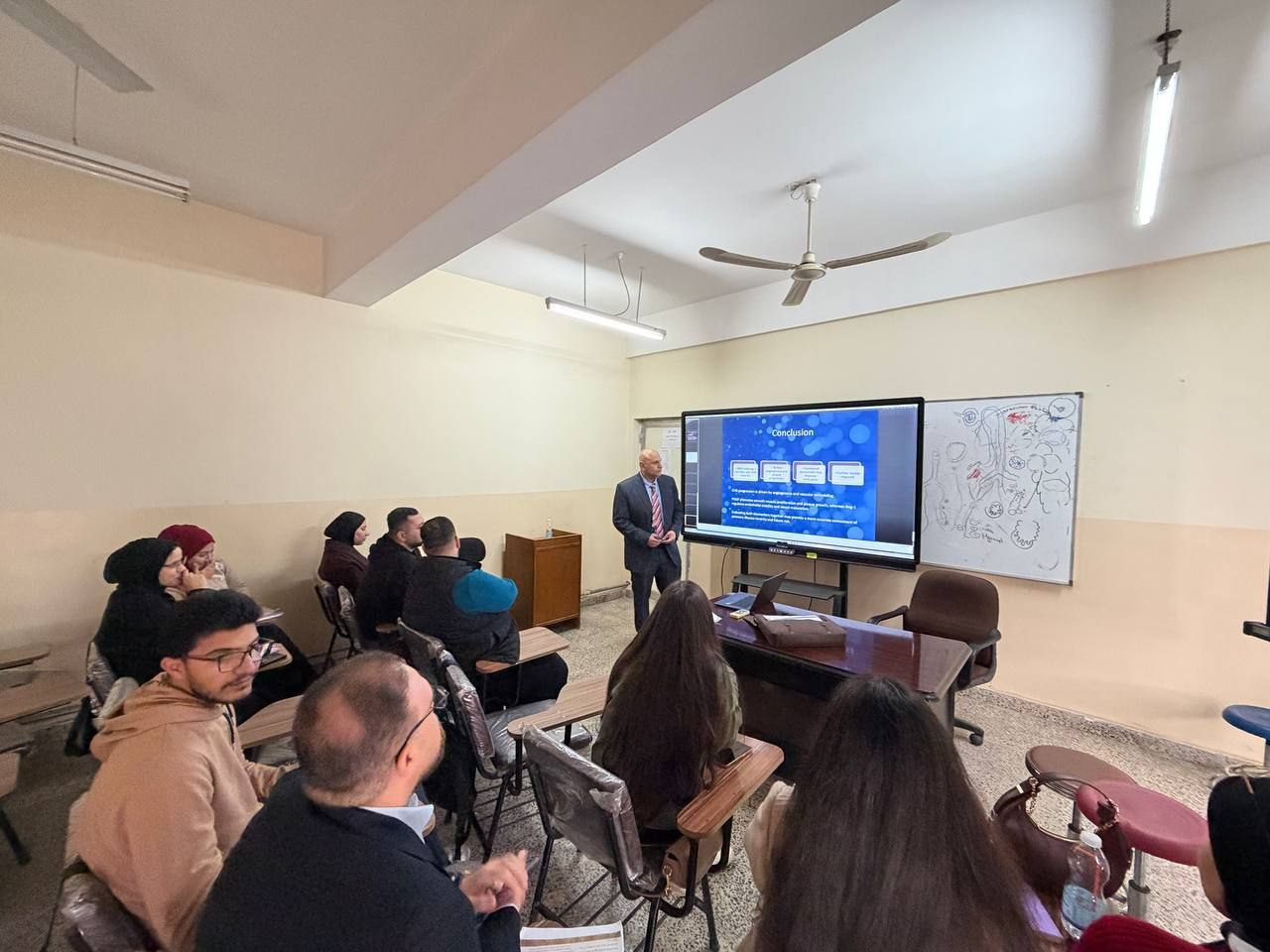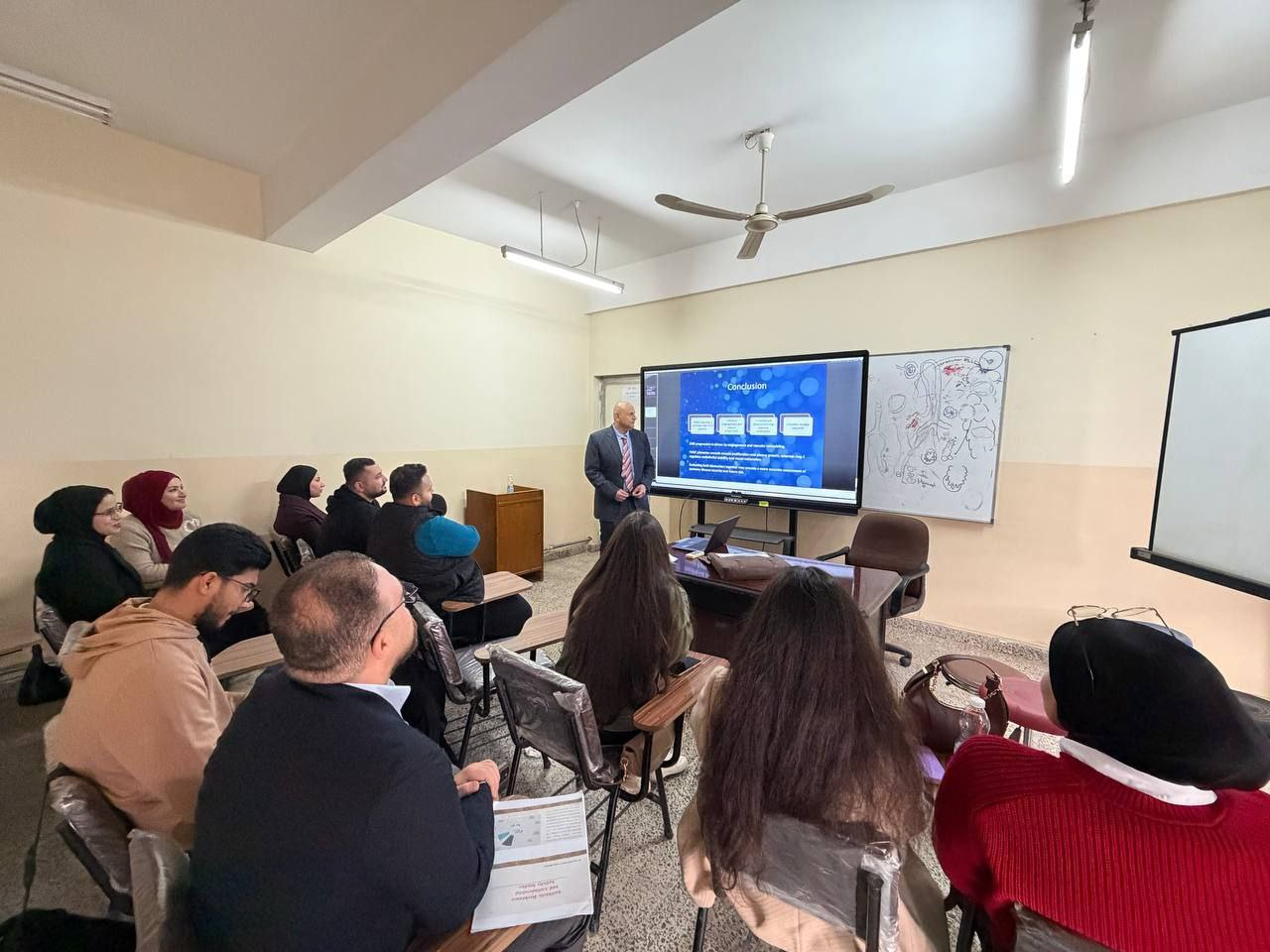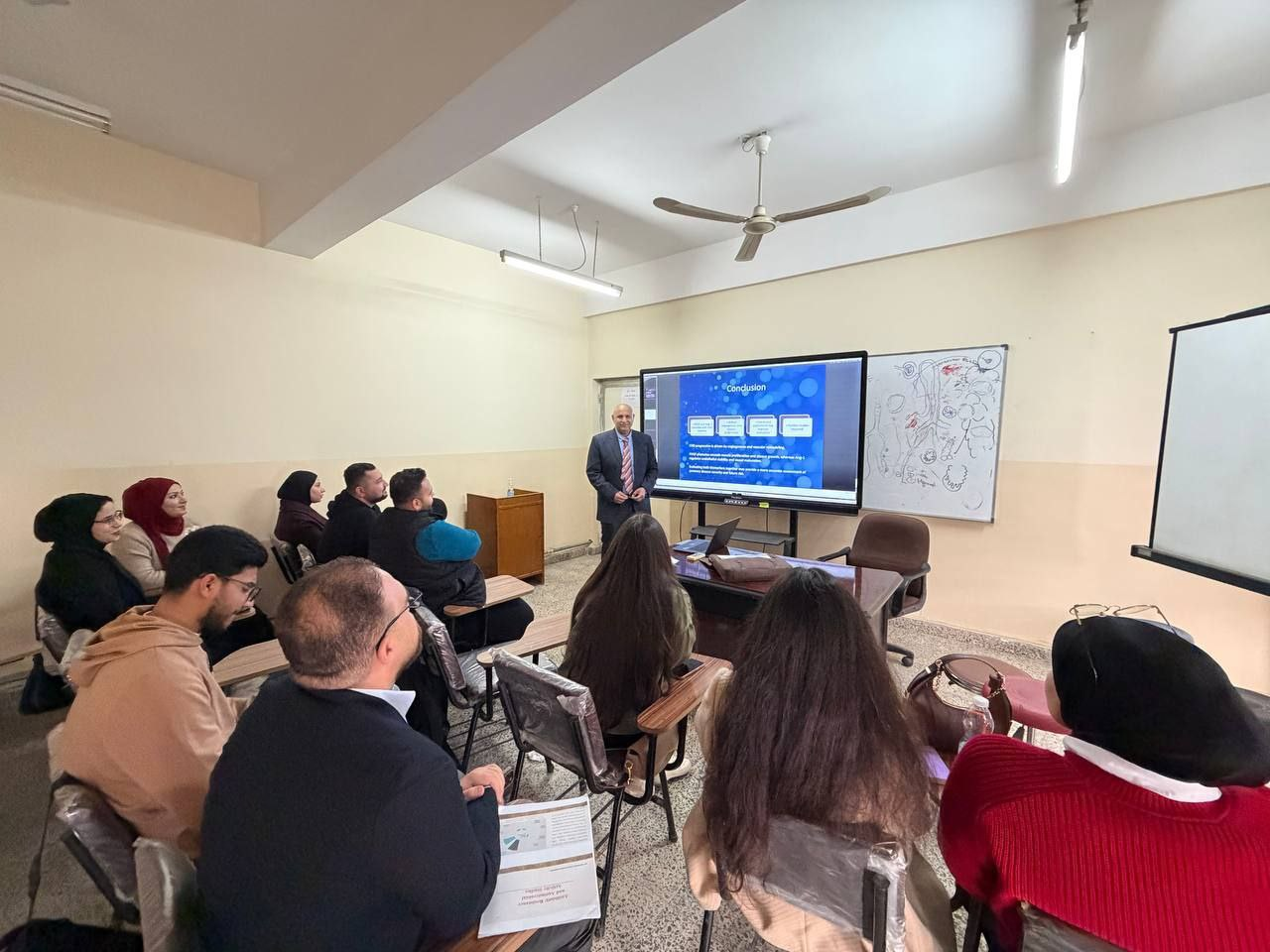

Under the supervision of the Dean of the College of Pharmacy, Professor Dr. Sarmed H. Kathem Alkhateeb, the Scientific Affairs Division at the University of Baghdad/College of Pharmacy held an in-person scientific seminar entitled “Correlation Between Serum Platelet‑Derived Growth Factor, Angiopoietin‑1, and the Severity of Coronary Heart Disease,” delivered by Pharmacist Adel Abdulsahib Assi, the PhD student at the Clinical Laboratory Department.
The seminar aimed to introduce the combined role of platelet-derived growth factor (PDGF) and angiopoietin-1 in determining the severity of coronary heart disease. It, also highlighted the importance of these two factors in assessing disease progression and their potential use as supportive biomarkers in diagnosis and clinical follow-up.
The seminar included several topics, including an introduction to coronary heart disease and the role of atherosclerosis in disease progression, the stages of atherosclerosis and the associated pathophysiological changes occurring throughout these stages, as well as the role of newly formed blood vessel branching resulting from the disease. It, also included an overview of serum platelet-derived growth factor (PDGF) and angiopoietin-1 and clarified their roles in determining the severity of coronary heart disease, in addition to explaining the medical benefits of monitoring their levels as potential biomarkers. Furthermore, the seminar addressed future therapeutic approaches targeting these two factors and the possibility of contributing to reversing disease severity. In addition, it highlighted the existing research gap regarding their combined effect, particularly the limited number of studies conducted in the Middle East region.
The seminar concluded that the progression of coronary heart disease is associated with the formation of new blood vessels, the development of thrombus formation, and the redistribution of cellular patterns within the blood vessels. Platelet-derived growth factor (PDGF) stimulates the proliferation of smooth muscle cells and exacerbates thrombus formation, whereas angiopoietin-1 functions to stabilize the vascular endothelium and promote vascular maturation. Evaluating both factors is considered an important indicator that provides a clear insight into disease progression and the potential future risk of its complications.