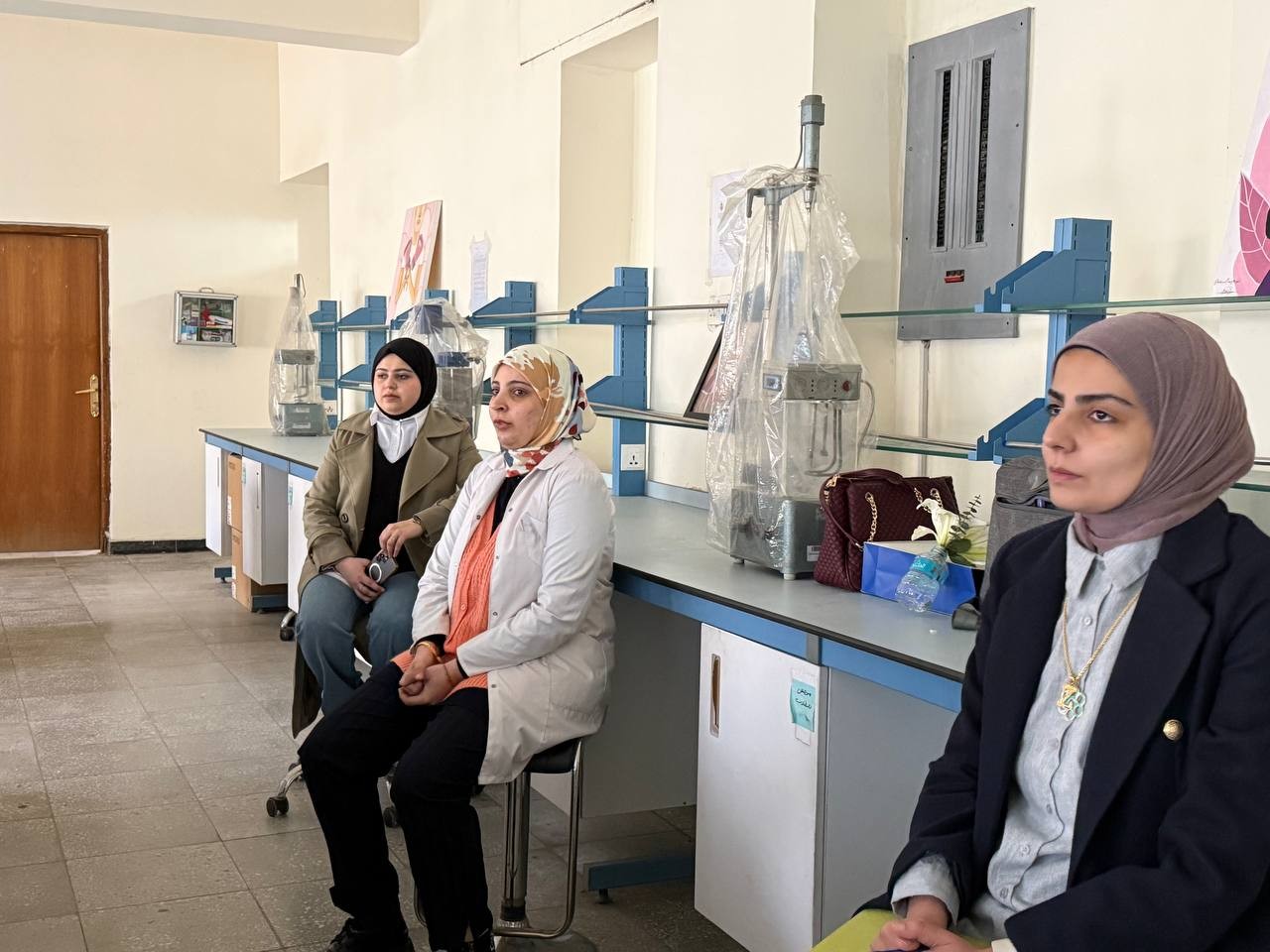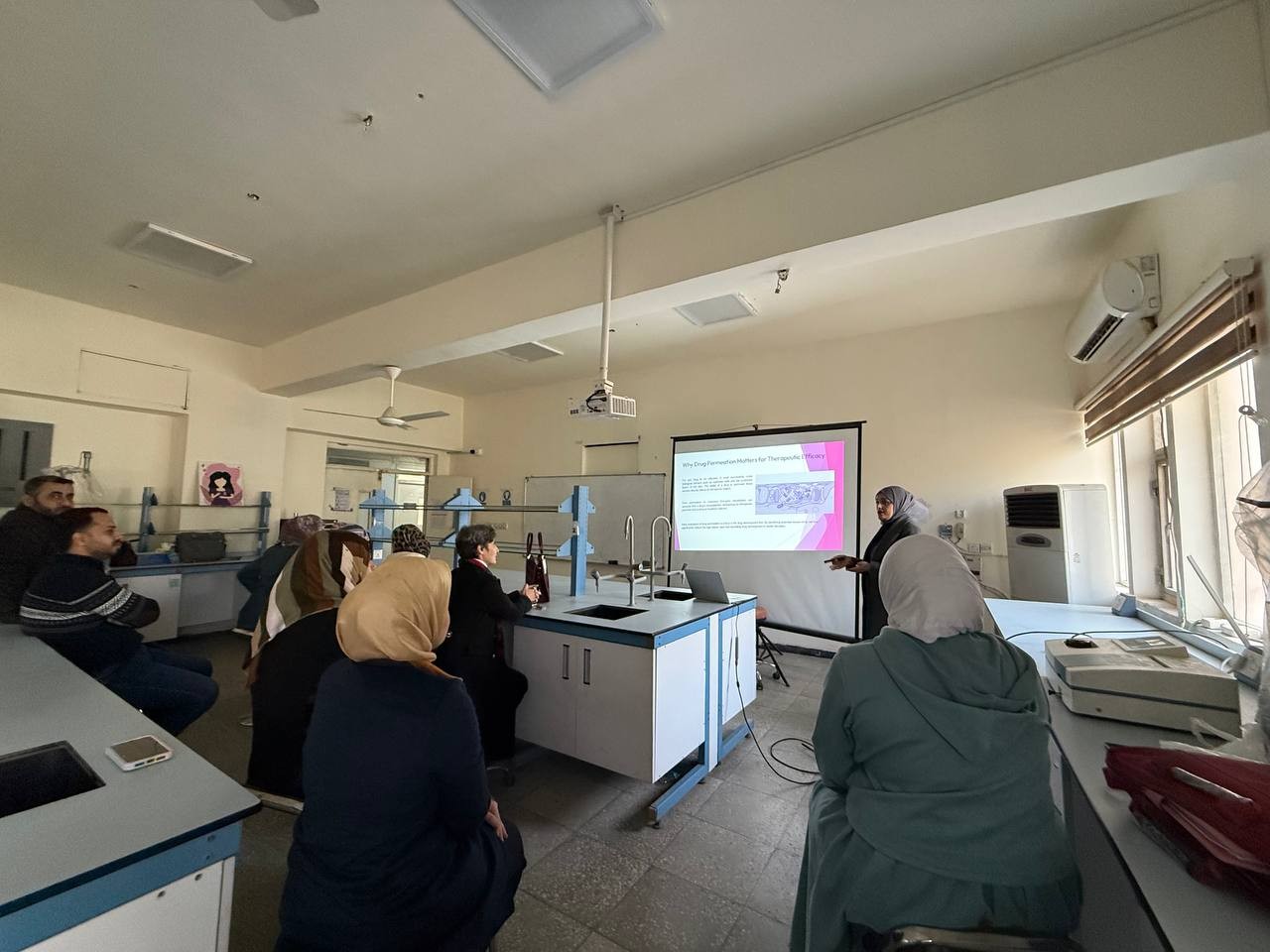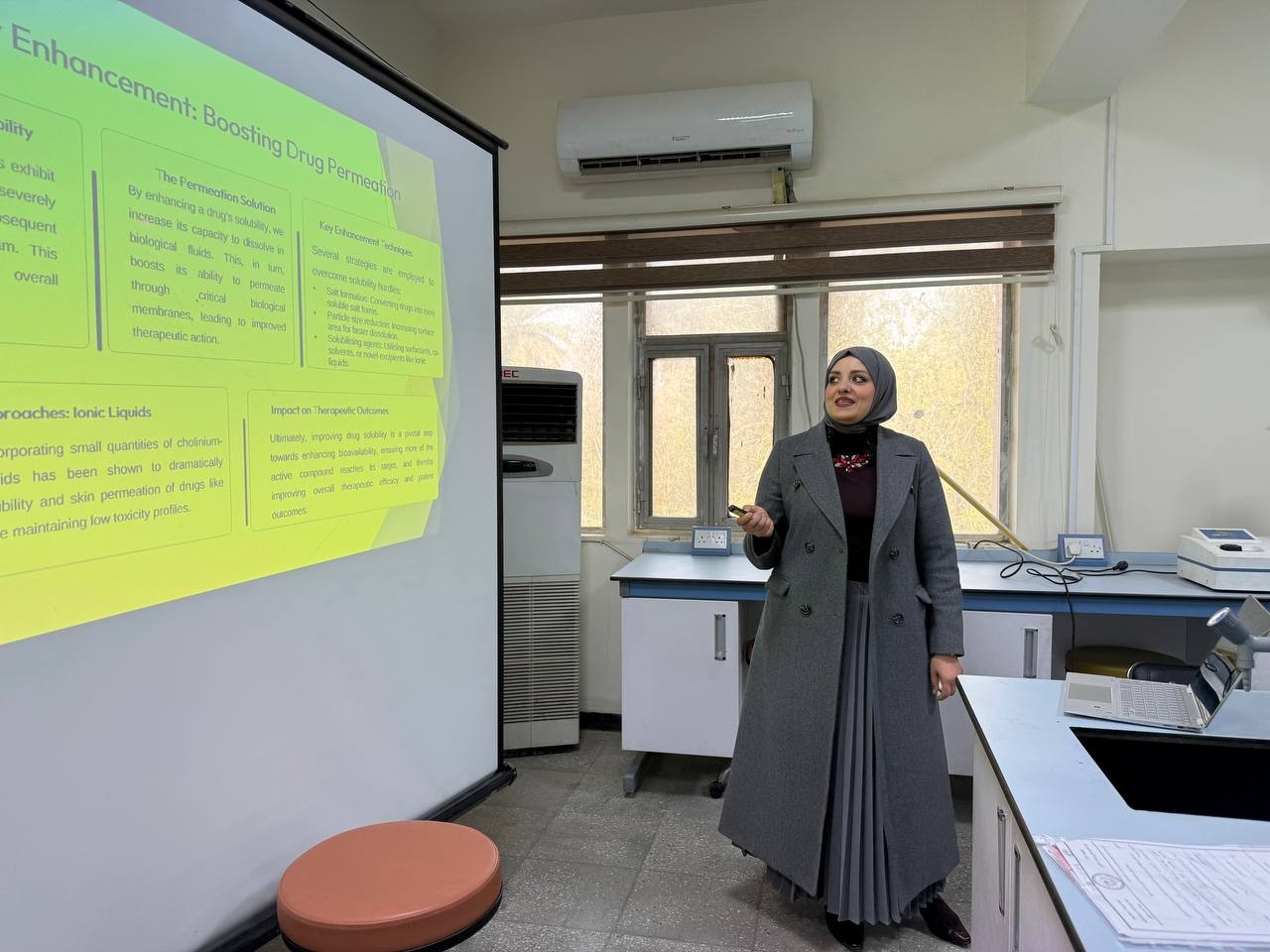

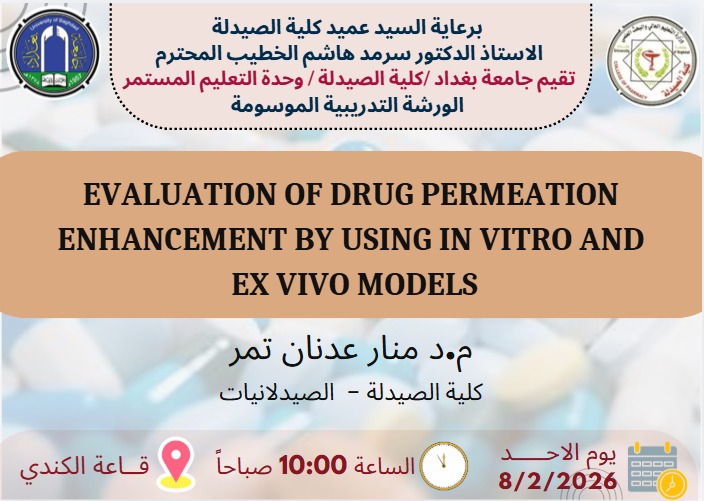
Under the supervision of the Dean of the College of Pharmacy, Professor Dr. Sarmed H. Kathem Alkhateeb, the Continuing Education Unit at the University of Baghdad/College of Pharmacy held an in-person workshop entitled “Evaluation of Drug Permeation Enhancement Using In Vitro and Ex Vivo Models,” delivered by Lecturer Dr. Manar Adnan Tamer, a faculty member at the Pharmaceutics Department.
The workshop aimed to emphasize the importance of early evaluation of drug permeation in the drug development process. By identifying potential permeability-related limitations at an early stage, researchers can minimize late-stage attrition, optimize formulation strategies, and ultimately reduce the historically high failure rates that have challenged pharmaceutical development in previous decades.
The workshop included several topics, including the fundamental role of drug permeation in determining therapeutic efficacy and clinical performance. It further examined the application of in vitro and ex vivo experimental models as essential platforms for the systematic evaluation of drug permeation characteristics. In addition, the workshop explored contemporary strategies aimed at enhancing drug permeation, including formulation and physicochemical optimization approaches. The advantages of these experimental models in streamlining drug development and reducing translational risk were also discussed. Finally, critical challenges associated with permeation assessment and prospective future directions in the field were highlighted.
The workshop concluded that in vitro and ex vivo models represent indispensable experimental platforms in the optimization of drug permeation and bioavailability. Their systematic and rigorous application enhances predictive accuracy during preclinical development, supports informed formulation design, and facilitates more efficient translational progression. Ultimately, continued advancement and strategic integration of these models contribute to the accelerated development of safer and more efficacious therapeutic agents, thereby improving overall healthcare outcomes.