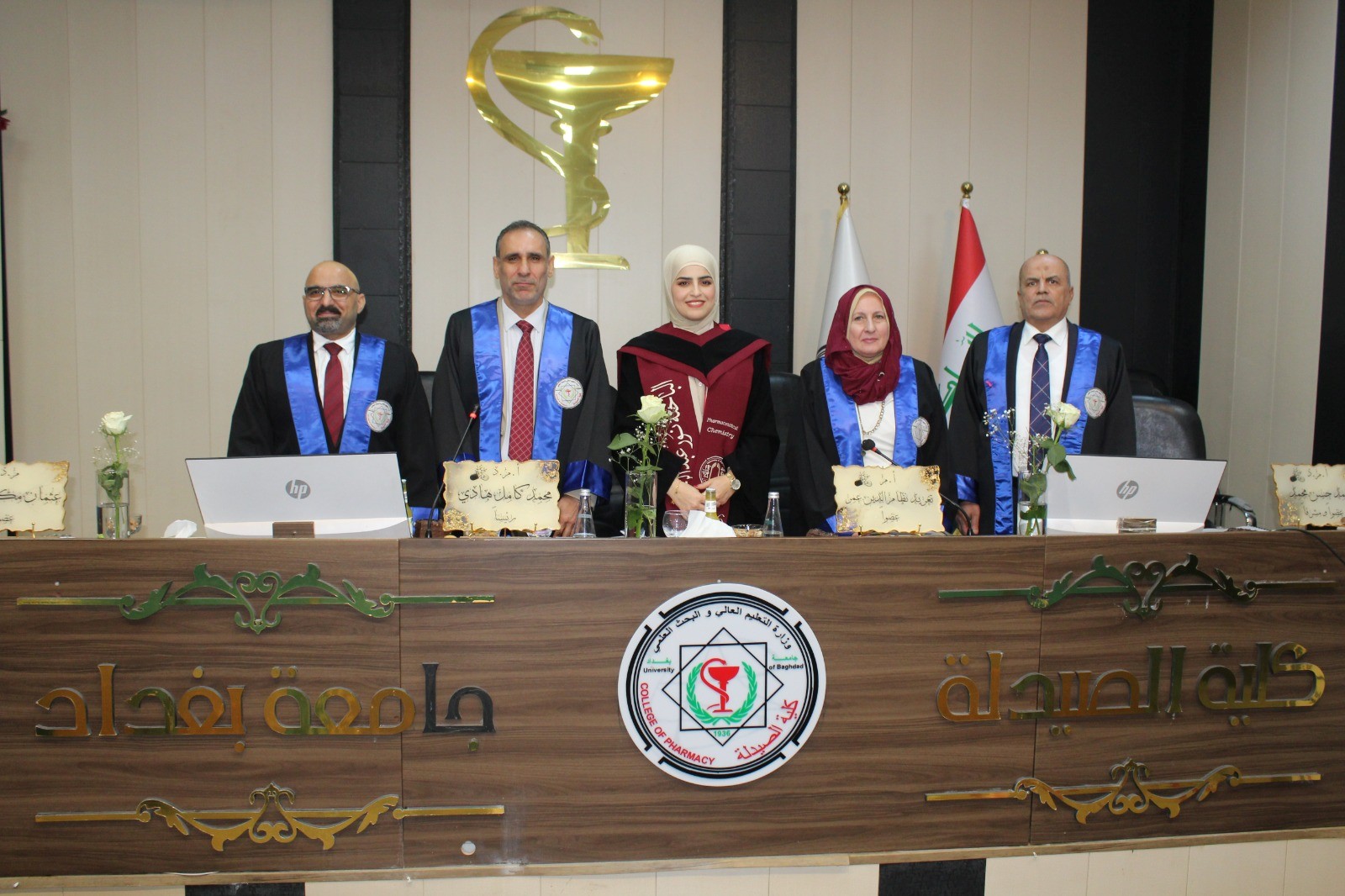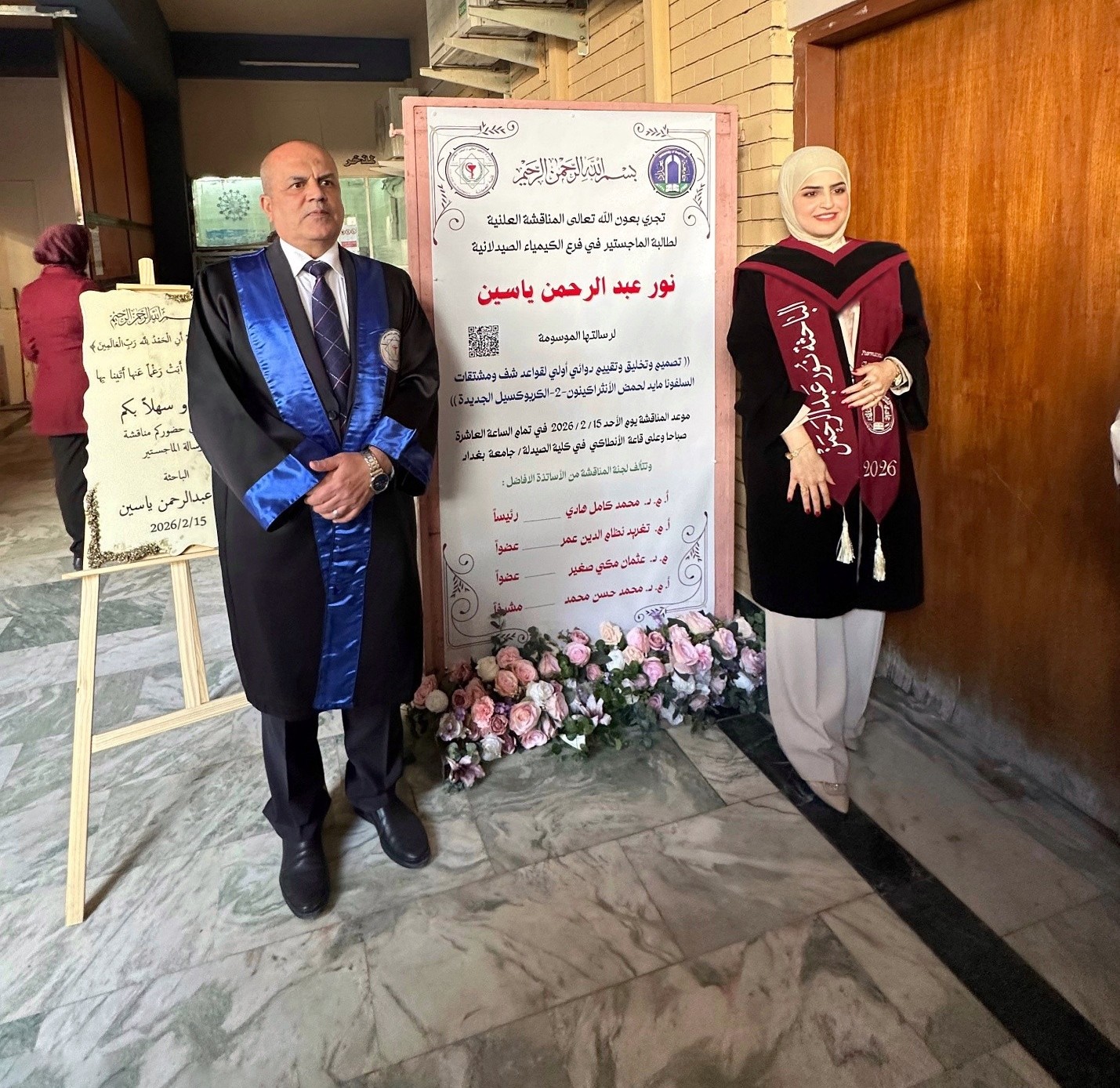
The College of Pharmacy discussed the MSc thesis entitled “Design, Synthesis, and Preliminary Pharmacological Evaluation of New Schiff Bases and Sulfonamide Derivatives of Anthraquinone-2-Carboxylic Acid” by the student Noor Abdulrahman Yaseen and the supervisor, Assistant Professor Dr. Mohammed Hassan Mohammed at the Pharmaceutical Chemistry Department.
The study aimed to design various compounds resulting from the hybridization of the anthraquinone scaffold with N-acyl hydrazone and N-acyl sulfonyl hydrazide derivatives using amino acids, specifically L-proline and glycine, as linkers, and performing virtual simulations. Subsequently, the compounds were synthesized using chemical synthesis techniques, and their cytotoxic activity against human colorectal cancer cells was evaluated using the MTT assay.
The study included different compounds obtained from the hybridization of an anthraquinone scaffold with N-acyl hydrazone and N-acyl sulfonyl hydrazide derivatives using amino acids specifically L-proline and glycine as linkers, they were virtually docked, then synthesized using chemical synthesis techniques, and their cytotoxic activity was evaluated against the human colorectal cancer cell line (HCT-116) using the MTT assay.
The results showed that all synthesized compounds exhibited excellent purity according to their physical properties and analytical spectrum. The designed hydrazides and most of the final compounds showed higher docking scores than doxorubicin as a reference compound with L-proline hydrazide (PH) achieving the highest docking score. Pharmacokinetic property evaluation confirmed their compliance with drug-likeness criteria. Furthermore, the MTT assay revealed a significant ability of these compounds to inhibit the growth of human colorectal cancer (HCT-116) cells in a concentration-dependent manner, particularly compounds NAY1, NAY2, NAY7, and PH with IC50 values of 14.66 µM, 15.85 µM, 9.16 µM, and 22.46 µM, respectively. Molecular dynamics simulation of compound NAY7 demonstrated good stability and favorable interaction behavior.
The study recommended synthesizing additional derivatives and subjecting them to advanced pharmacological and biological investigations, considering them promising anticancer compounds based on the encouraging results obtained. Also , It emphasized the importance of further evaluating their efficacy and mechanisms of action, paving the way for their potential future development within safer and more effective therapeutic strategies.