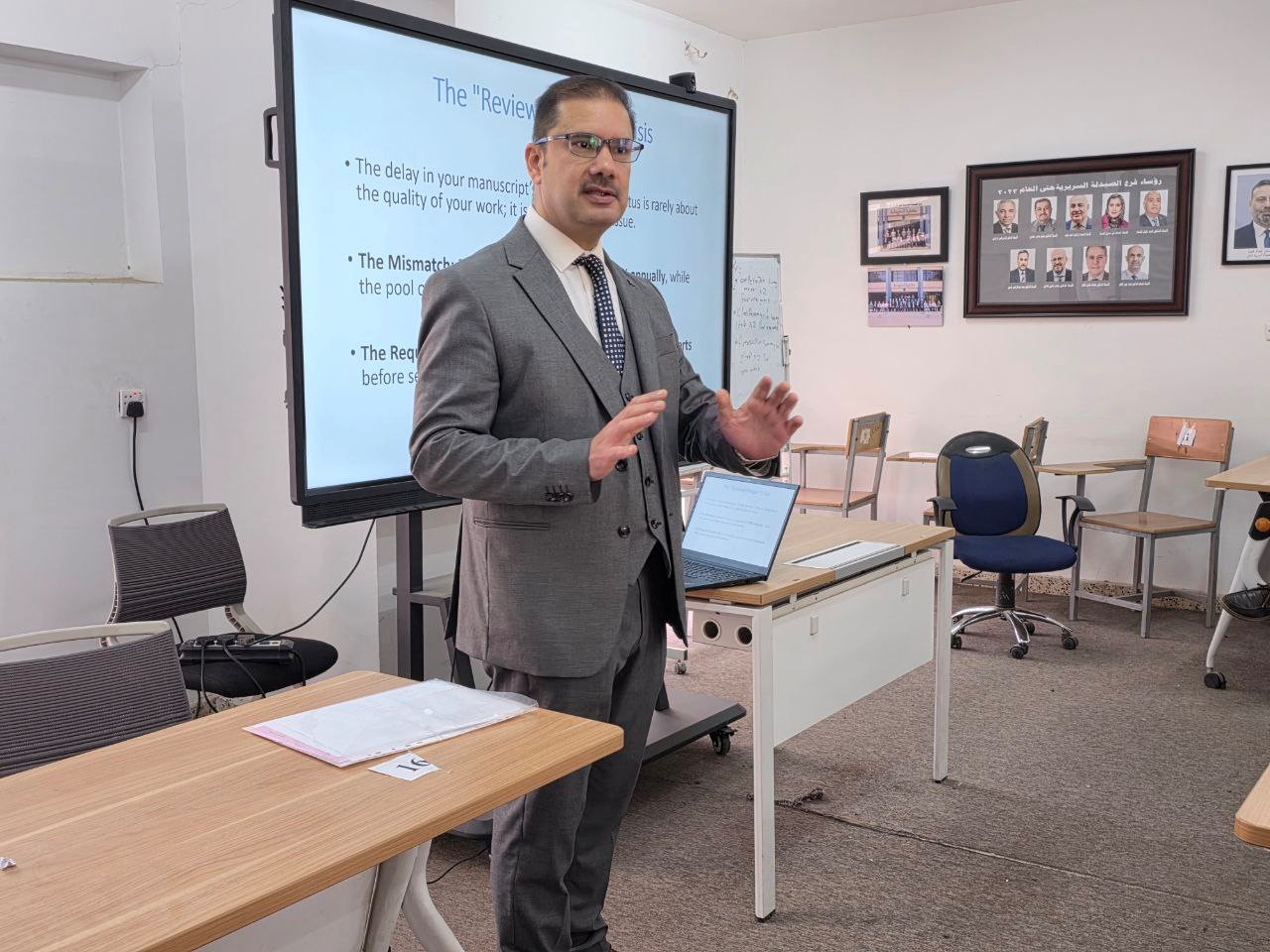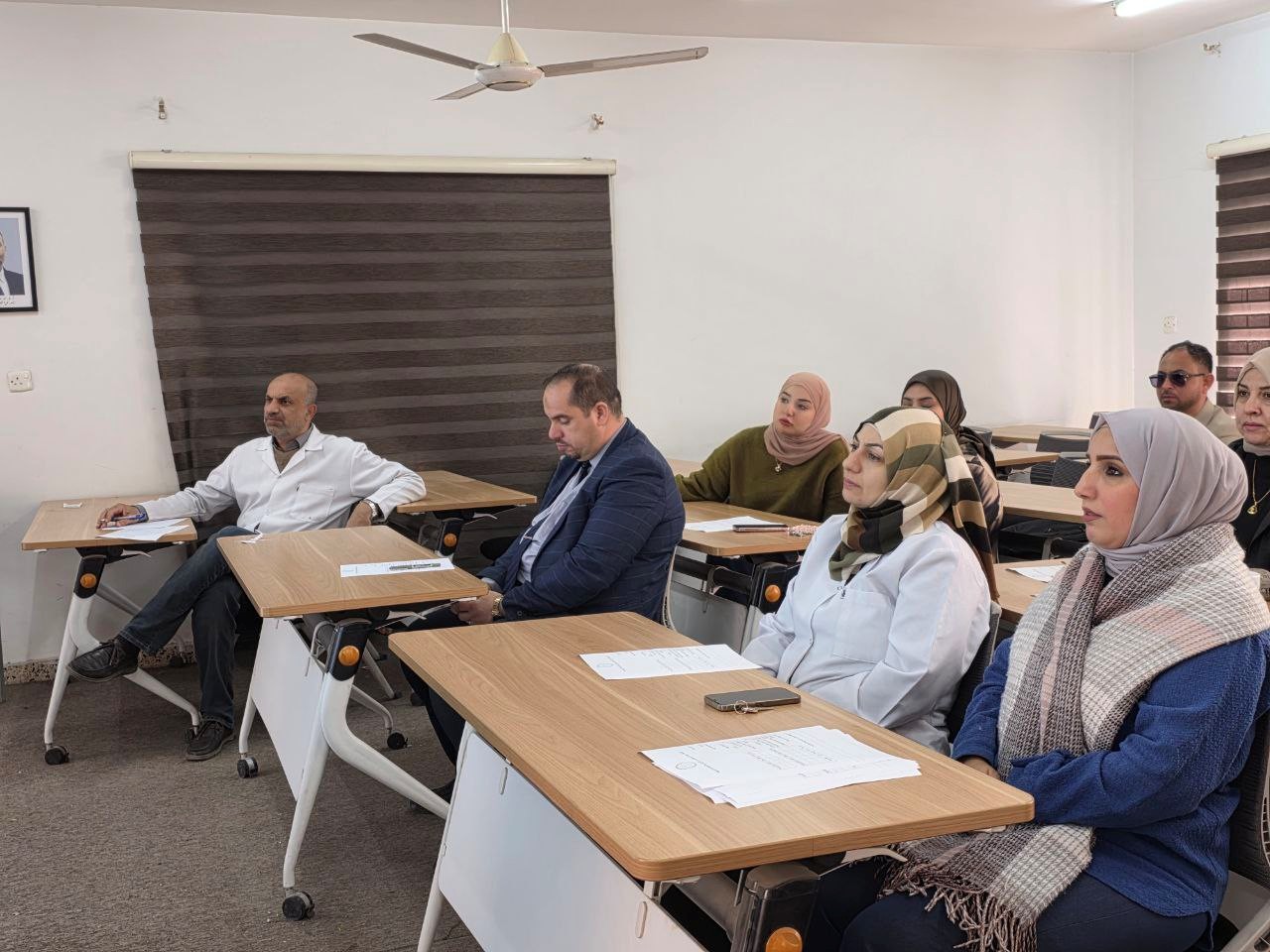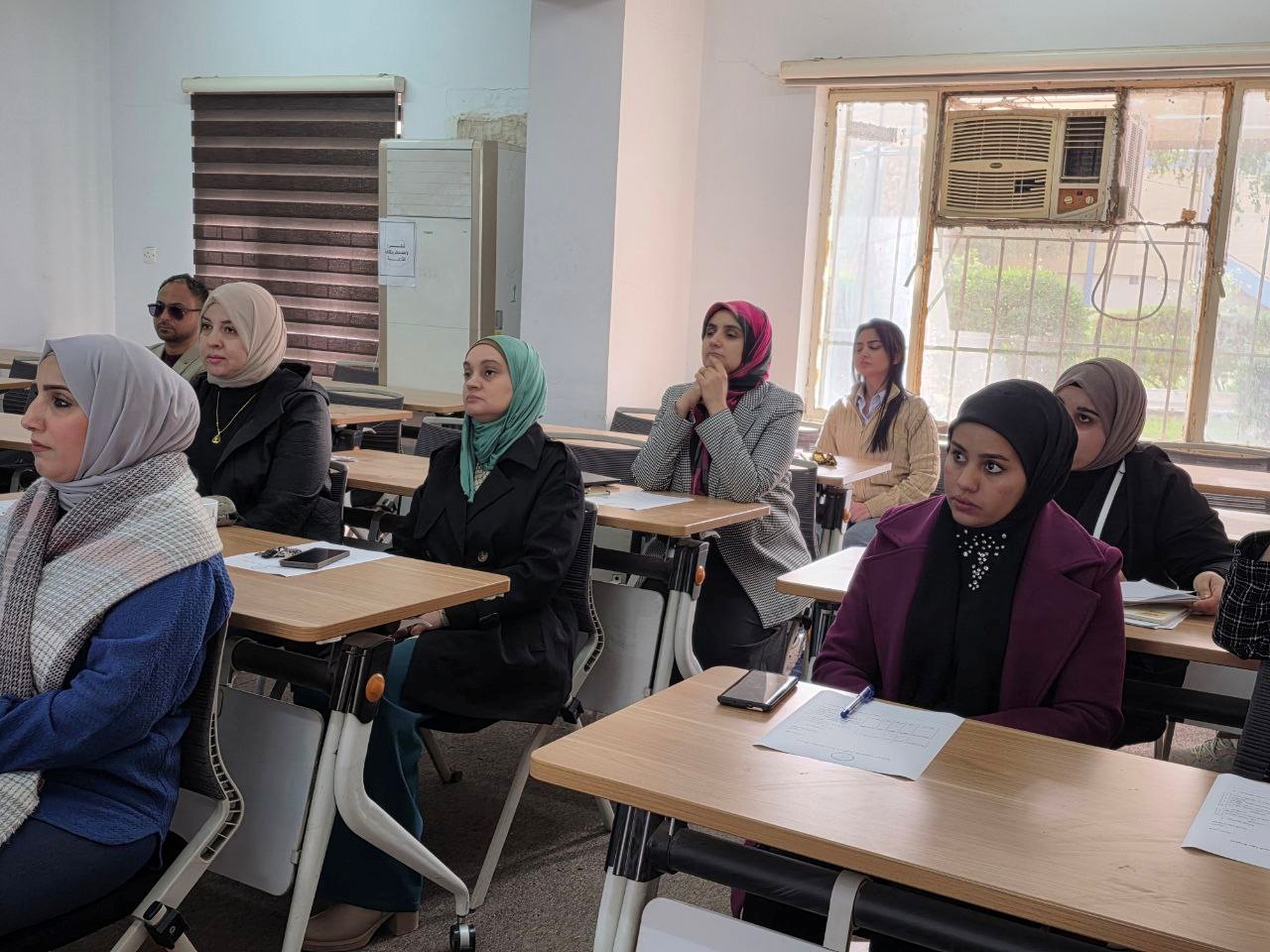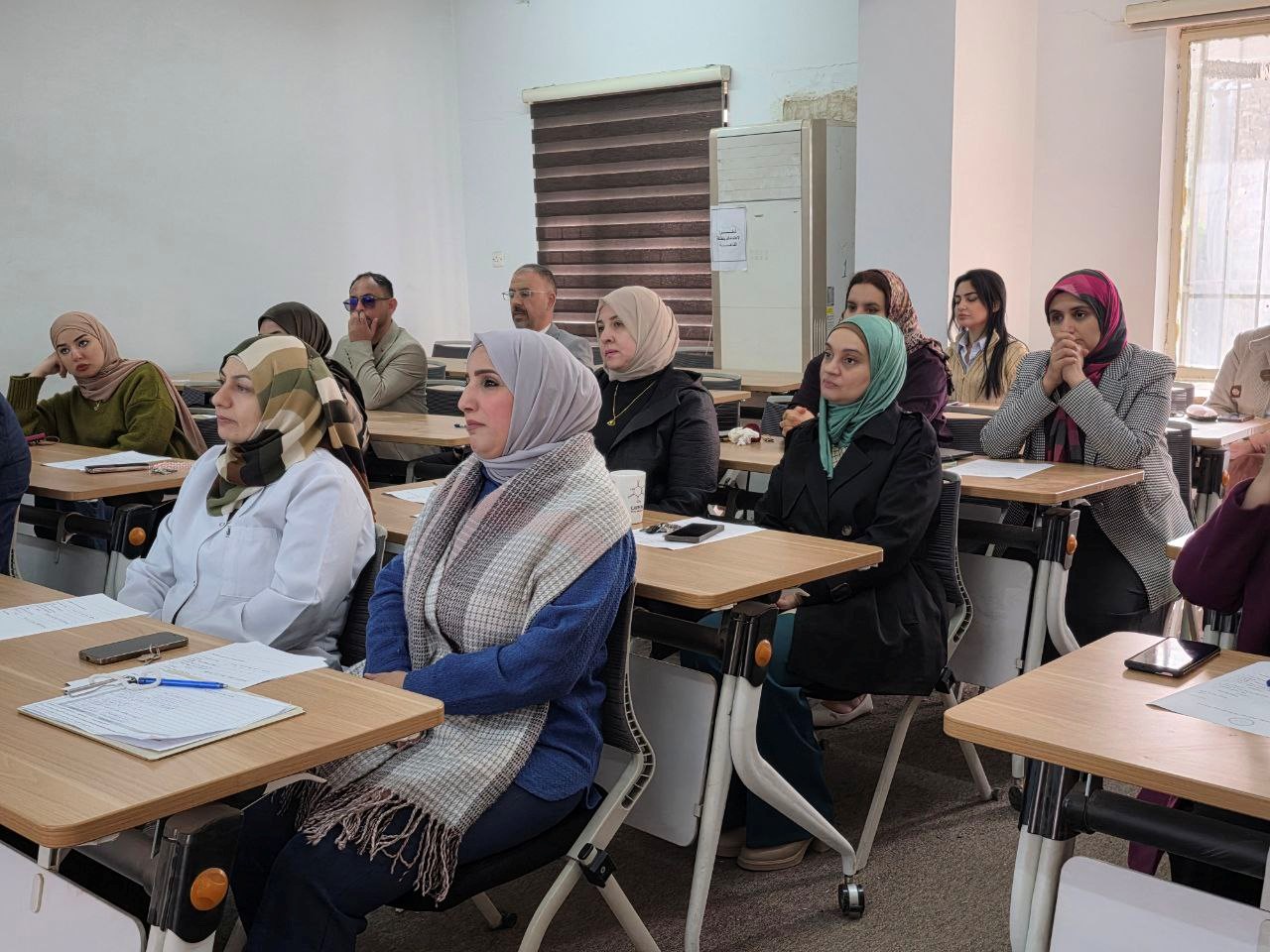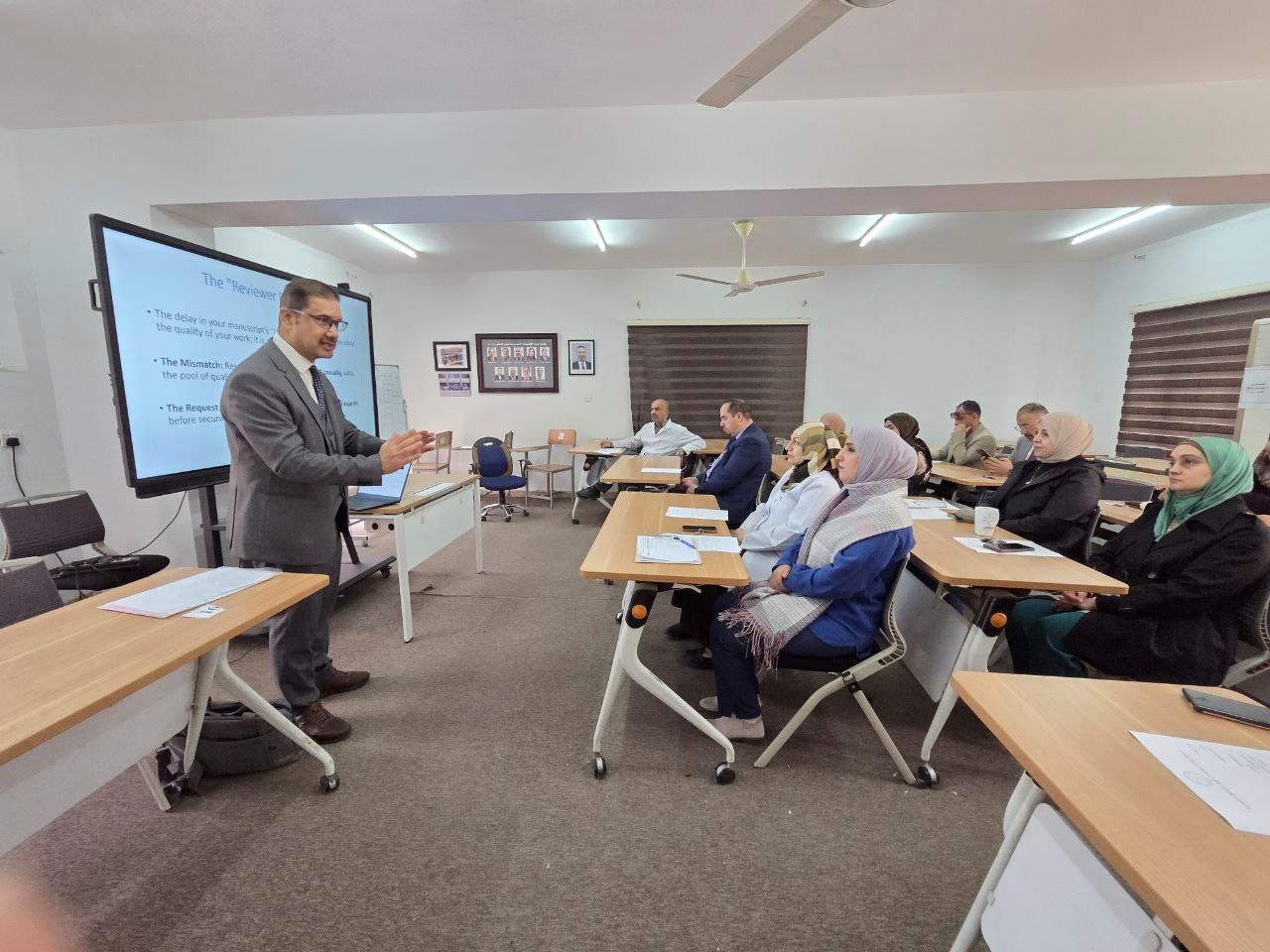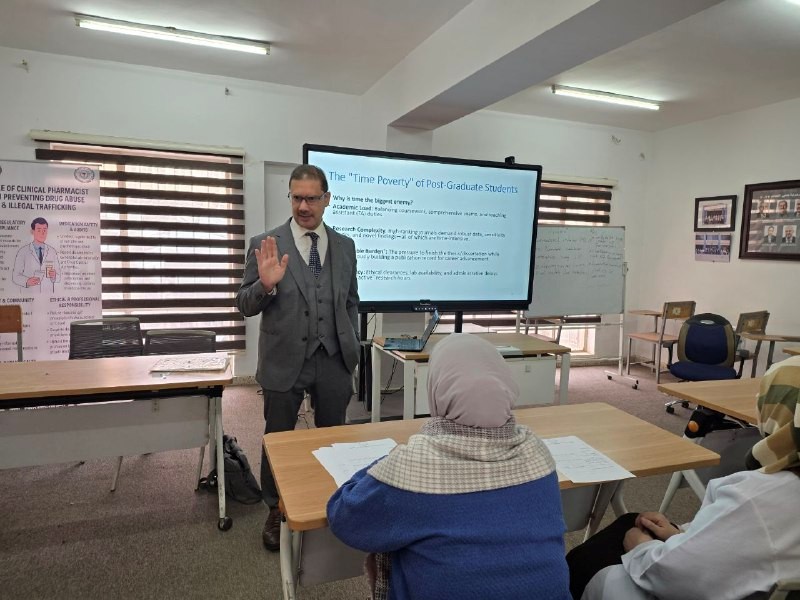
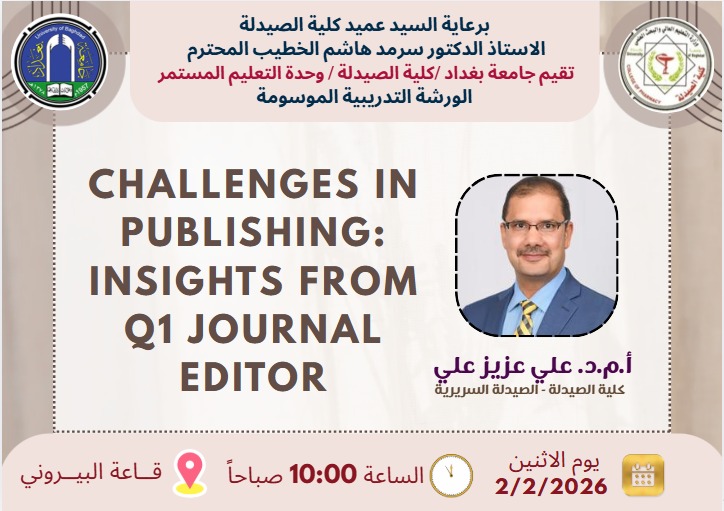
Under the supervision of the Dean of the College of Pharmacy, Prof. Dr. Sarmed H. Kathem Alkhateeb, the Continuing Education Unit at the University of Baghdad/College of Pharmacy held an in-person workshop entitled “Challenges in Scientific Publishing: Insights from a Q1 Journal Editor,” delivered by Assistant Prof. Dr. Ali Azeez Al-Jumaili, a faculty member in the Clinical Pharmacy Department, a member in the College Robustness Committee for Scientific Publication, and assistant editor for BMC Health Services Research (within Springer Nature publisher).
The workshop aimed to shed light on the major challenges faced by researchers in publishing high-quality scientific research, with a particular focus on providing practical strategies for time management and improving manuscript readiness. It also sought to clarify mechanisms for effectively utilizing modern tools and academic collaboration to enhance publication efficiency, as well as distinguish between reputable scientific journals and predatory journals to select the appropriate publishing pathway. In addition, the workshop addressed the importance of strengthening research manuscripts by suggesting suitable peer reviewers, writing effective cover letters, and understanding both institutional and personal solutions that help reduce financial and editorial barriers.
The workshop included several topics, including linguistic and editorial challenges in scientific publishing and the time pressures experienced by postgraduate students and their impact on journal selection decisions. It also discussed reviewer fatigue and the global and local shortage of peer reviewers, alongside practical strategies to overcome time and resource constraints. Furthermore, it highlighted essential tools and techniques for efficient manuscript preparation, as well as the role of academic supervision, research collaboration, and institutional support in improving the quality of scientific outputs. The workshop also explained how to identify legitimate and free journals, understand hybrid publishing models, and apply for publication fee waivers. Practical recommendations were provided to enhance researchers’ chances of acceptance during the peer-review process.
The workshop concluded by emphasizing the importance of targeting high-quality journals ranked within the first quartile (Q1) or second quartile (Q2) in the Scopus database, as this represents a fundamental benchmark for enhancing research value and increasing citation potential. It affirmed that achieving this goal is possible through early manuscript submission, strategic planning, effective use of modern language-editing applications, and institutional support. Moreover, it stressed that collaboration between students, supervisors, and institutions constitutes a key pillar in empowering Iraqi researchers to publish their contributions in reputable journals with clear impact within the global scientific community. Conversely, the workshop warned against the risks of publishing in predatory or non-reputable commercial journals, emphasizing the necessity of verifying journal accreditation through the official Electronic Journal Portal of the Ministry of Higher Education and Scientific Research before submission. Publishing in such journals may result in the loss of scientific effort, subsequent exclusion from international indexing databases, diminished credibility, and lower citation rates for the published research.