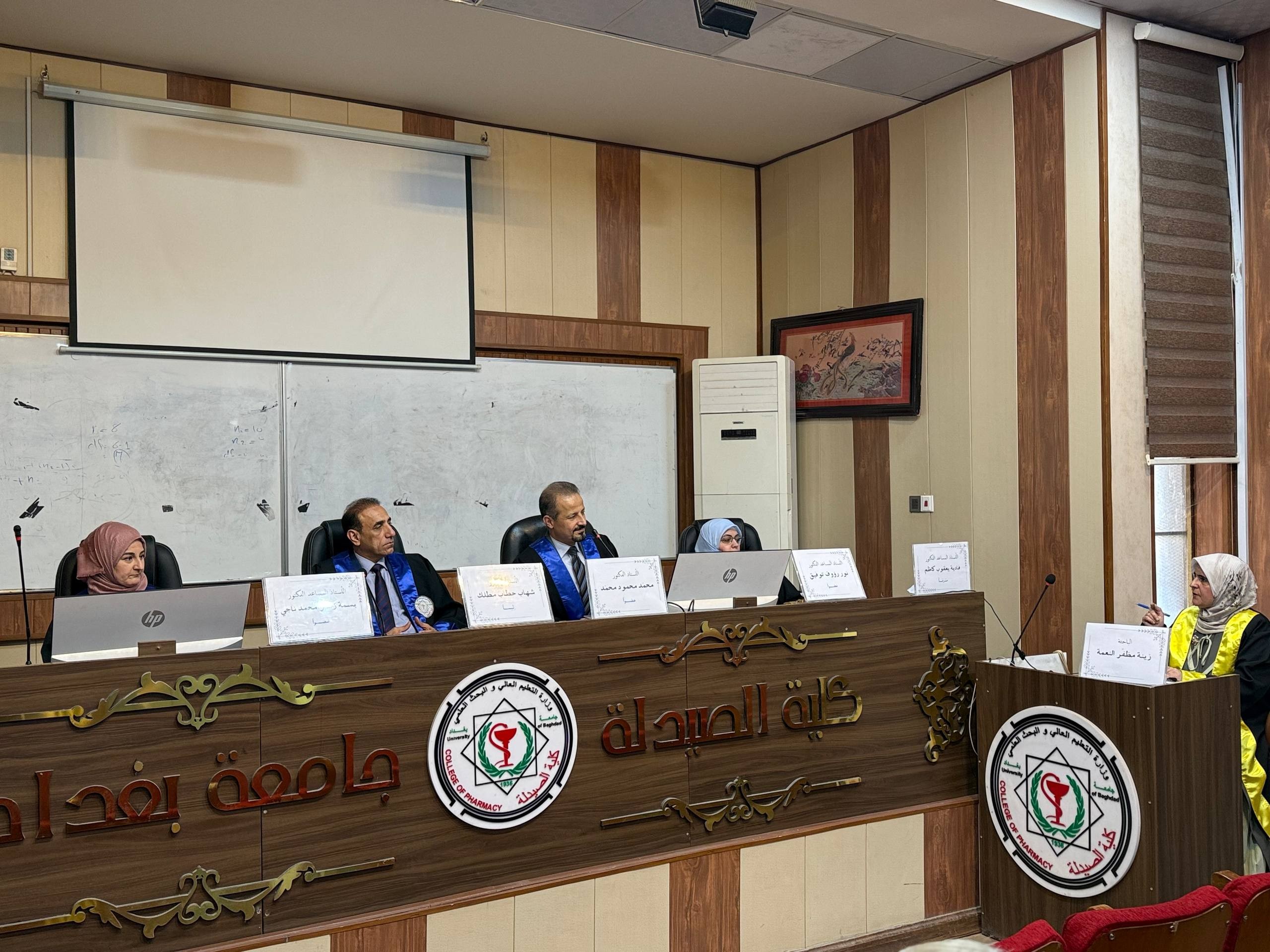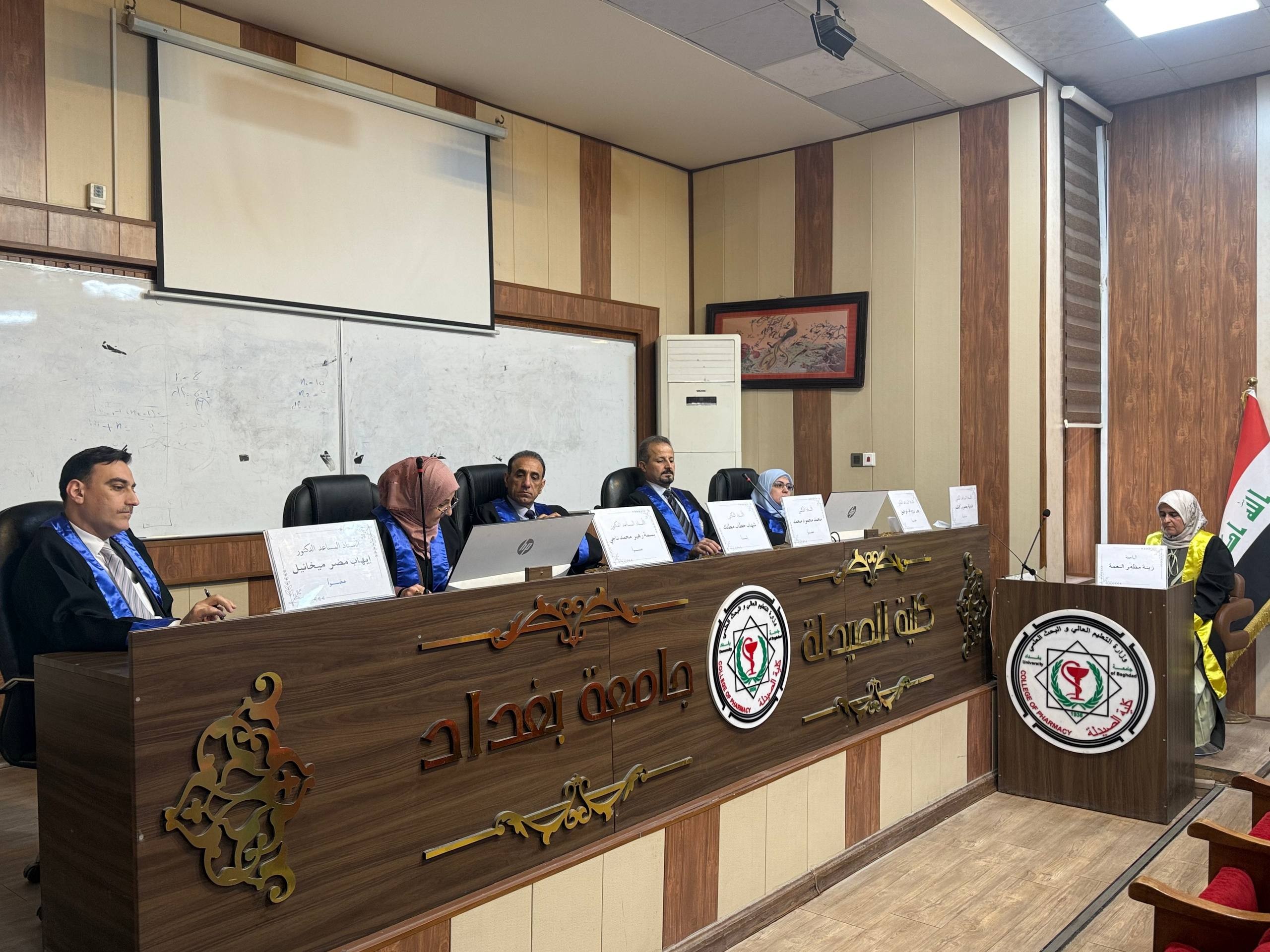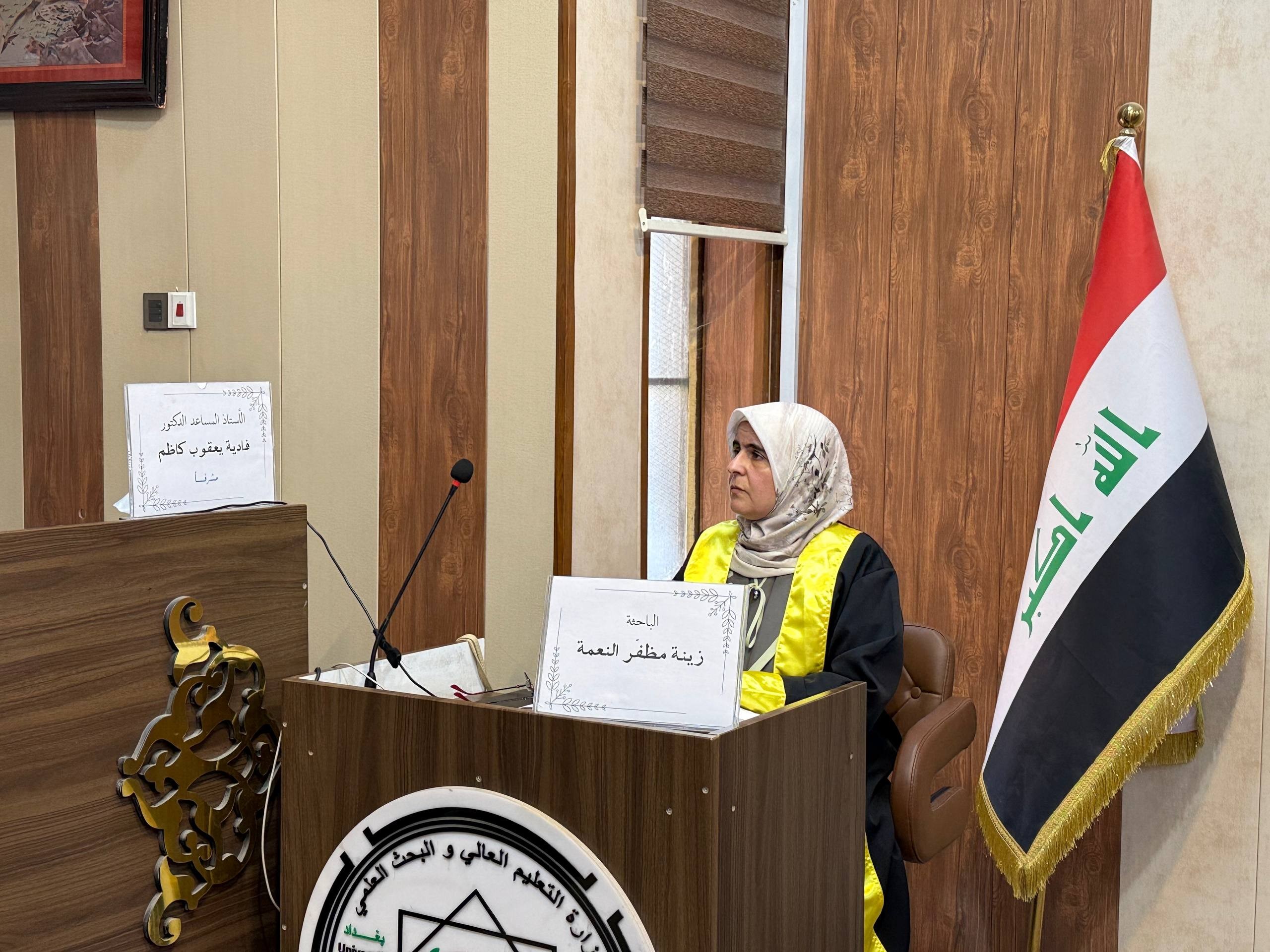
The College of Pharmacy discussed the PhD dissertation entitled “A View from Inside to the Problems of Non-Medical Use of Supplements and Prescription Drugs Among Secondary School Students in Baghdad, Iraq: A Behavioral Interventional Study” by the student Zinah Mudhafar Al-nema, and the supervisor, Assistant Professor Dr. Fadya Yaqoob Al-Hamadani at the Clinical Pharmacy Department.
The study aimed to assess the prevalence of using medications and dietary supplements without medical consultation among secondary school students, as well as the factors and circumstances associated with this behavior. Also, it aimed to evaluate the impact of educational interventions on secondary school students’ knowledge in Baghdad regarding medications and dietary supplements.
The study included a cross-sectional, cluster-based random sampling design in two Directorates of Education in Baghdad from February 2024 to March 2025. A total of 604 male and female secondary school students, aged 14 to 19 years, from 12 secondary schools participated in the study. To evaluate the impact of the educational intervention, a knowledge-based questionnaire was administered before and after the intervention. The intervention, developed by the researcher, included lectures, a publicly available YouTube video, discussions, a booklet, and an evaluation test.
The results showed that a prevalence of medication use without medical supervision among Iraqi secondary school students, particularly analgesics, vitamins, and antibiotics. This behavior was especially common in public schools located in urban areas within the Karkh district of Baghdad. A multi-component educational program contributed to a significant improvement in adolescents’ knowledge regarding the safe use of medications and dietary supplements.
The study recommended limiting adolescents’ access to medications without medical supervision by implementing targeted educational programs in schools. It also emphasized the importance of enhancing collaboration with healthcare providers, particularly pharmacists, to ensure the safe use of medications and dietary supplements.