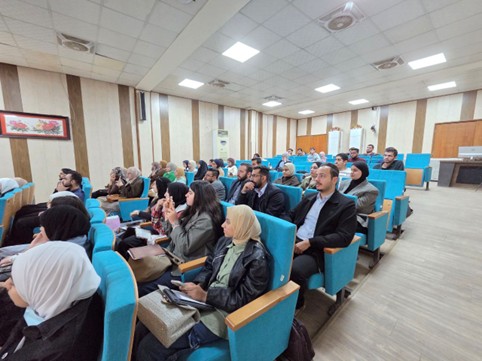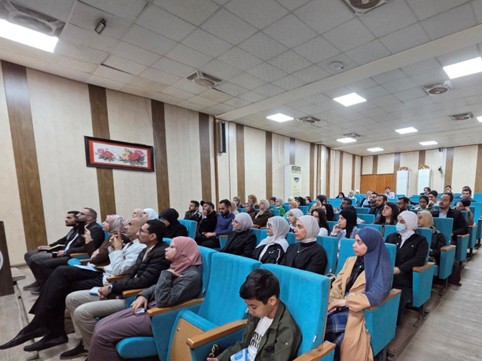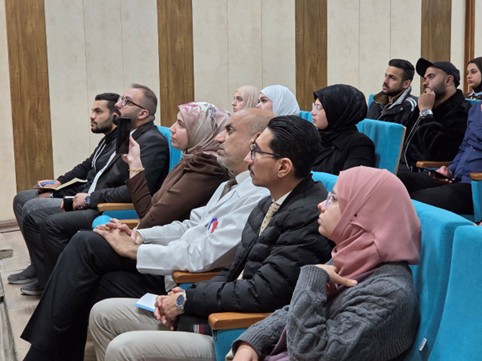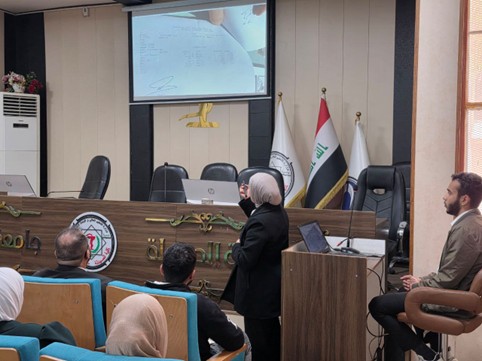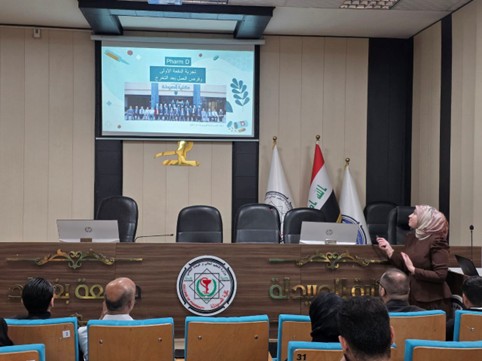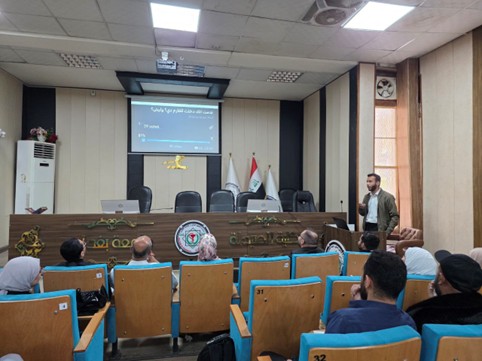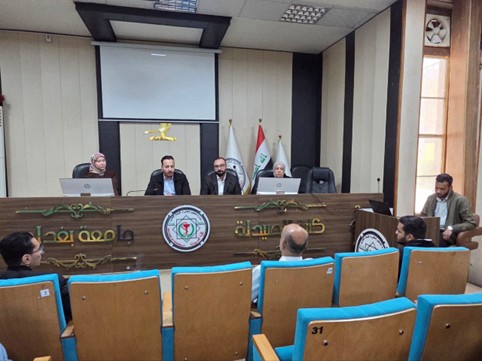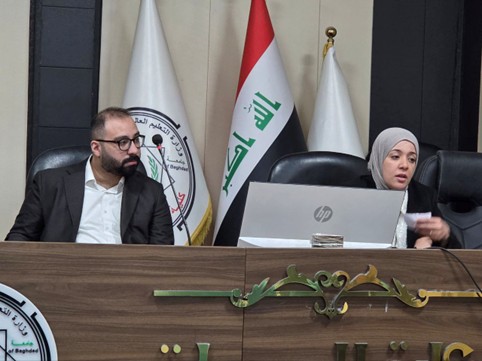
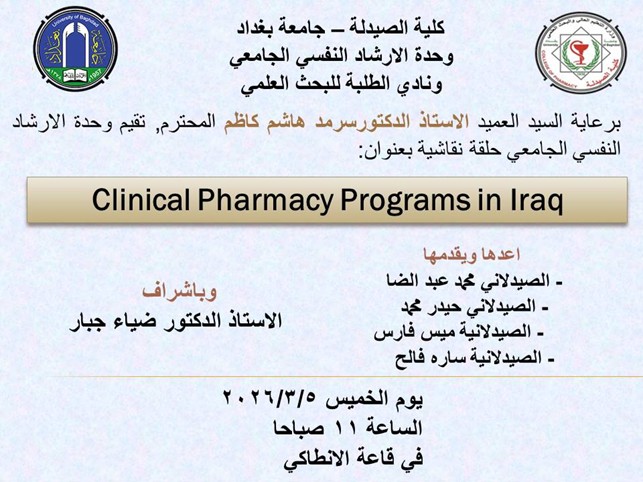
Under the supervision of the Dean of the College of Pharmacy, Professor Dr. Sarmed H. Kathem Alkhateeb, the University Psychological Counseling Unit at the University of Baghdad/College of Pharmacy organized an in-person scientific discussion session entitled “Clinical Pharmacy Programs in Iraq.” The discussion was prepared by a group of students from the student research club (Pharmacine Club) under the supervision of Professor Dr. Diaa Jabbar Kadhim, a faculty member in the Department of Clinical Pharmacy. The session hosted several speakers who are graduates of the University of Baghdad/College of Pharmacy, including pharmacist Mohammed Abdulridha, pharmacist Haider Mohammed, pharmacist Mais Fares, and pharmacist Sarah Faleh.
The discussion session aimed to introduce the college students to the training and specialization programs available after graduation in the field of clinical pharmacy, while highlighting the nature of these programs, their requirements, and the career opportunities associated with them. This helps guide students and supports them in choosing the most suitable academic and professional path after graduation.
The session included several topics, including an overview of the evolution of the pharmacy profession and the emergence of clinical pharmacy. It also introduced specialized training programs such as the Iraqi Board in Clinical Pharmacy, explaining its training mechanism and the history of its establishment in Iraq, in addition to introducing the PGY1 and PGY2 programs, their admission requirements, and the training opportunities they provide. The session also discussed the roles and responsibilities of clinical pharmacists within the healthcare team, as well as details of the academic and training curricula adopted in these programs. Examples of clinical cases were presented in which trainees from clinical programs (Board, PGY1, and PGY2) played an active role in patient follow-up and contributed to treatment decisions. Furthermore, the session highlighted the role of pharmacists in chemotherapy compounding units, their participation in cancer medication documentation programs, and their contributions to pharmaceutical regulatory activities. The discussion also included an introduction to the PharmD program, outlining its key advantages and the career opportunities available to its graduates. In addition, the updates introduced to the PharmD curriculum at the University of Baghdad/College of Pharmacy following the graduation of the third cohort were presented.
The session concluded by emphasizing the importance of students being aware of postgraduate training and specialization programs for developing pharmacists’ professional skills and strengthening their role within the healthcare team, followed by an open discussion that witnessed active engagement from students interested in learning more about these academic and professional pathways.