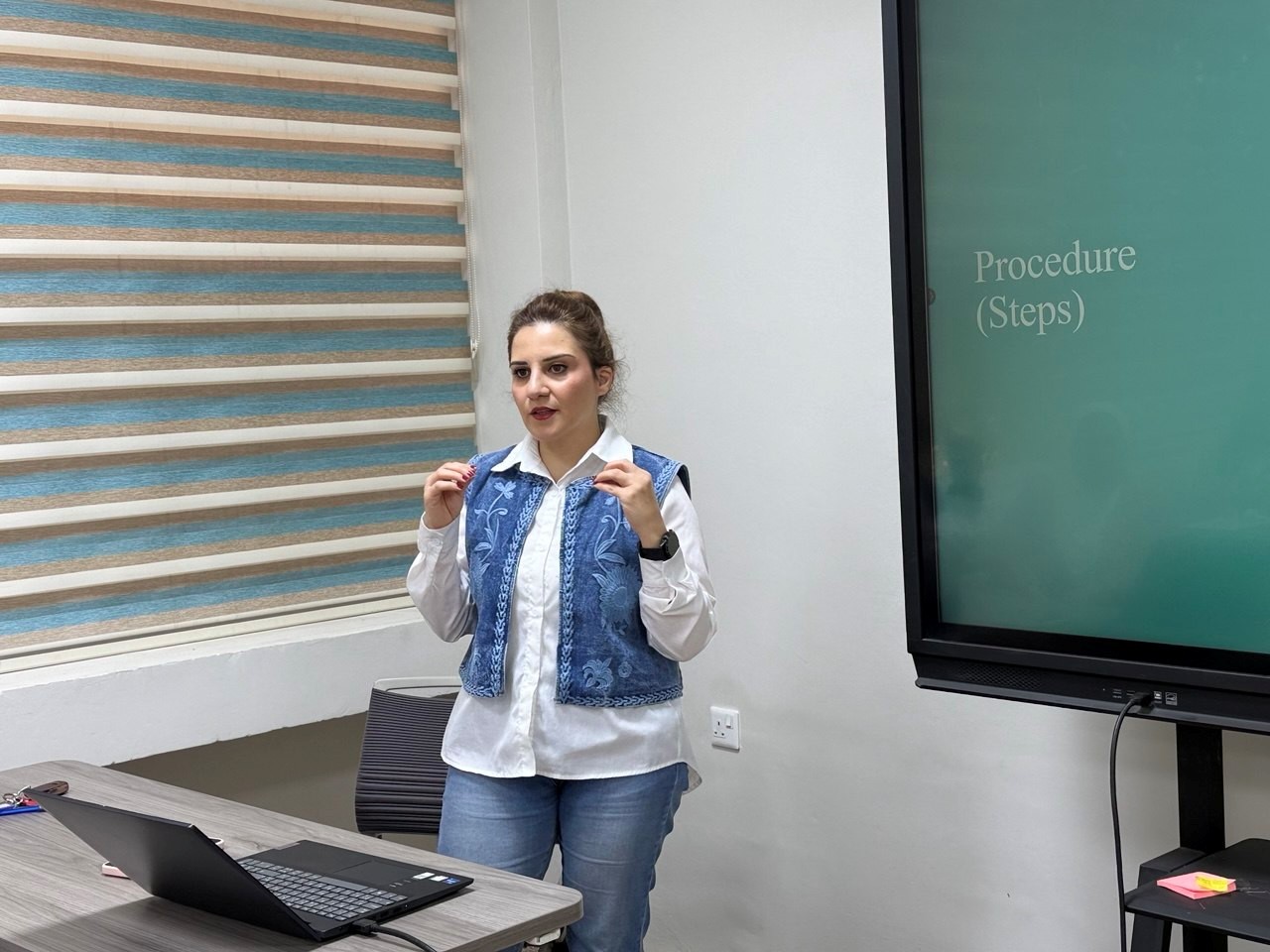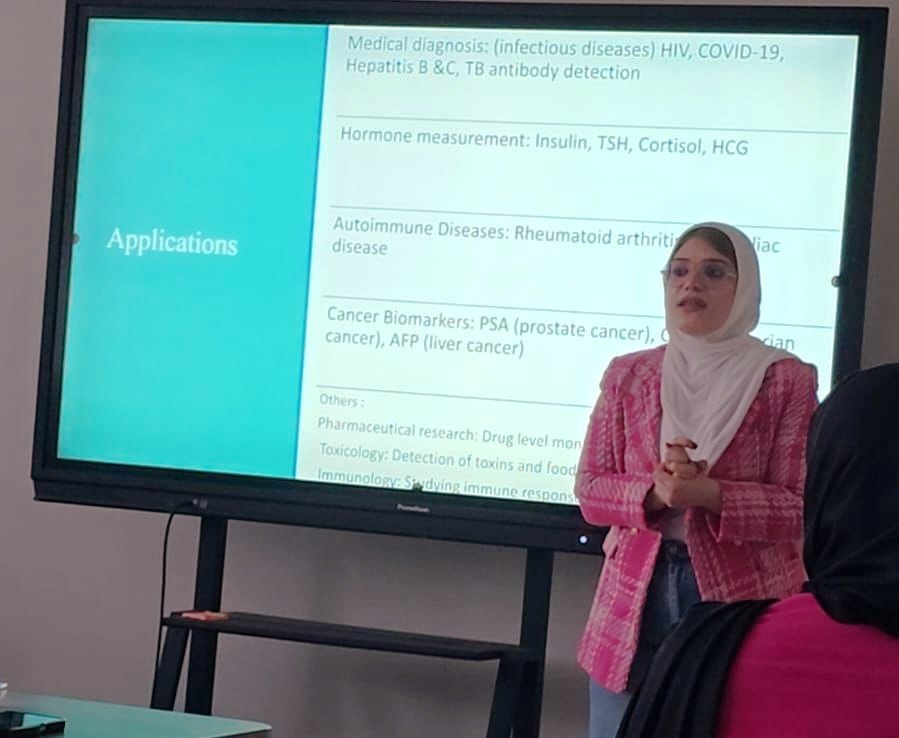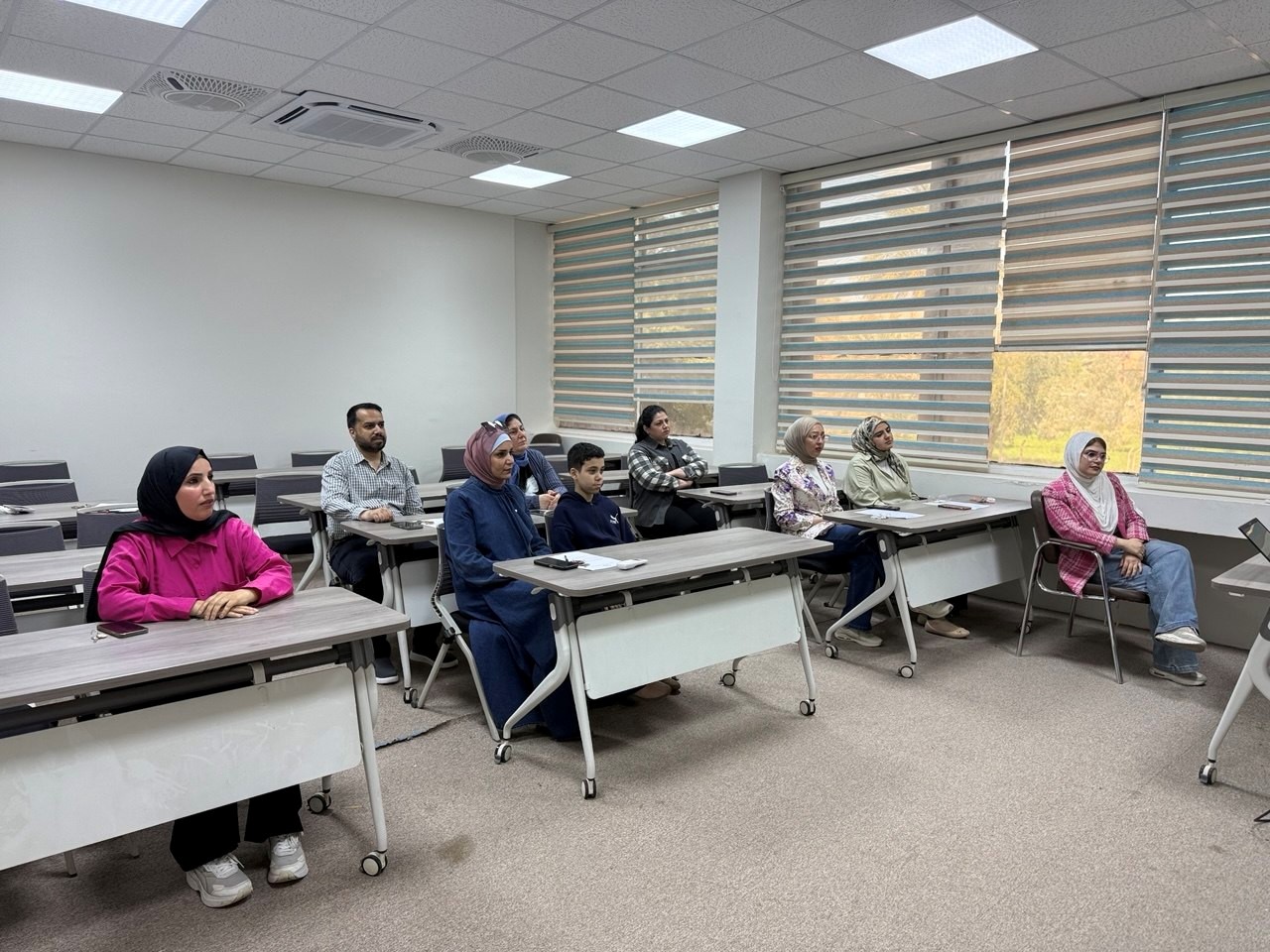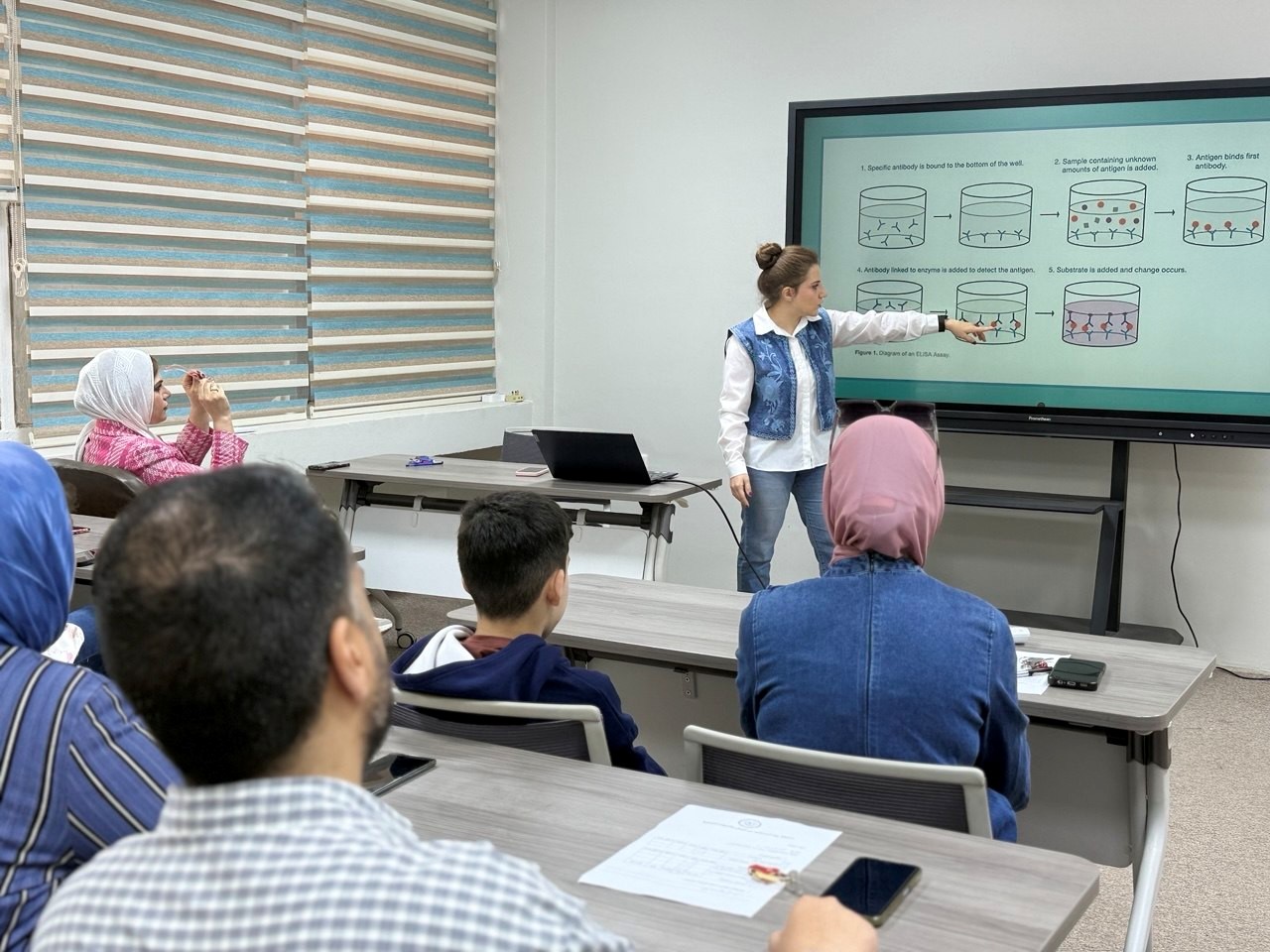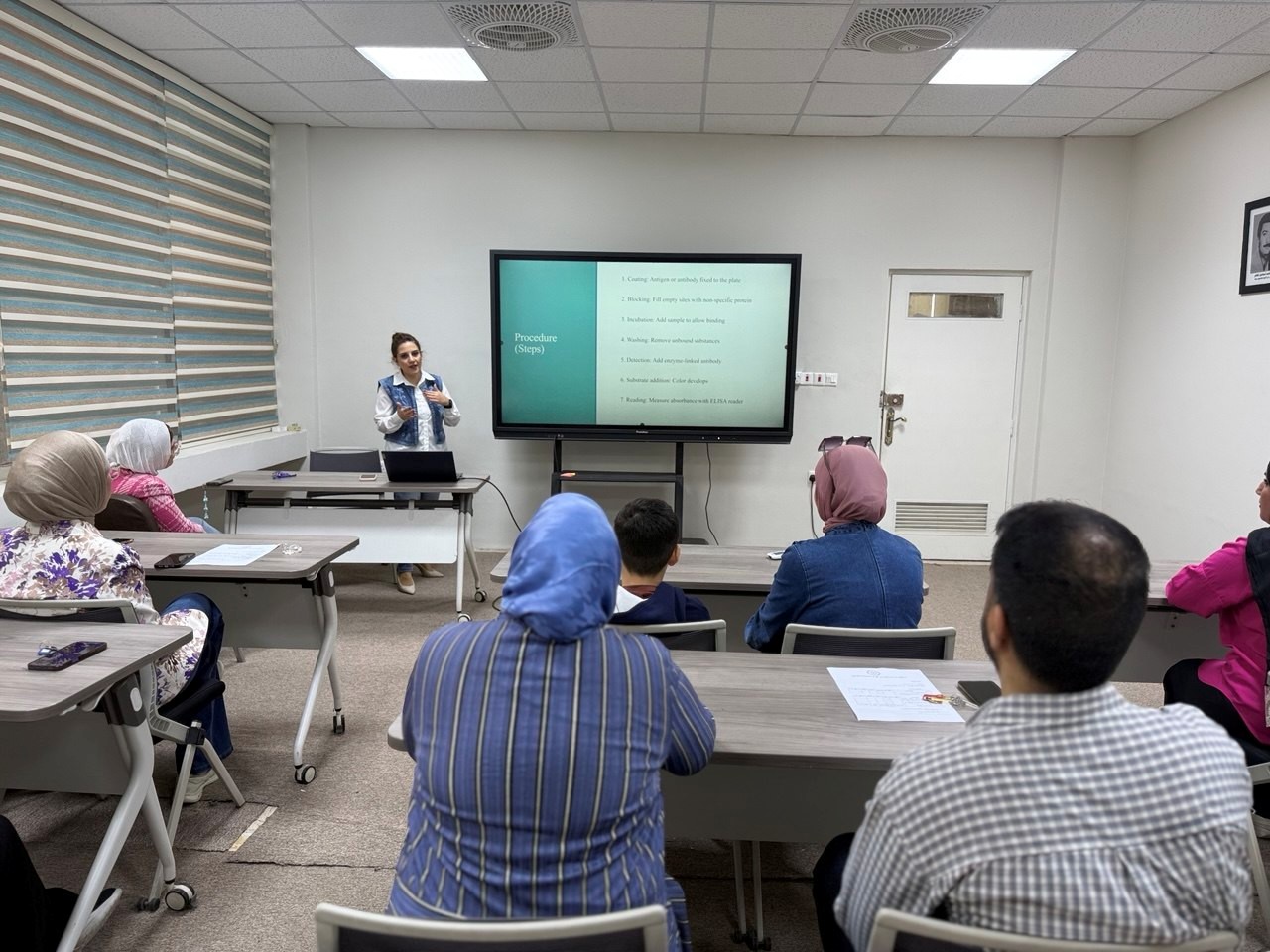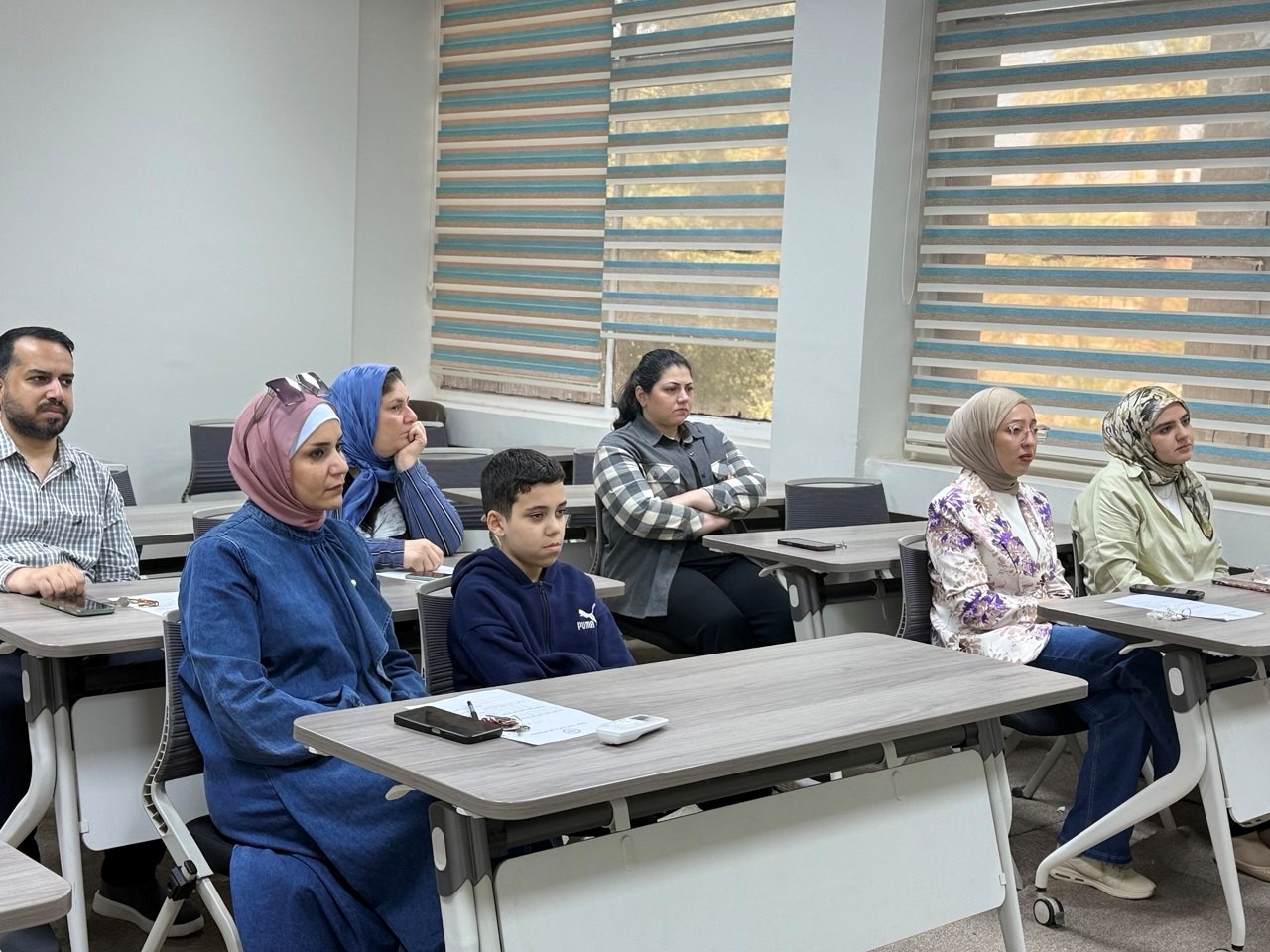
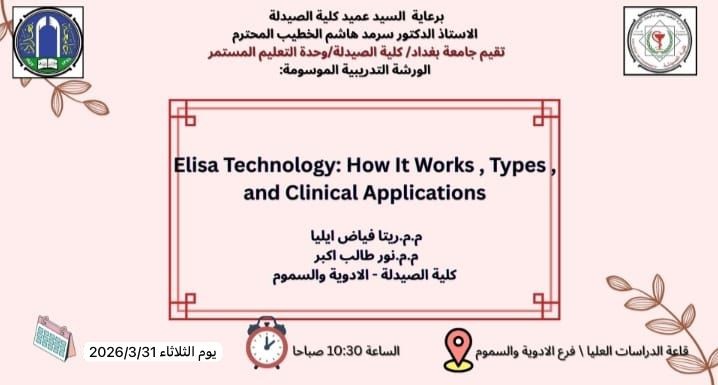
Under the supervision of the Dean of the College of Pharmacy, Professor Dr. Sarmed H. Kathem Alkhateeb, the Continuing Education Unit at the University of Baghdad/College of Pharmacy held an in-person workshop entitled “ELISA Technology: How It Works, Types, and Clinical Applications,” delivered by Assistant Lecturer Rita Fayyadh Elia and Assistant Lecturer Noor Taleb Akber, both faculty members at the Pharmacology & Toxicology Department.
The workshop aimed to introduce ELISA technology and explain its principle of operation, while highlighting its different types and major clinical and laboratory applications, given its important role in disease diagnosis and the accurate and efficient detection of biological compounds.
The workshop included several topics, including a scientific overview of the concept of ELISA (Enzyme-Linked Immunosorbent Assay) and its main components, such as antibodies, antigens, enzymes, substrates, and buffer solutions, in addition to an explanation of the assay procedure, starting from coating, blocking, incubation, and washing through to detection and result reading. It also addressed the different types of ELISA and its most prominent clinical and laboratory uses, as well as the main advantages and limitations associated with this technique.
The workshop concluded the significant importance of ELISA technology in diagnostic and research fields, as it is considered one of the accurate and effective techniques widely used in medical laboratories and scientific research, while also highlighting its vital role in supporting modern clinical applications.