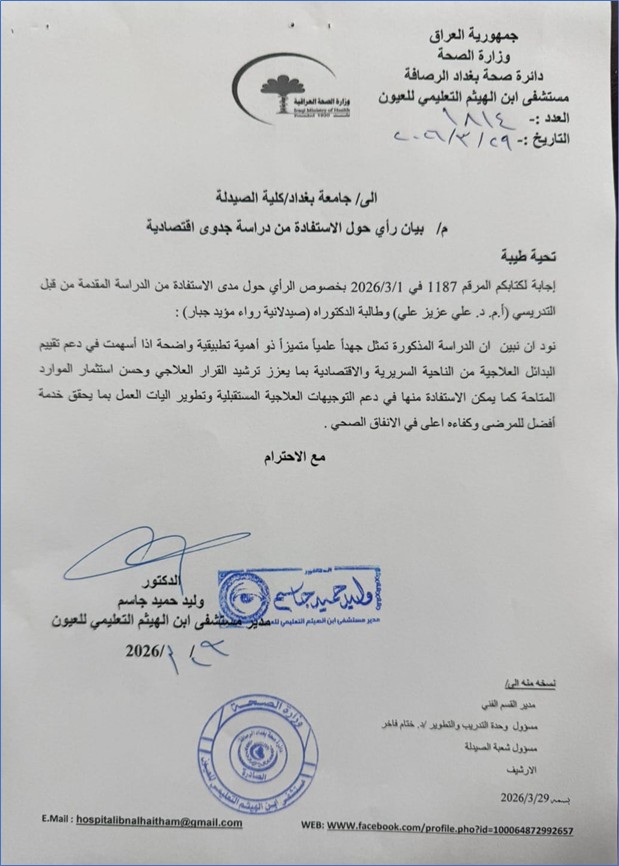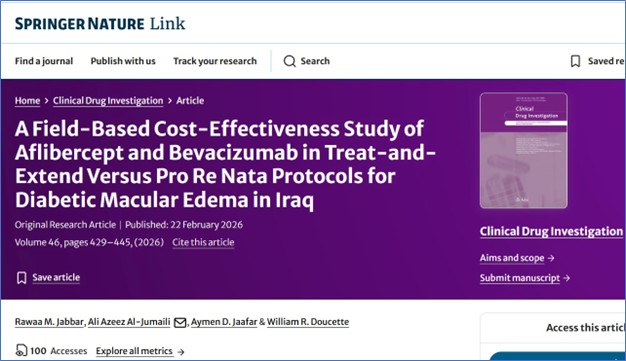
In a remarkable scientific achievement, the University of Baghdad/ College of Pharmacy has achieved a direct clinical impact through one of its applied research projects, reflecting the transformation of academic research from theory into real-world patient care. The Ibn Al-Haytham Teaching Eye Hospital has adopted the findings of a pioneering study entitled “Economic Feasibility Study on Anti-VEGF Therapy for Retinopathy”, which examined the economic feasibility of using anti-VEGF therapies in the treatment of retinal diseases.
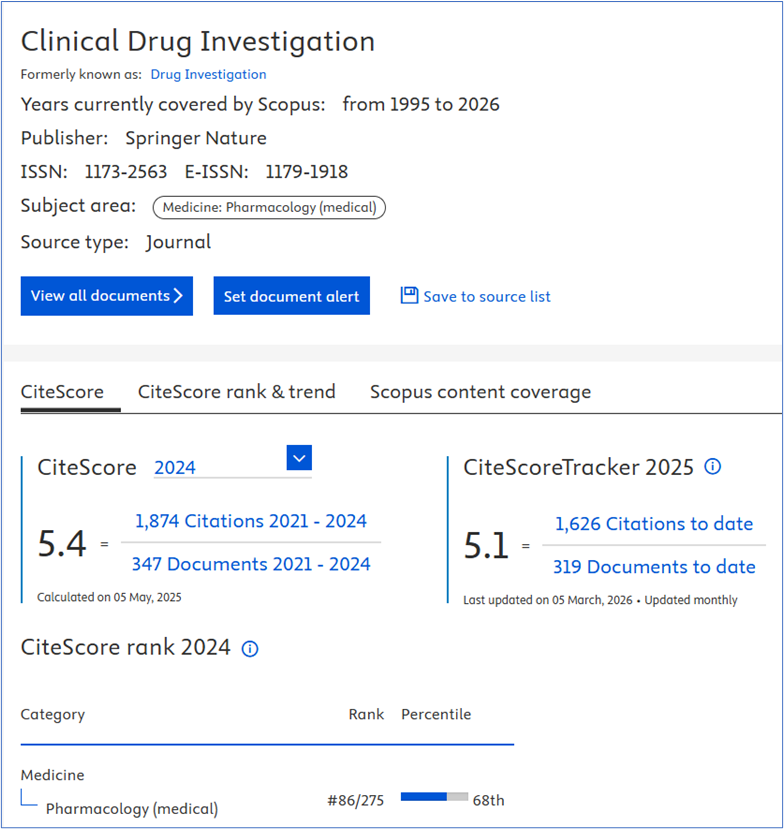
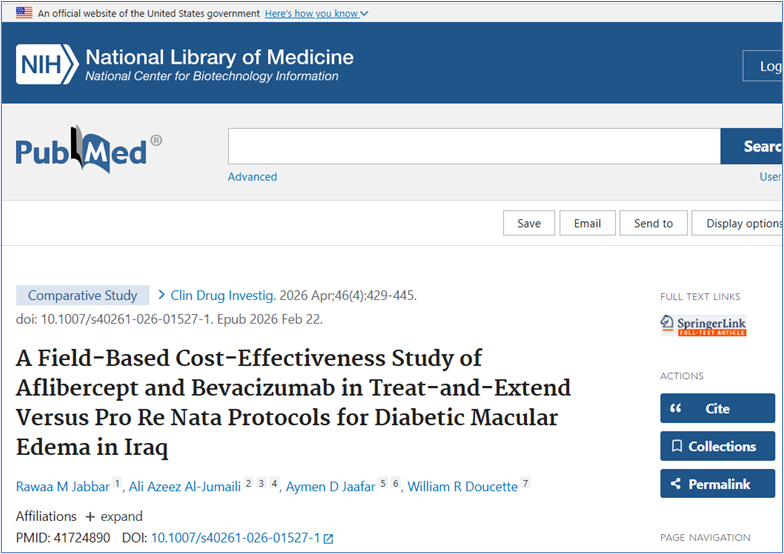
This success is attributed to the scientific vision of the faculty members of the University of Baghdad/College of Pharmacy, including Assistant Professor Dr. Ali Azeez from the Department of Clinical Pharmacy, who directly supervised this distinguished research effort, with the participation of PhD candidate pharmacist Rwaa Moaid Jabbar and ophthalmology specialist Dr. Aymen D. Jaafar. The study provided a clear scientific framework that supports physicians and healthcare decision-makers in adopting more efficient and effective treatment strategies, ensuring improved quality of care for patients with retinal diseases, while also promoting the rational use of therapies through accurate economic and scientific data, enhancing resource allocation efficiency within healthcare institutions, improving patient outcomes through evidence-based practices, and highlighting the vital role of research in serving society and translating knowledge into practical application. The study has received international recognition, as it was published in a reputable British scientific journal ranked in the second quartile (Q2) and indexed in Scopus under the global publisher Springer Nature.
This achievement represents a vivid example of the role of the College of Pharmacy/University of Baghdad in linking academic research with real-world healthcare practice and contributing effectively to the advancement of the medical sector in Iraq.