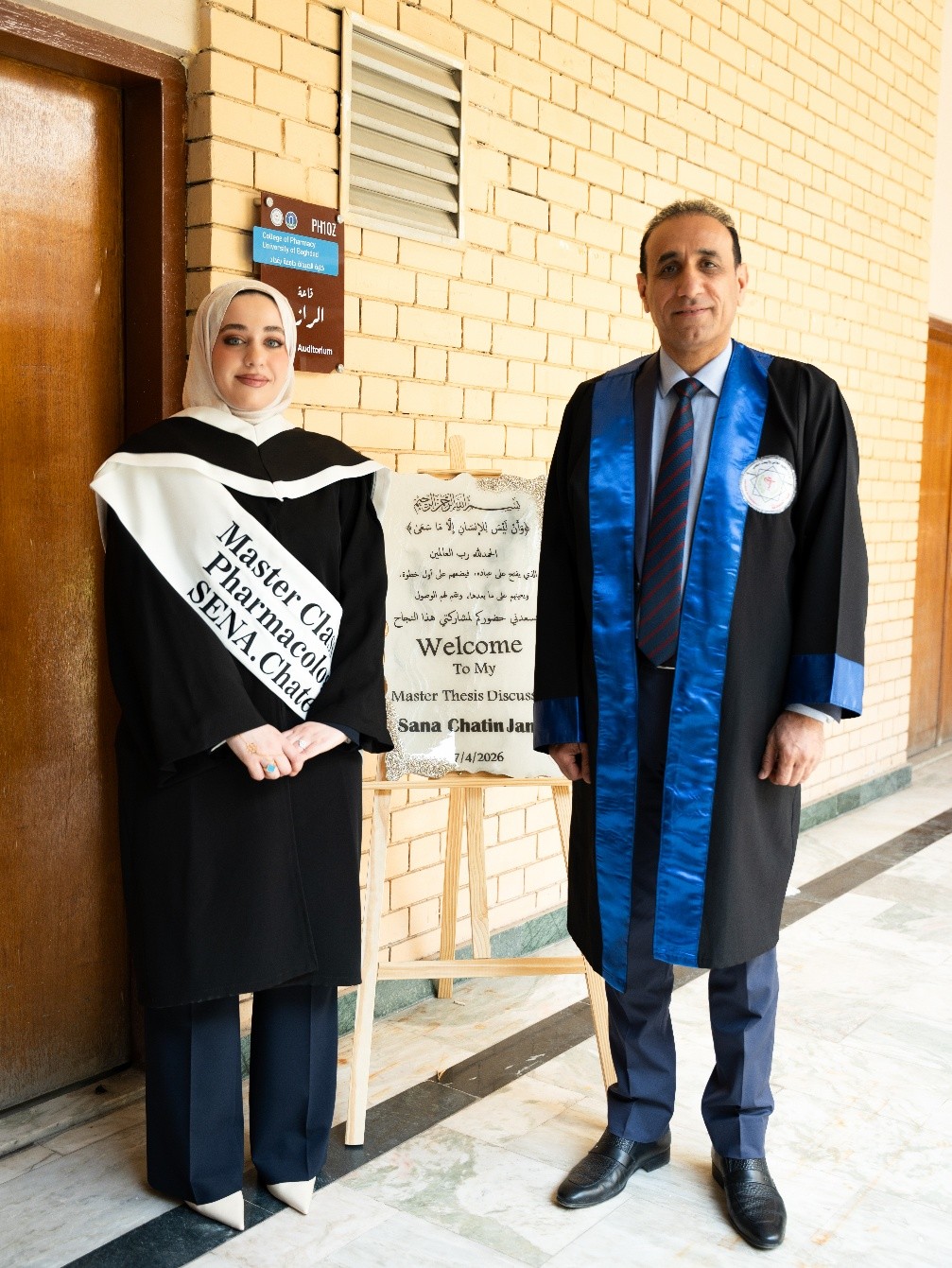
The College of Pharmacy discussed the MSc thesis entitled “ Evaluation the Effect of Iraqi Hibiscus tiliaceus in Cerulein Induced Acute Pancreatitis in Rat Model” by the student Sana Chatin Jamal and the supervisor, Professor Dr. Shihab Hattab Mutlaq, at the Pharmacology and Toxicology Department.
The study aimed to investigate the potential therapeutic efficacy of Hibiscus tiliaceus leaf extract in treating cerulein-induced acute pancreatitis in rats.
The study included forty female rats divided into five groups of eight and treated as follows: group I rats received 1 mL/kg/day of distilled water for 7 days, group II rats received intraperitoneal (IP) injection of 50 μg/kg cerulein 2 times at 1-hour interval, and sacrificed 24 hours after the last injection, group III rats received IP injection of 50 μg/kg cerulein 2 times at 1-hour interval, after which they were treated orally with 125 mg/kg of Hibiscus tiliaceus leaf extract 24 hours after the last cerulein dose once daily for 7 days, group IV rats received IP injection of 50 μg/kg cerulein 2 times at 1-hour interval, after which they were treated orally with 250 mg/kg of Hibiscus tiliaceus leaf extract 24 hours after the last cerulein dose once daily for 7 days, group V received IP injection of 50 μg/kg cerulein 2 times at 1-hour interval, after which they were treated orally with 500 mg/kg of Hibiscus tiliaceus leaf extract 24 hours after the last cerulein dose once daily for 7 days. Subsequently, the rats were sacrificed, and blood and pancreatic tissue samples were collected for histopathological, biochemical, and gene expression analyses.
The results showed improvements in pancreatic tissues in rats treated with Hibiscus tiliaceus leaf extract, along with reductions in pancreatic enzyme levels (amylase and lipase) in serum compared with the second group. Additionally, treatment with Hibiscus tiliaceus leaf extract reduced cerulein-induced oxidative stress by increasing GSH and decreasing MDA levels. Furthermore, treatment with Hibiscus tiliaceus leaf extract alleviated inflammation and apoptosis caused by cerulein by reducing levels of IL-6 and TNF-α. Moreover, treatment with Hibiscus tiliaceus leaf extract ameliorated cerulein-induced apoptosis by reducing caspase-3 levels in pancreatic tissues.
The study recommended further research using rats of both sexes. Also, it recommended investigating the potential synergistic effects of combining the extract with conventional medications to clarify the plant’s therapeutic potential in acute pancreatitis and other inflammatory diseases.