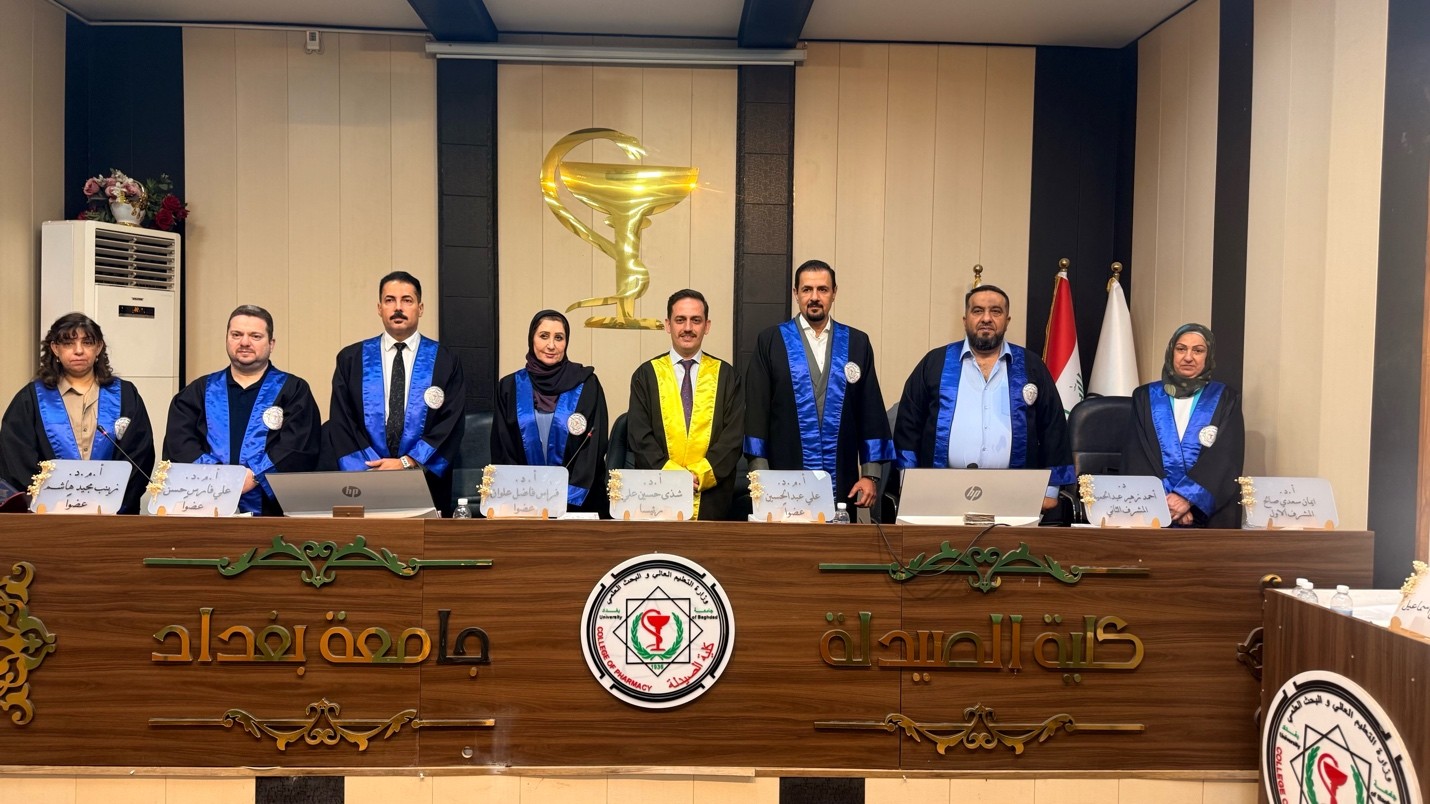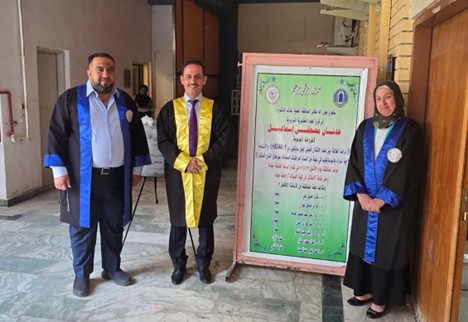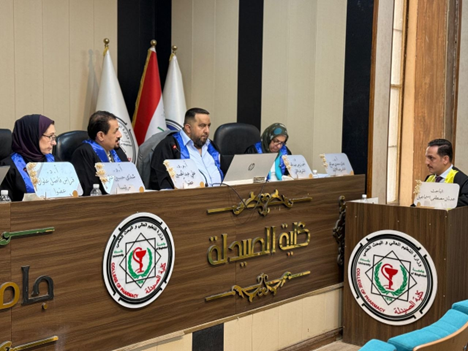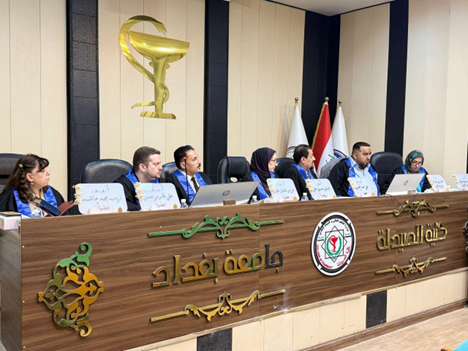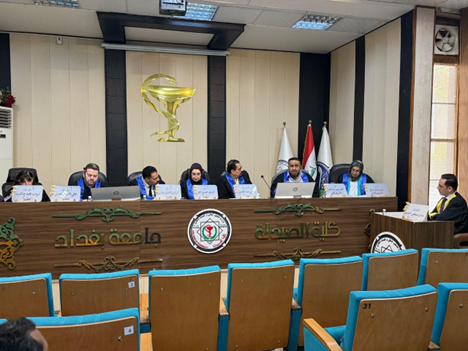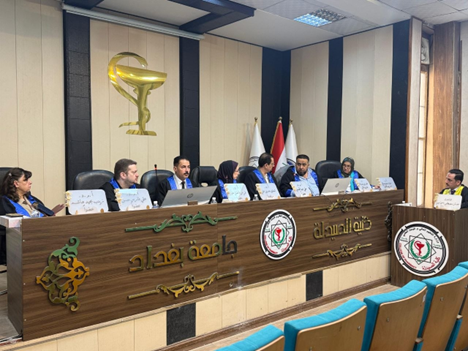

The College of Pharmacy discussed the PhD dissertation entitled “Study of The Association between Cyclin D1 Gene (rs9344) Polymorphism and Response to Palbociclib in A Sample of Iraqi Female Patients with Metastatic Breast Cancer” by the student Adnan Mustafa Ismail and the supervisor, Professor Dr. Eman Saadi Saleh and Dr. Ahmed Zuhair Abdulhameed, at the clinical laboratory sciences Department.
The study aimed to investigate the prognostic value of CCND1 gene polymorphism (G870A/rs9344), serum biological markers (Cyclin D1, CDK4, CDK6), and hematological toxicity patterns in Iraqi patients receiving palbociclib plus letrozole therapy.
The study included as an observational hospital-based study conducted at the Teaching Oncology Hospital in Medical City, Baghdad, Iraq. The study population included 85 patients with confirmed metastatic HR+/HER2-negative breast cancer who received palbociclib (125 mg/day, 3 weeks on/1 week off) in combination with letrozole (2.5 mg/day). Blood samples were collected for the assessment of genotyping, CCND1 G870A polymorphism using DNA extraction and polymerase chain reaction (PCR)-based sequencing, serum biomarker analysis, and quantitative measurement of Cyclin D1, CDK4, and CDK6 levels using enzyme-linked immunosorbent assay (ELISA), as well as hematological parameters.
The results showed that the distribution of CCND1 G870A genotypes within the study group was 34% A/A, 30% G/A, and 37% G/G. The G/G genotype, which represents the wild-type, was significantly associated with improved progression-free survival (PFS) compared to the A/A genotype. Patients carrying the A/A genotype exhibited a 5.8-fold increase in the risk of disease progression (HR = 5.8, p = 0.0067), with a clearly shorter PFS duration. A significant association was observed between genotype and hematological toxicity, where grade 3–4 neutropenia occurred more frequently in G/G carriers (55.5%) compared to A/A carriers (29.6%). Grade 4 neutropenia was observed exclusively in the G/G group. Patients who developed neutropenia were more likely to achieve a clinical response to treatment, whereas those who maintained relatively higher neutrophil counts were more likely to be non-responders and were predominantly of the A/A genotype. On the other hand, baseline serum levels of Cyclin D1, CDK4, and CDK6 did not differ significantly between different genotypes or between responders and non-responders, suggesting that CCND1 polymorphism status may be a more informative predictor of treatment outcomes than circulating levels of these proteins.
The study recommended conducting future long-term follow-up studies to more accurately and comprehensively evaluate treatment response, using larger sample sizes involving multiple oncology centers in Iraq to enhance statistical power, external validity, and generalizability of the findings, and further stratifying patients into more detailed therapeutic subgroups in future studies, such as comparing patients treated with palbociclib plus letrozole versus those treated with palbociclib plus fulvestrant, in order to assess potential differences in therapeutic response and clinical outcomes between these regimens.