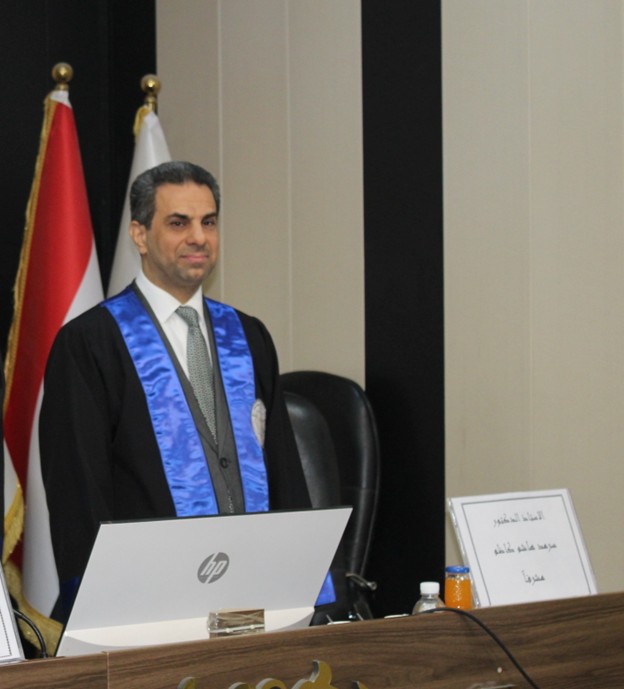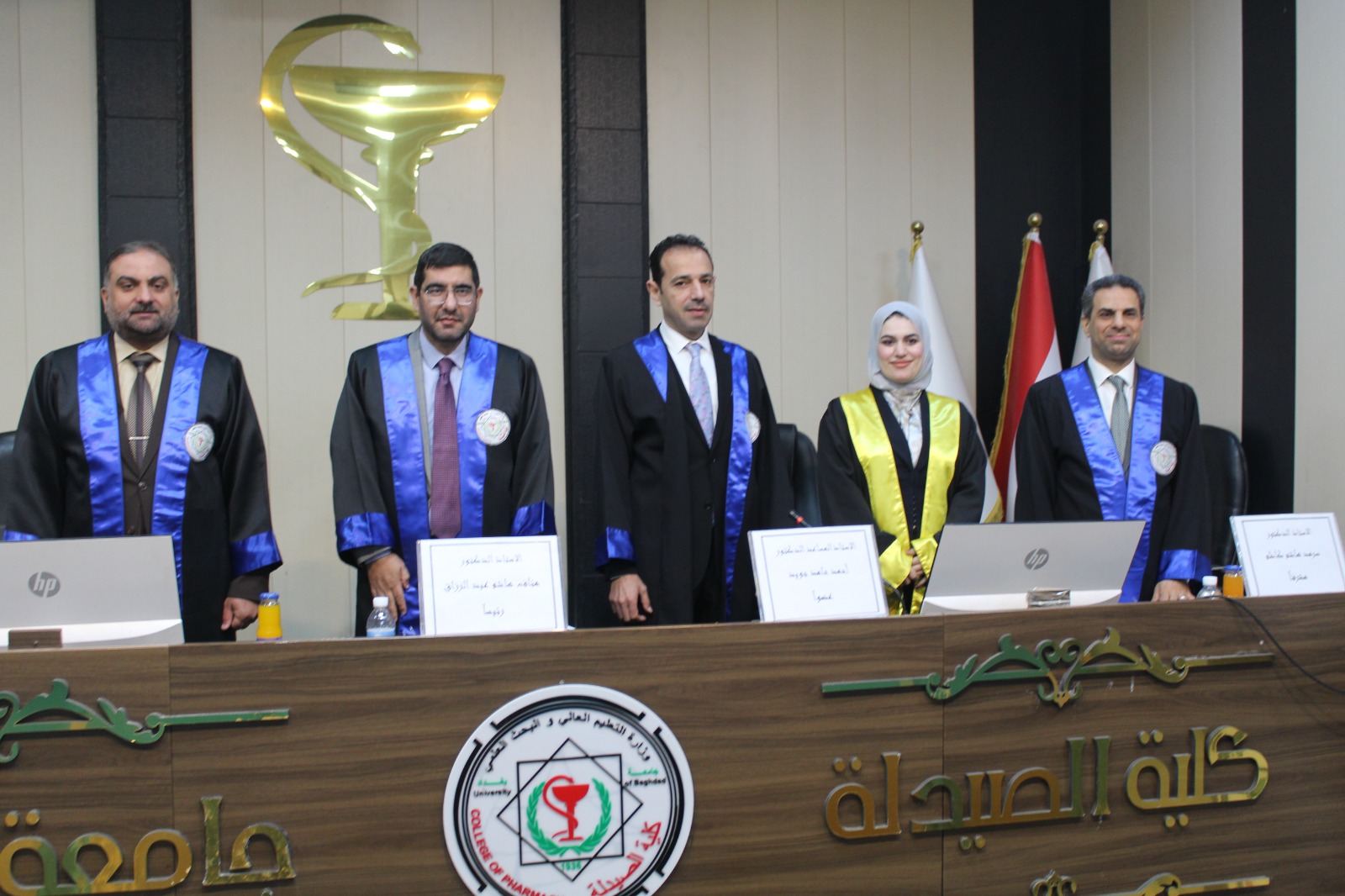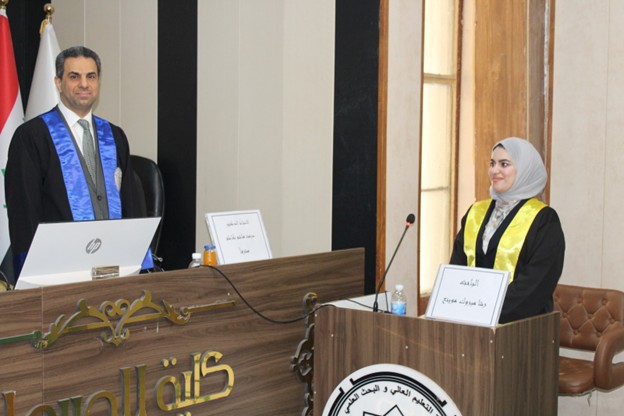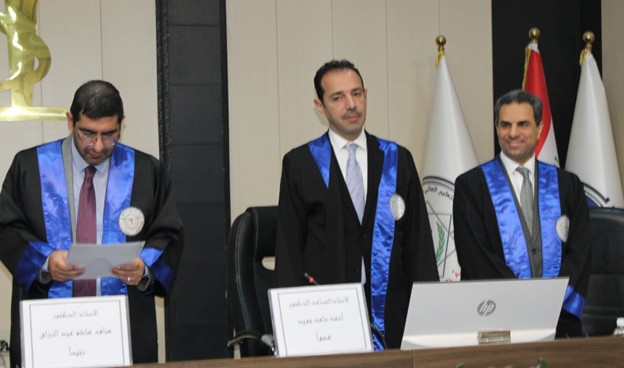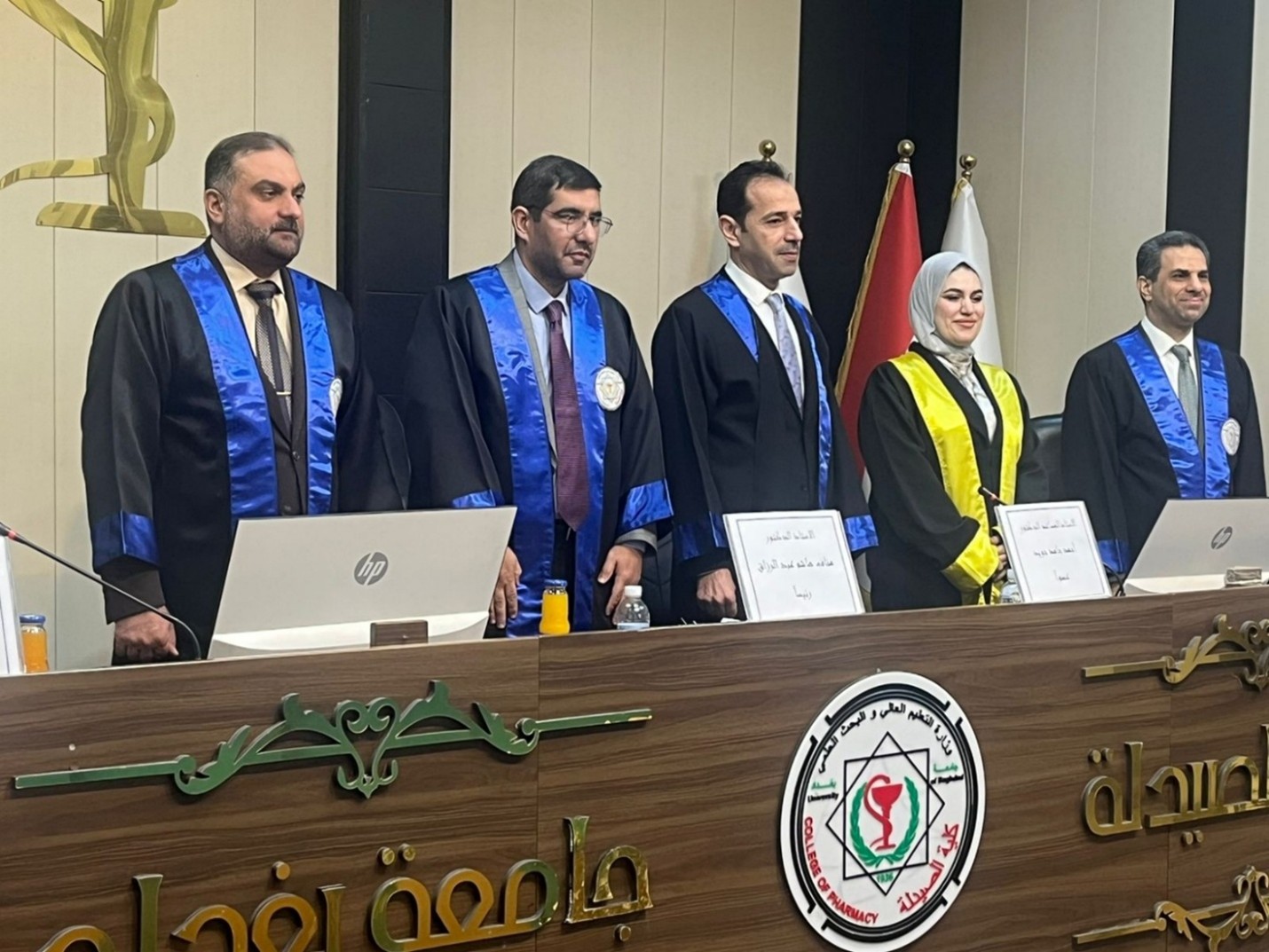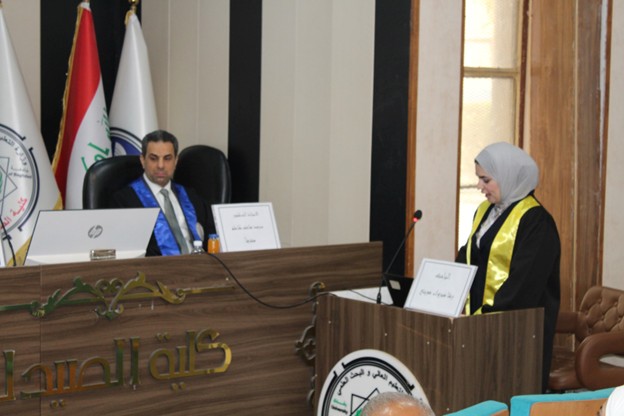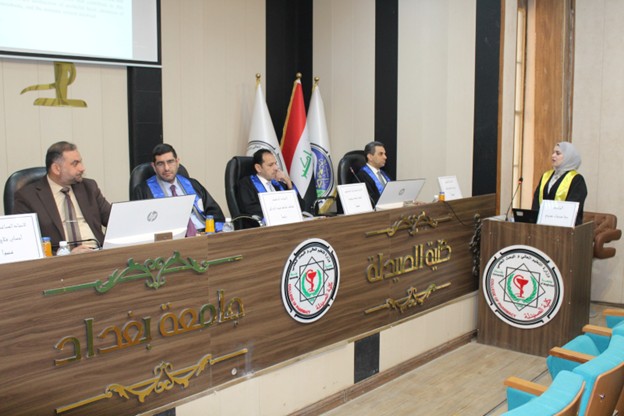
The College of Pharmacy discussed the MSc thesis entitled “Evaluation of the Effects of Two Doses of Carvone on Dextran Sulphate Sodium-Induced Acute Colitis in Male Mice” by the student Rasha Mabrouk Moineia and the supervisor, Professor Dr Sarmed Hashim Kathem, at the Pharmacology and Toxicology Department.
The study aimed to evaluate the anti-inflammatory properties of carvone and its ability to maintain epithelial barrier integrity in acute colitis induced by dextran sulphate sodium (DSS), and to compare it with sulfasalazine.
The study included 30 male mice, divided into five groups of six each, and treated as follows: Group I mice received 1 mL/kg of corn oil orally for 9 consecutive days; Group II mice received 3% DSS orally for 9 consecutive days; Group III mice received 50 mg/kg of carvone and 3% DSS orally for 9 consecutive days; Group IV mice received 100 mg/kg of carvone and 3% DSS orally for 9 consecutive days; and Group V mice received 100 mg/kg of sulfasalazine and 3% DSS orally for 9 consecutive days. Subsequently, the mice were sacrificed, and blood and colon tissue samples were collected for biochemical, gene expression, and histological analysis.
The results showed that carvone treatment led to an improvement in colon tissue in mice with DSS-induced acute colitis, as well as an increase in the levels of ZO-1 and occludin proteins in the colon tissue compared to group II. Furthermore, carvone treatment reduced DSS-induced inflammation by increasing serum IL-10 levels and decreasing gene expression of IL-6 and TNF-α in the colon tissue, exhibiting efficacy comparable to sulfasalazine.
The study recommended further research using mice of both sexes. It also recommended investigating the potential synergistic effects of carvone with conventional medications used to treat ulcerative colitis.