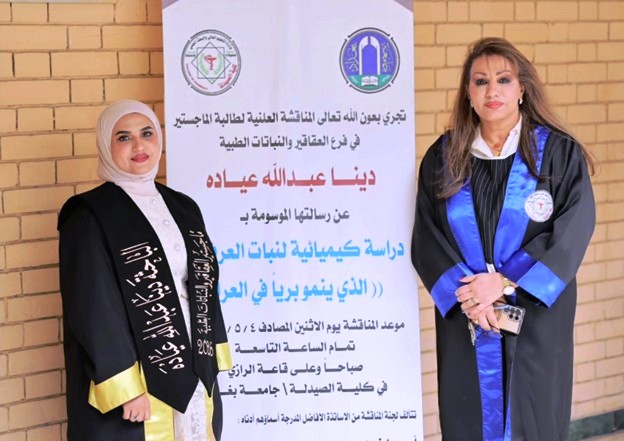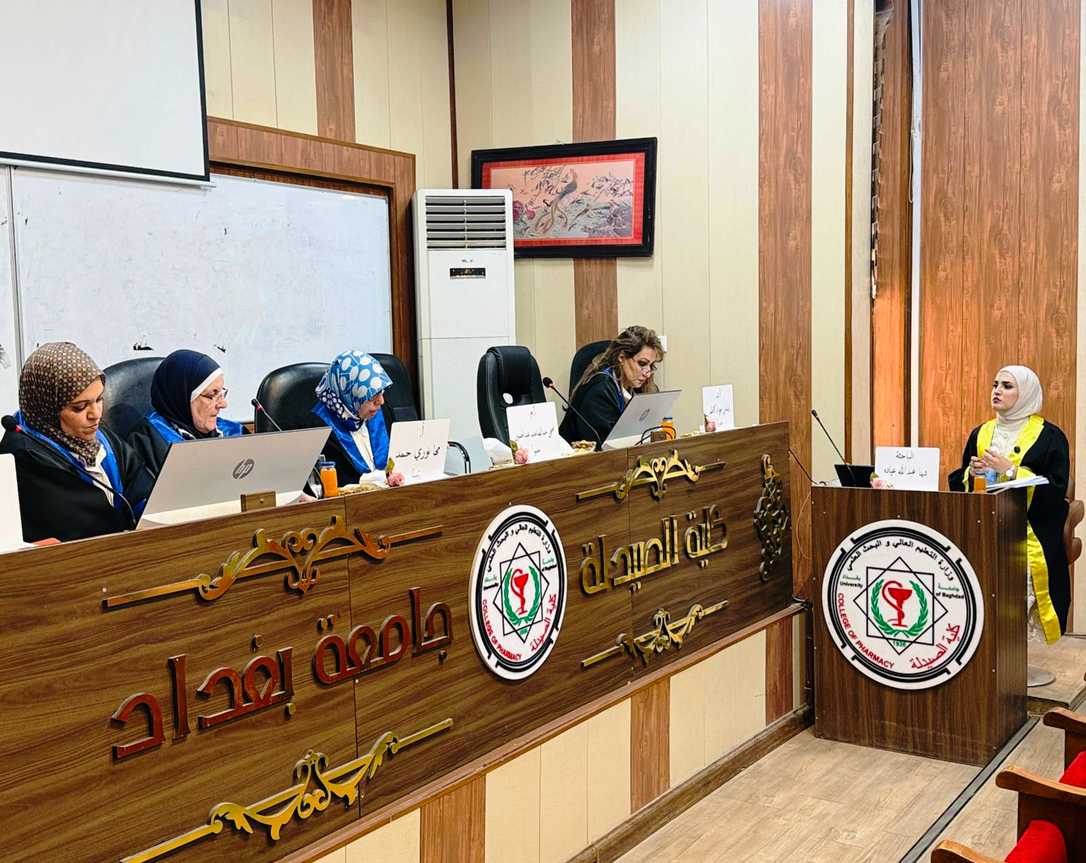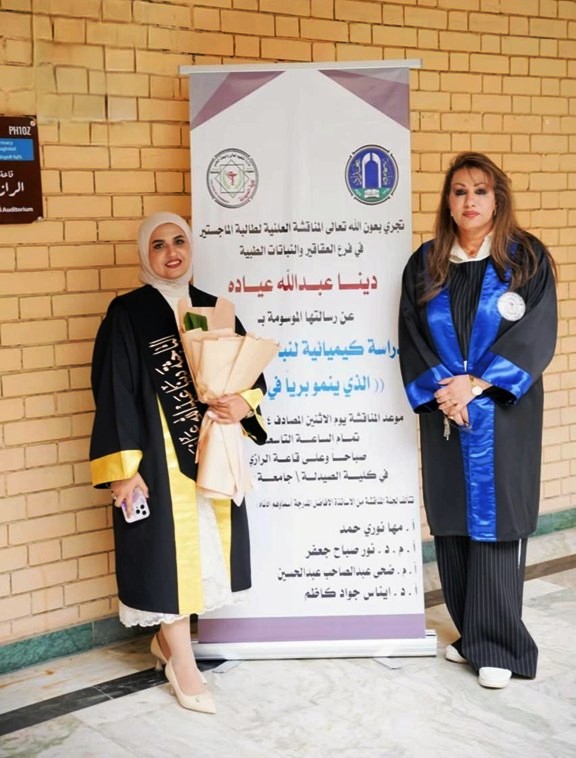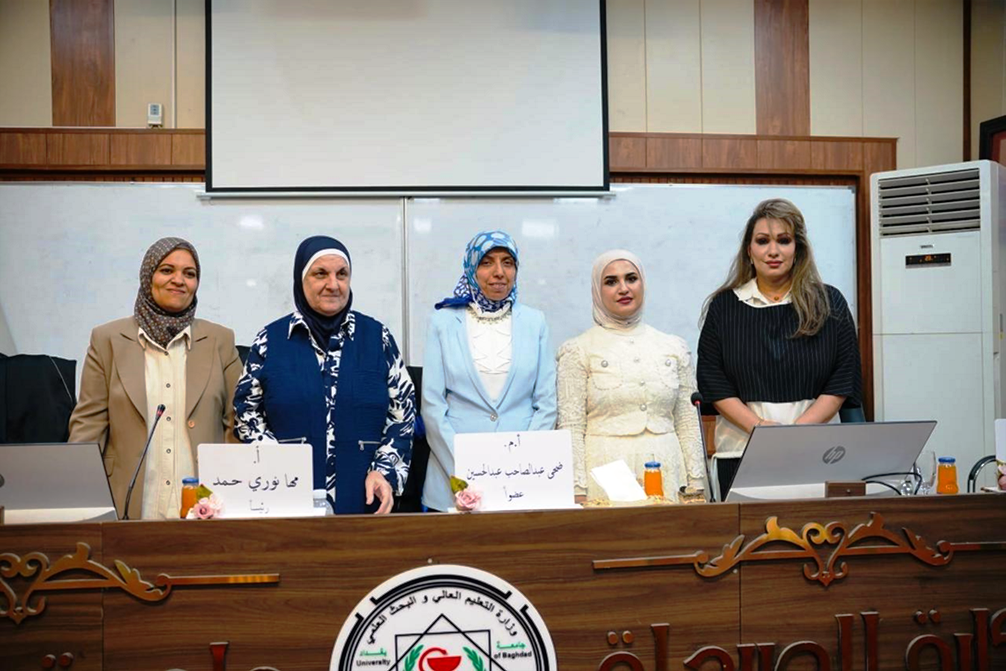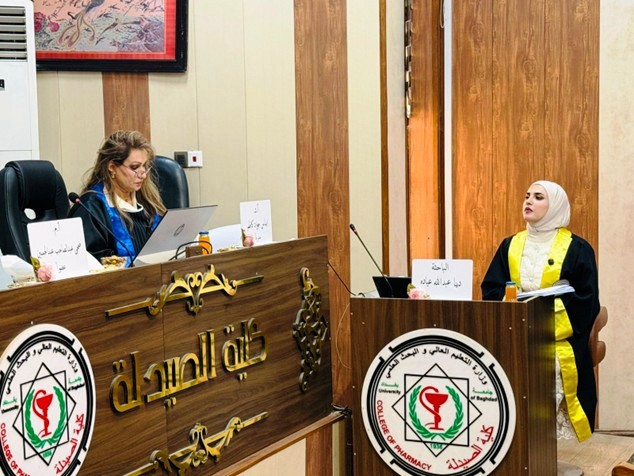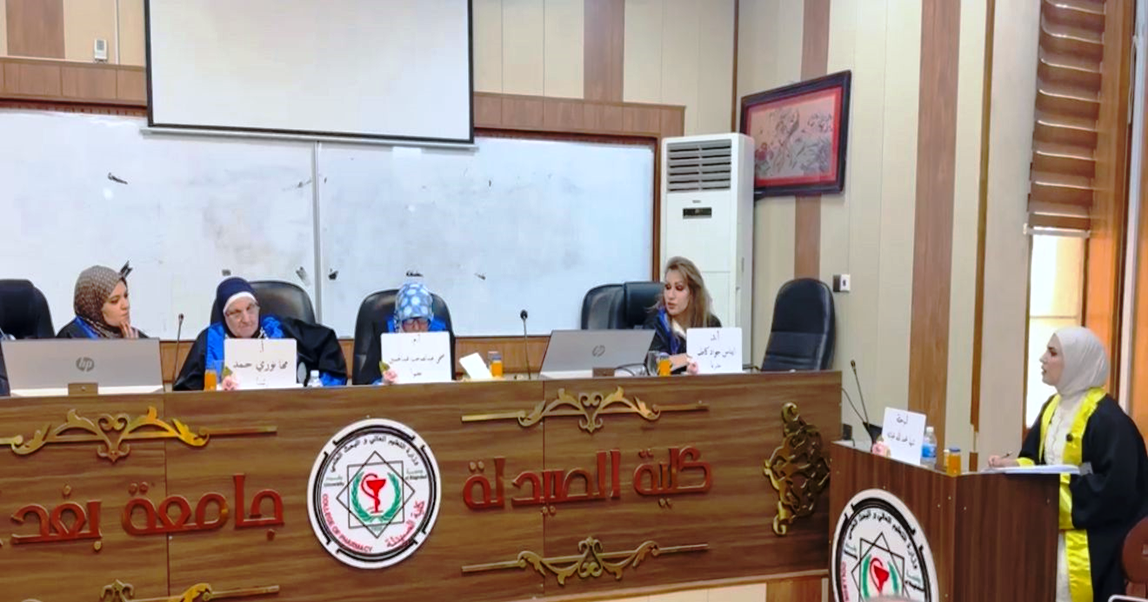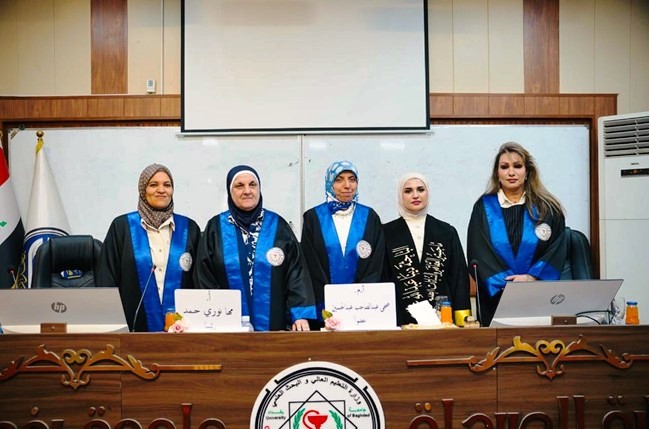
The College of Pharmacy discussed the MSc thesis entitled “Phytochemical Investigation and Evaluation of Cytotoxic Activity of Rhanterium epapposum Wildly Grown in Iraq” by the student Dina Abdullah Eida and the supervisor, Professor Dr. Enas Jawad Kadhim, at the Department of Pharmacognosy and Medicinal Plants.
The study aimed to identify the bioactive compounds present in wild Iraq Rhanterium epapposum , evaluate its potential as a natural source rich in pharmacologically important compounds, and investigate its anti-breast cancer activity as well as its effect on normal cells.
The study included defatting the plant material using n-hexane, followed by extraction of the active constituents by maceration using 85% methanol, the extract was then fractionated using solvents of different polarities, including petroleum ether, chloroform, ethyl acetate, and n-butanol. Compound analysis was carried out using several techniques, including thin-layer chromatography (TLC), high-performance liquid chromatography (HPLC), and gas chromatography–mass spectrometry (GC-MS). Six compounds were isolated using HPLC, while five additional compounds were isolated using preparative thin-layer chromatography (PTLC). The isolated compounds were characterized using TLC, ultraviolet-visible (UV-Vis) spectroscopy, HPLC, Fourier-transform infrared spectroscopy with attenuated total reflectance (FTIR-ATR), nuclear magnetic resonance spectroscopy (¹H-NMR and ¹³C-NMR), and mass spectrometry, In addition, the anti-breast cancer activity and the effect on normal cells of the ethyl acetate fraction were evaluated using a microculture cytotoxicity assay at different concentrations ranging from 10 to 1000 µg/mL for 24 hours.
The results showed that Rhanterium epapposum is a promising and rich source of biologically active compounds. A wide range of compounds was identified, including beta-sitosterol, stigmasterol, catechin, apigenin, luteolin, rutin, caffeic acid, gallic acid, p-coumaric acid, and scopoletin. Beta-sitosterol, stigmasterol, catechin, apigenin, luteolin, rutin, scopoletin, and one oxygen-containing compound were isolated, in addition to three unidentified compounds. Evaluation of the ethyl acetate fraction showed a concentration-dependent inhibitory effect on cell growth, with IC50 values of 78 µg/mL for cancer cells and 84.88 µg/mL for normal cells, with a selectivity index of 0.48.
The study recommended the potential use of this plant as a promising natural source of anti-breast cancer compounds and suggested conducting broader future studies to comprehensively evaluate its therapeutic efficacy, as well as exploring its potential application in the development of natural pharmaceutical preparations in the future.