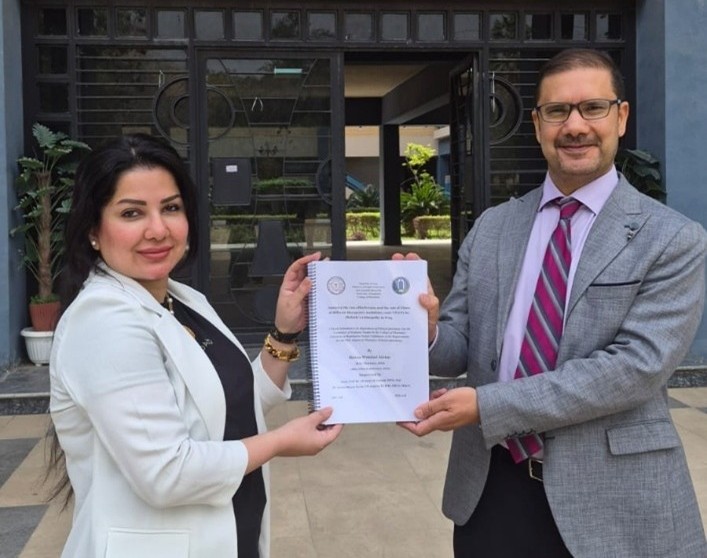
Under the supervision of the Dean of the College of Pharmacy, Professor Dr. Sarmed H.Kathem Al-Khateeb, the College of Pharmacy / University of Baghdad continues to achieve scientific and research accomplishments that contribute to supporting the healthcare sector and pharmaceutical decision-making in Iraq. This was reflected in the adoption by the National Higher Committee for Drug Selection at the Ministry of Health of the findings of a specialized PhD study in Pharmacoeconomics on the cost of treating retinopathy. The study was conducted in cooperation with Ibn Al-Haitham Specialized Eye Hospital and included 603 patients over a full year.
The study aimed to establish a scientific methodology for calculating the costs of retinopathy treatment in governmental healthcare institutions, contributing to rationalizing therapeutic decisions, enhancing the efficiency of healthcare expenditure, and improving the quality of services provided to patients, in line with the Sustainable Development Goals, particularly Goal 3 related to good health and well-being.
The study included distinguished research efforts supervised by Assistant Professor Dr. Ali Azeez Ali, a faculty member at the Department of Clinical Pharmacy, with the participation of PhD pharmacist specialist Ruaa Moayad Jabbar, in collaboration with ophthalmology specialist Dr. Ayman Diaa. The research team successfully calculated the total cost for each patient and each affected eye in terms of medications, medical supplies, and treatments provided, in addition to estimating direct and indirect costs from the perspective of the Ministry of Health.
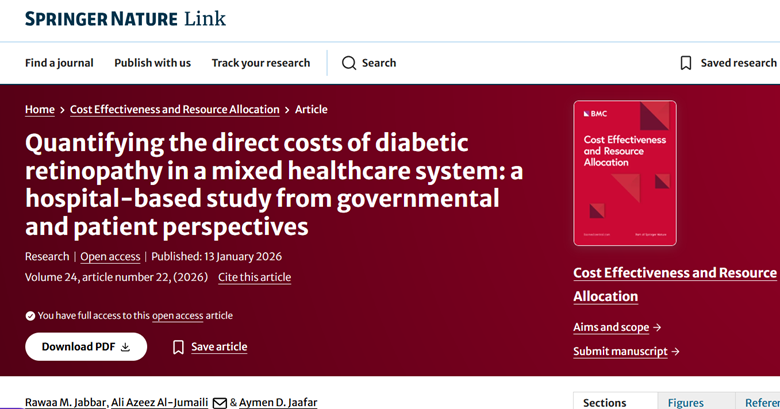
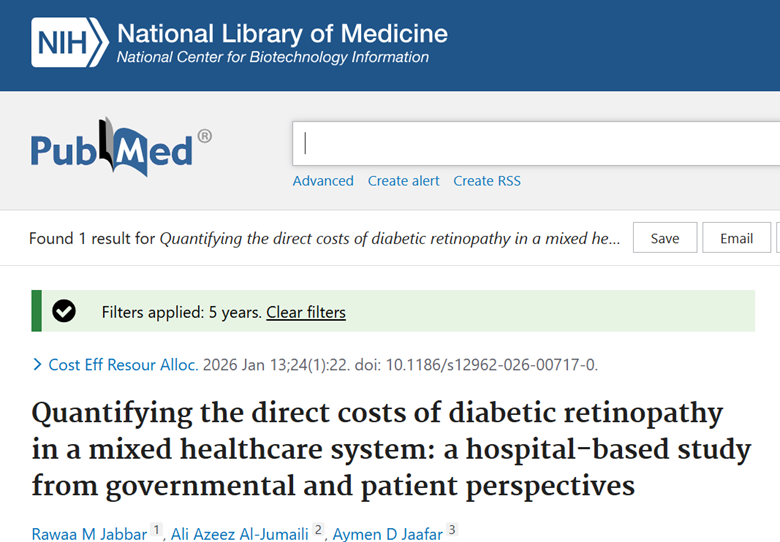
This study is considered the first of its kind in Iraq, and its findings were published in the reputable British journal “Cost Effectiveness and Resource Allocation,” issued by the international publishing house Springer Nature and ranked within the second quartile (Q2) in the Scopus database.
The study concluded that adopting pharmacoeconomic analysis is essential for supporting healthcare decision-makers and achieving the optimal use of financial and medical resources, ensuring the sustainability of treatment provision and improving healthcare services for patients.