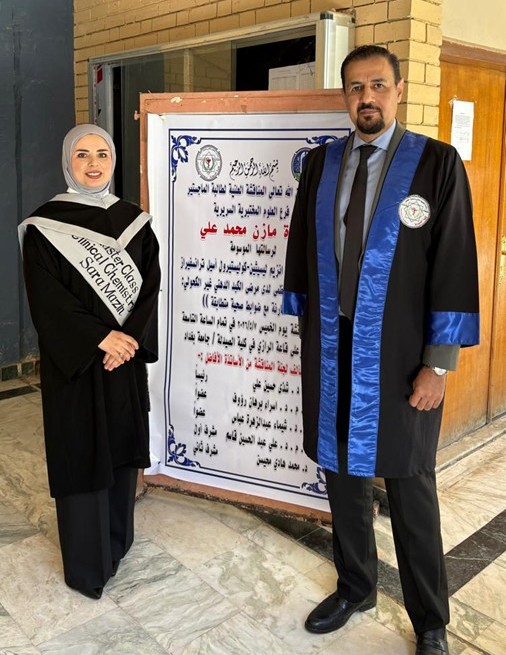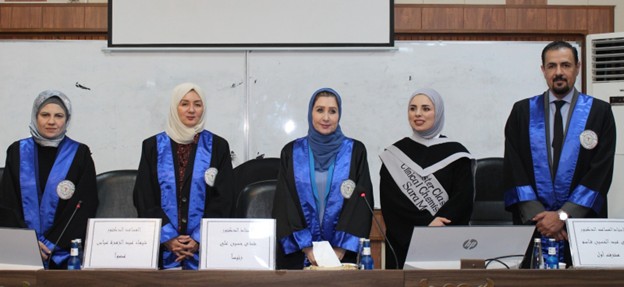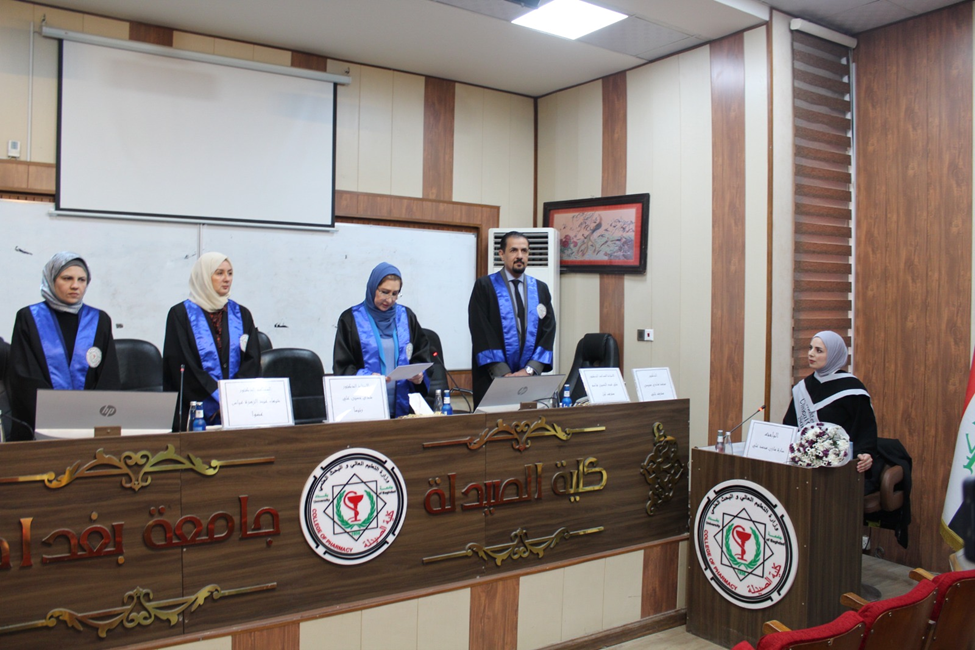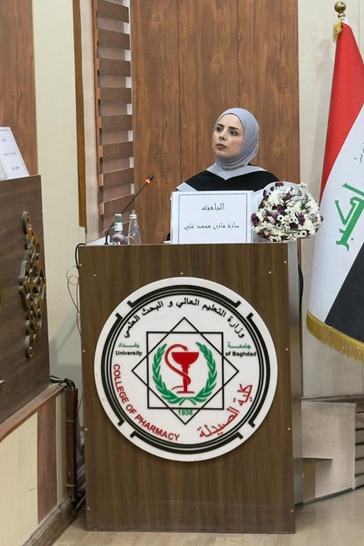

The College of Pharmacy discussed the MSc thesis entitled “The Association of Lecithin-Cholesterol Acyltransferase Levels with Bone Biomarkers in Non-Alcoholic Fatty Liver Disease Patients” by the student Sara Mazin Muhammed Ali and the supervisor, Assistant Professor Dr. Ali Abdulhussain Kasim, at the Clinical Laboratory Sciences Department.
The study aimed to compare the serum levels of lecithin-cholesterol acyltransferase enzyme, osteocalcin, C-terminal telopeptide of type I collagen, and fibroblast growth factor 23 between patients with non-alcoholic fatty liver disease and healthy individuals; evaluate the associations between lecithin-cholesterol acyltransferase enzyme and bone metabolism markers within the non-alcoholic fatty liver disease group; and assess the diagnostic performance of these biomarkers in identifying non-alcoholic fatty liver disease and its severity.
The study included a case-control design involving 90 participants, comprising 45 patients with non-alcoholic fatty liver disease and 45 healthy age- and sex-matched controls. Biochemical parameters, lipid profiles, and serum levels of lecithin-cholesterol acyltransferase enzyme, osteocalcin, C-terminal telopeptide of type I collagen, and fibroblast growth factor 23 were measured. Liver enzymes and the fibrosis index were used to assess liver function and fibrosis risk. Receiver operating characteristic curve analysis was employed to evaluate the diagnostic accuracy of the studied biomarkers.
The results showed that lecithin-cholesterol acyltransferase enzyme and bone resorption parameters were significantly altered in non-alcoholic fatty liver disease and may serve as effective non-invasive diagnostic tools. However, their predictive value in disease classification appears to be limited. Further longitudinal studies are recommended to explore the mechanistic associations and potential clinical applications of these biomarkers in the management of non-alcoholic fatty liver disease.
The study recommended that future research should include larger sample sizes and a more balanced distribution across fibrosis and steatosis severity levels to enhance statistical power and achieve more conclusive findings regarding the predictive value of lecithin-cholesterol acyltransferase enzyme and bone metabolism markers in non-alcoholic fatty liver disease.