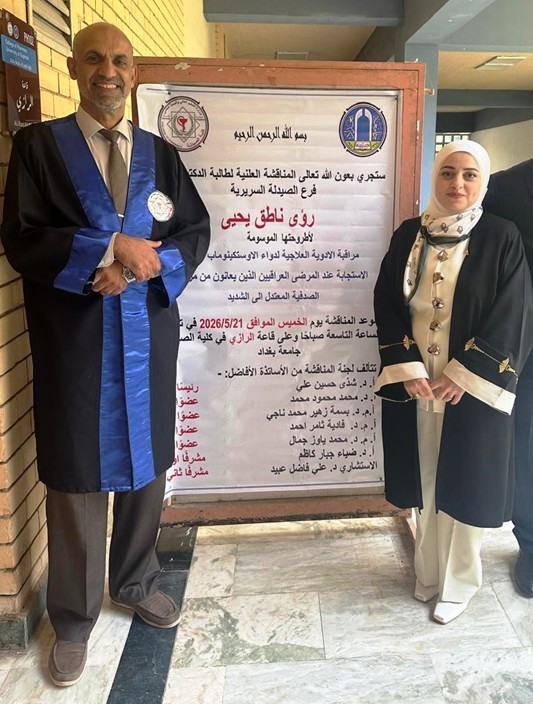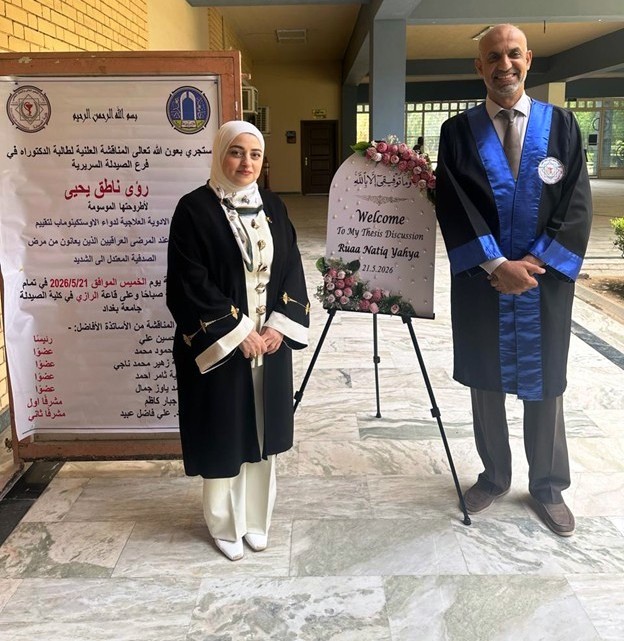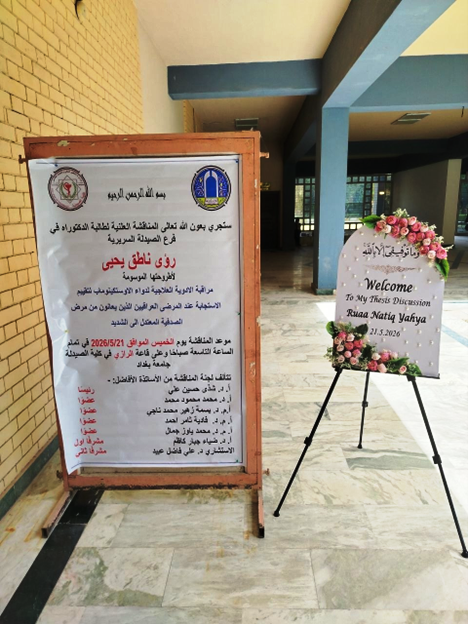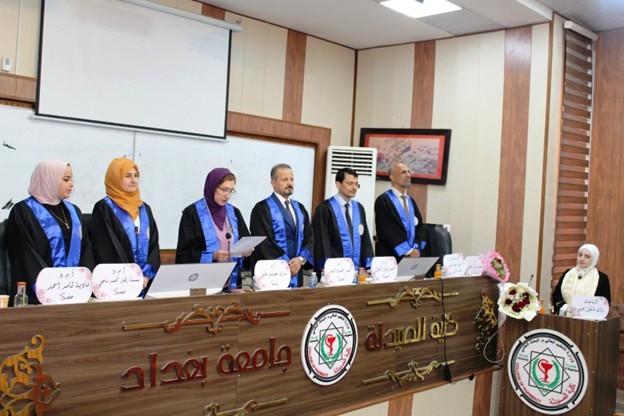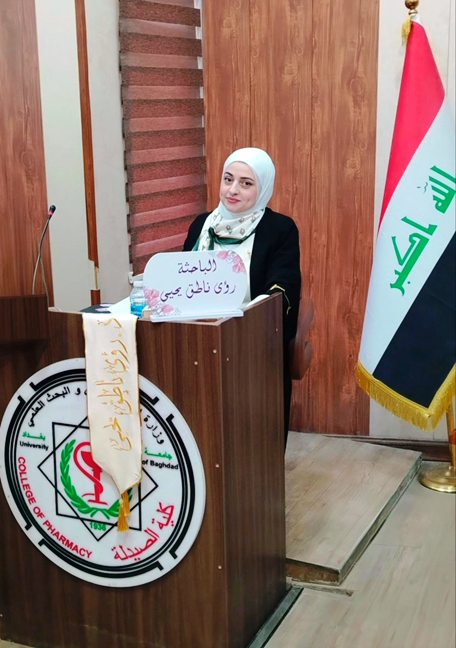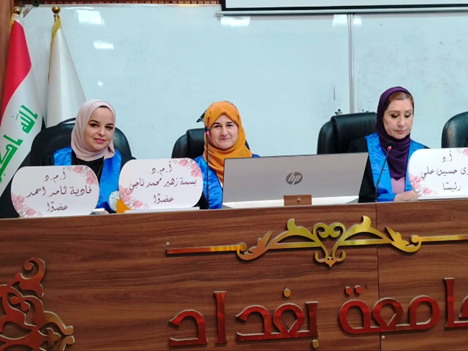
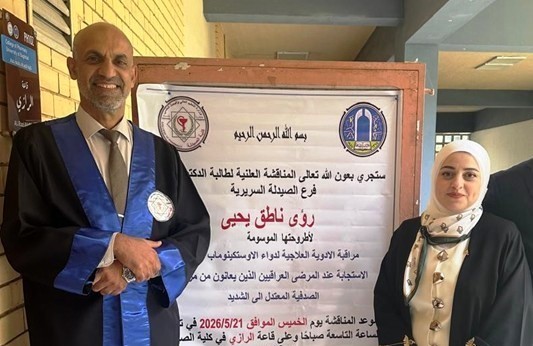
The College of Pharmacy discussed the PhD dissertation entitled “Therapeutic Drug Monitoring of Ustekinumab to Assess The Response of Iraqi Patients with Moderate to Severe Psoriasis” by the student Ruaa Natiq Yahya and the supervisor, Professor Dr. Dheyaa Jabbar Kadhim, at the Clinical Pharmacy Department.
The study aimed to measure the trough level of Ustekinumab, detect anti-drug antibodies, and evaluate clinical response to provide appropriate therapeutic recommendations. It also aimed to determine the potential relationship between sociodemographic characteristics, disease characteristics, certain biomarkers, and the achievement of target Ustekinumab levels and clinical response among patients with psoriasis.
The study included a cross-sectional investigation of 75 patients recruited from the Dermatology and Venereology Center at Baghdad Teaching Hospital in Medical City. Patients were classified into two groups: the first group included patients who achieved the target Ustekinumab concentration, while the second group included patients who did not achieve the target concentration. Patients were also categorized into two groups according to the Psoriasis Area and Severity Index (PASI): the third group included patients with optimal response, whereas the fourth group included patients with suboptimal response. Data regarding sociodemographic and disease characteristics were collected, in addition to serum measurements of high-sensitivity C-reactive protein, interleukin-12, interleukin-17, interleukin-22, and interleukin-23.
The results showed that 44 patients in the first group achieved the target Ustekinumab concentration and were further subdivided into two subgroups: 34 patients demonstrated an optimal clinical response and were advised to continue Ustekinumab therapy, while 10 patients showed a suboptimal clinical improvement and were advised to switch therapy. In contrast, 31 patients in the second group did not achieve the target Ustekinumab concentration and were subdivided into two subgroups: 16 patients demonstrated an optimal clinical response and were advised to increase the dose or shorten the dosing interval, while 13 patients tested negative for anti-drug antibodies and were also advised to increase the dose or shorten the dosing interval. Two patients tested positive for anti-drug antibodies and were considered suitable candidates for switching to another biologic therapy. Furthermore, patients in the third group demonstrated significant improvement in PASI score and body surface area compared with the fourth group, which showed significantly higher levels of high-sensitivity C-reactive protein, interleukin-17, interleukin-22, and interleukin-23, indicating a greater inflammatory burden.
The study recommended conducting future studies with larger sample sizes, multicenter designs, and longer follow-up periods. Also , it recommended including measurements of inflammatory biomarkers at baseline and during treatment, exploring genetic factors influencing clinical response, and integrating therapeutic drug monitoring tests into the routine evaluation of patients with plaque psoriasis treated with Ustekinumab.