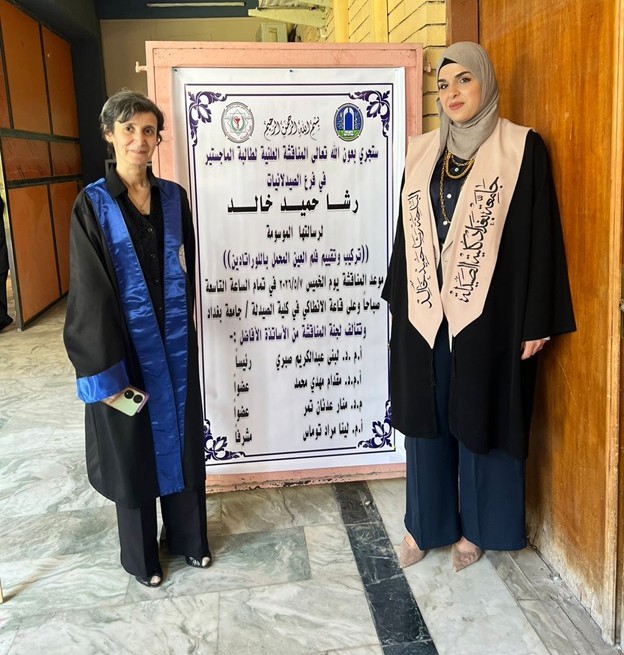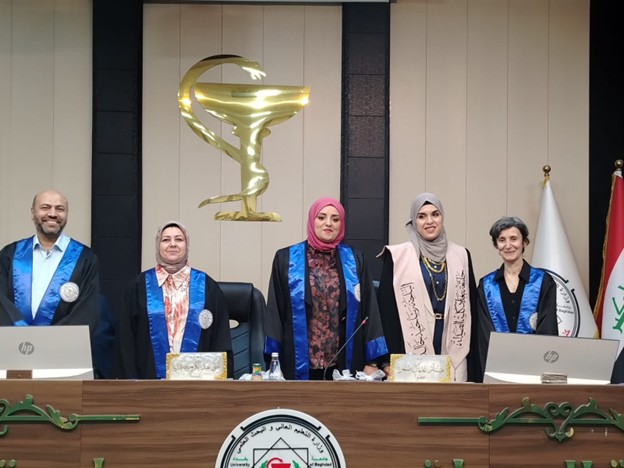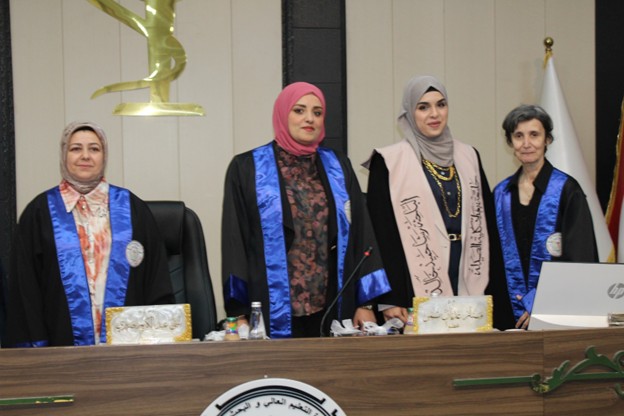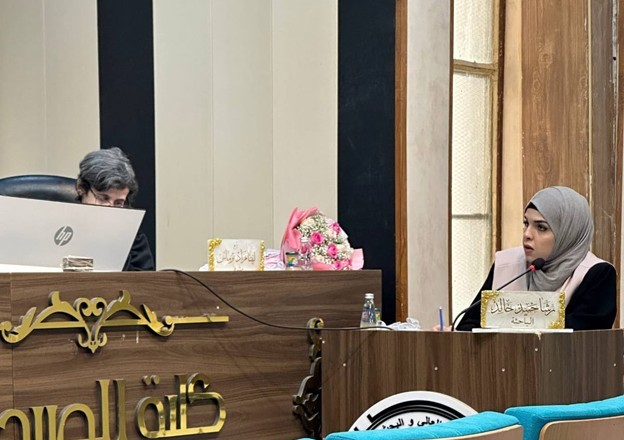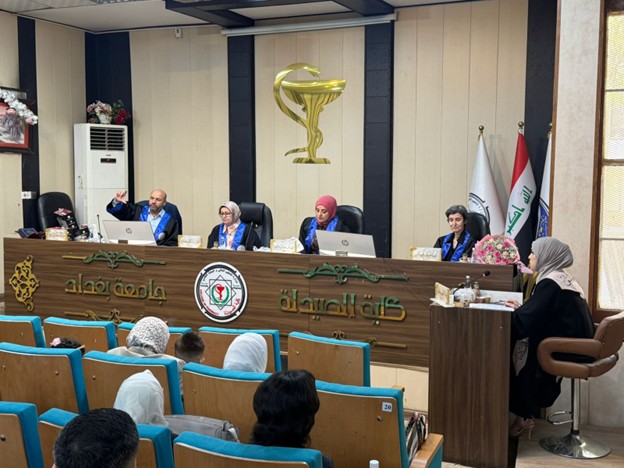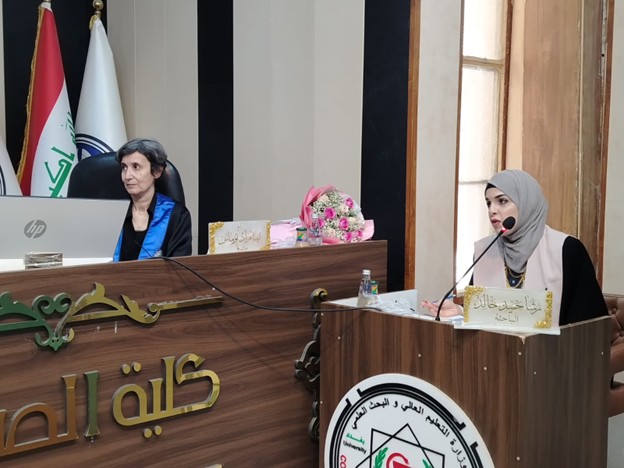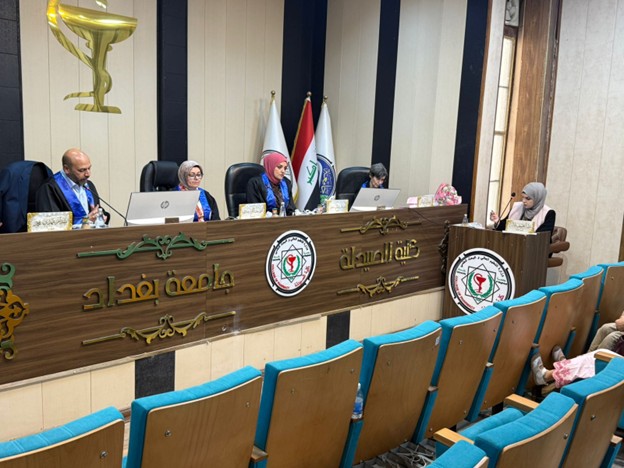
The College of Pharmacy discussed the MSc thesis entitled “Formulation and Evaluation of Loratadine Loaded Ocular Film” by the student Rasha Hameed Khalid and the supervisor, Assistant Professor Lina Murad Thomas, at the Pharmaceutics Department.
The study aimed to develop and evaluate a topical ophthalmic drug delivery system containing loratadine incorporated into a polymeric ocular film with mucoadhesive and sustained-release properties in order to prolong the residence time of the formulation on the ocular surface, enhance bioavailability, and reduce the frequency of drug administration.
The study included the preparation of ocular films using the solvent casting technique, employing hydroxypropyl methylcellulose (HPMC) as the film-forming polymer, along with various mucoadhesive polymers such as sodium alginate, sodium hyaluronate, and polyvinylpyrrolidone. Propylene glycol was used as a plasticizer. The study also included the evaluation of the physical and mechanical properties of the prepared films, as well as swelling behavior, mucoadhesion, and drug release characteristics, in addition to cytotoxicity and ocular irritation studies.
The study concluded that the optimized formulation exhibited good drug content uniformity, appropriate pH, suitable thickness, and satisfactory mechanical properties, along with high mucoadhesive strength and sustained drug release for up to 12 hours. Furthermore, biological studies demonstrated that the ocular film was non-toxic and non-irritant to the eye, indicating its potential as a promising long-acting ocular drug delivery system for loratadine.
The study recommended conducting further clinical and long-term stability studies to more comprehensively evaluate the efficacy and safety of the loratadine-loaded ocular film, as well as to explore its potential for future industrial-scale production.