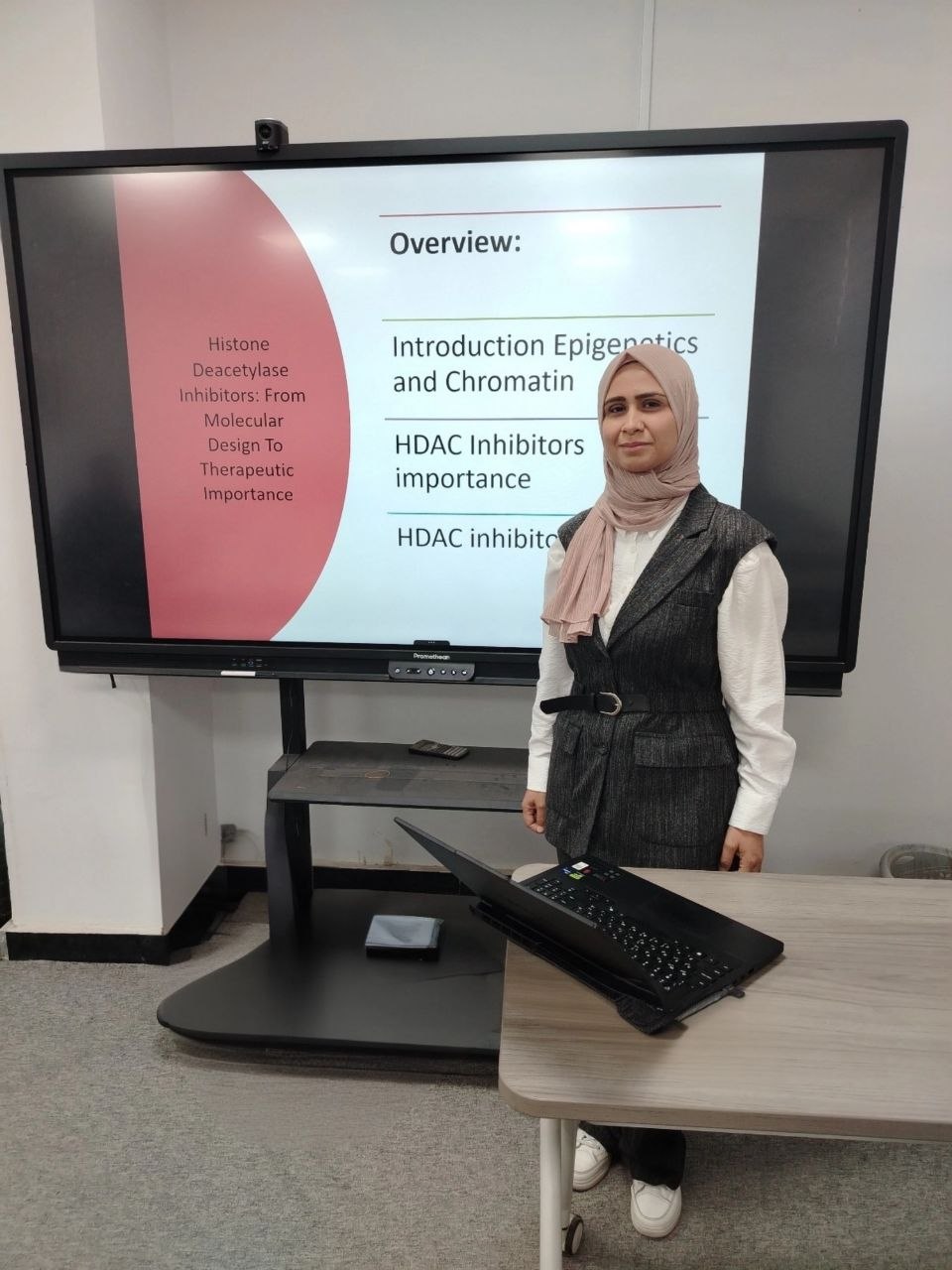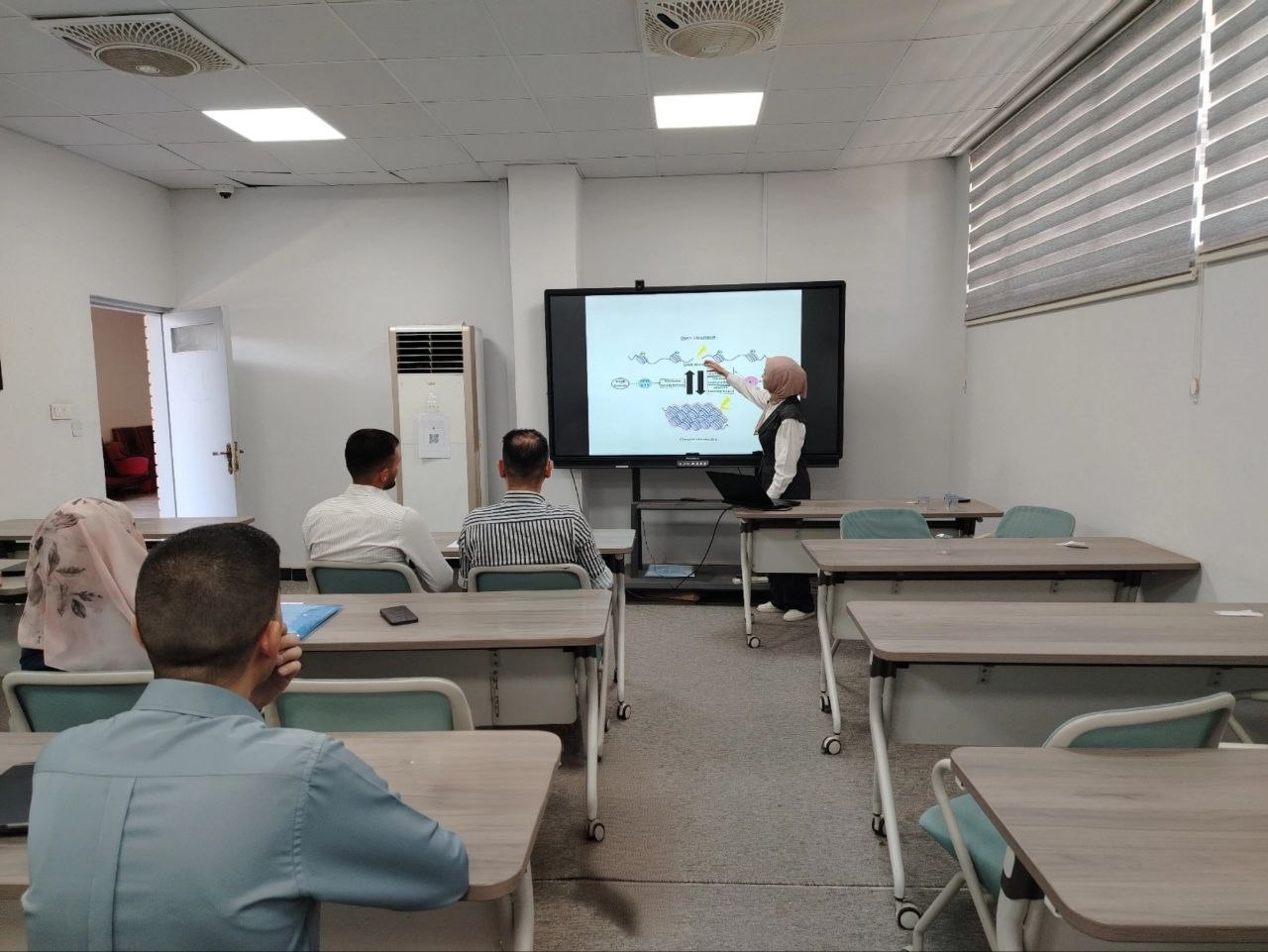
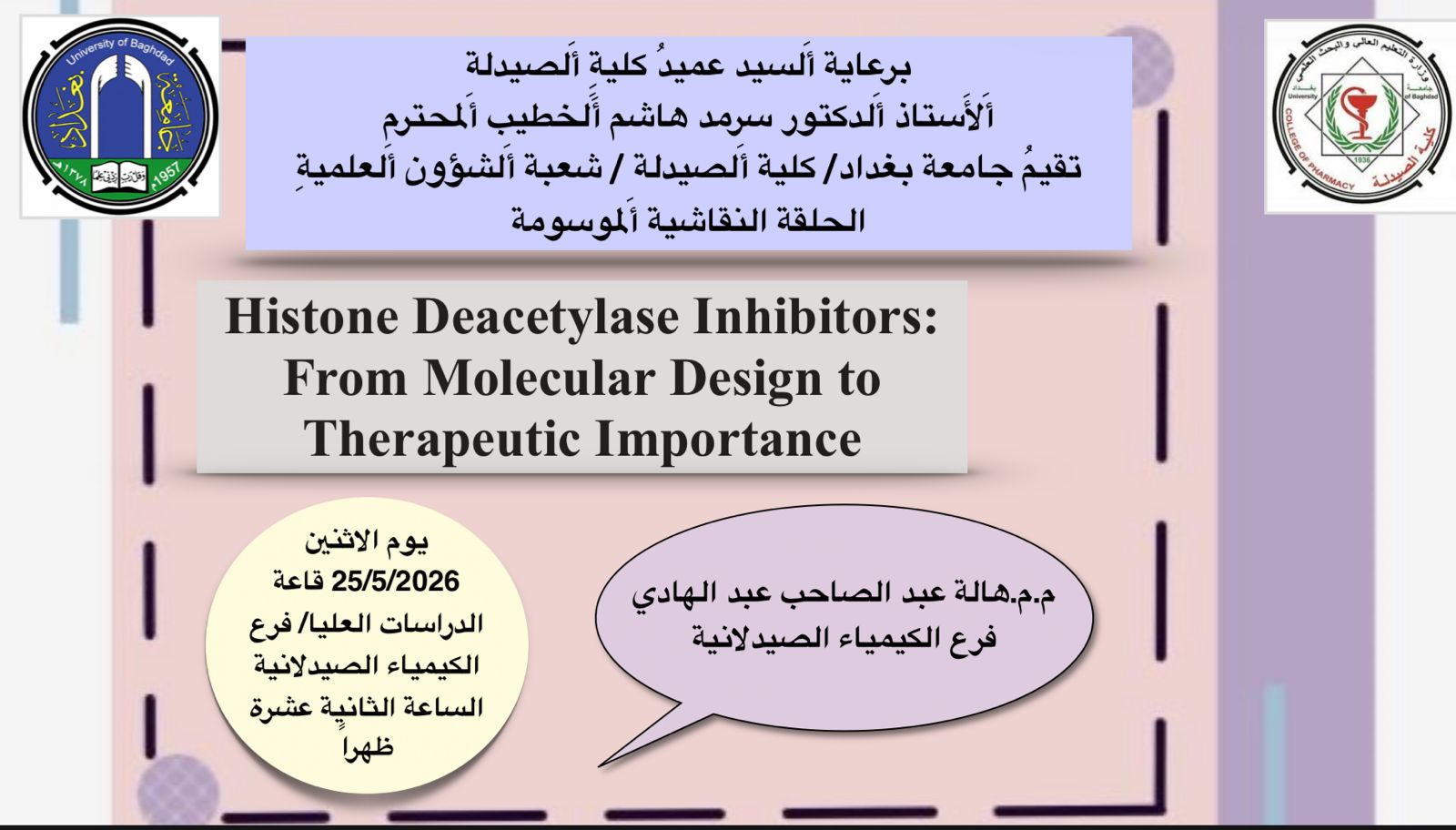
Under the supervision of the Dean of the College of Pharmacy, Professor Dr. Sarmed H. Kathem Alkhateeb, the Scientific Affairs Division at the University of Baghdad/College of Pharmacy, held an in-person scientific seminar entitled “Histone Deacetylase Inhibitors: from Molecular Design to Therapeutic Importance,” delivered by Assistant Lecturer Dr. Halah Abdulsahib, the PhD student at the Pharmaceutical Chemistry Department.
The seminar aimed to highlight the role of epigenetics and chromatin structure in regulating gene activity without altering the DNA sequence, explain the mechanism of action of histone deacetylase (HDAC) inhibitors in the treatment of cancer and other diseases, and review modern molecular design strategies for developing chemical inhibitors with greater efficacy, improved biological stability, and lower toxicity.
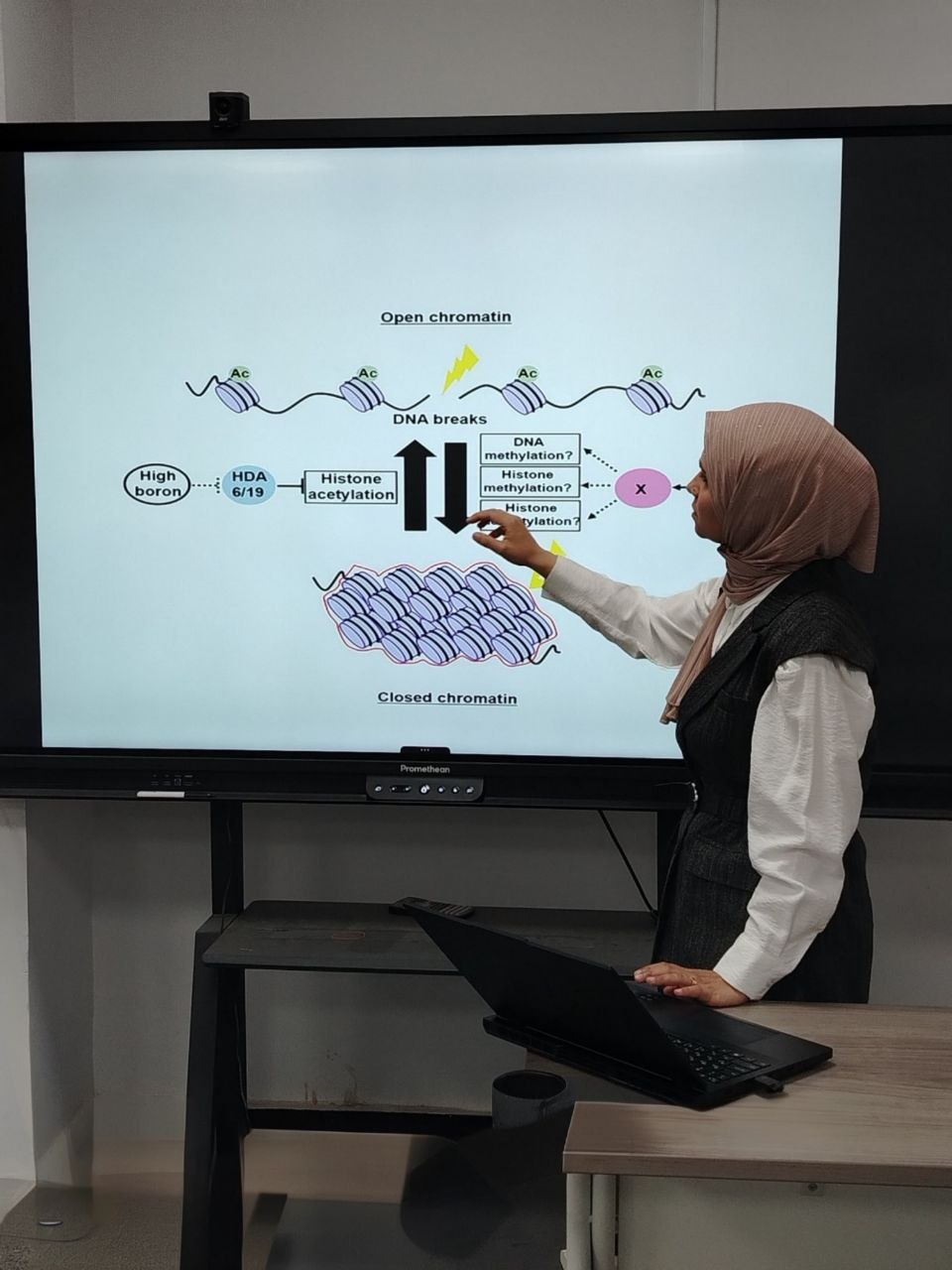
The seminar included several topics, including an introduction to epigenetics and chromatin structure, the distinction between relaxed chromatin, which is responsible for active gene expression, and condensed chromatin, which is associated with gene silencing. Also, it addressed the biological functions of histone deacetylases, such as cell cycle regulation, apoptosis, DNA repair, and immune response, as well as the association of abnormal HDAC activity with various diseases and cancers. Furthermore, the seminar reviewed globally approved HDAC inhibitors, including Vorinostat, Romidepsin, Belinostat, and Panobinostat, and their therapeutic applications in cancer, neurological disorders, and autoimmune diseases. It discussed the principles of molecular design for chemical inhibitors, which are based on three main components: the zinc-binding group, the linker region, and the cap group. The seminar highlighted structural modifications, such as introducing an oxadiazole ring instead of the hydroxamate moiety, to improve metabolic stability and enhance selectivity.
The seminar concluded that histone deacetylase inhibitors represent promising therapeutic agents in the field of epigenetic medicine. It emphasized the importance of future research focusing on the development of a new generation of selective inhibitors targeting specific enzyme isoforms, the application of personalized medicine approaches, and the integration of these inhibitors into combination therapies and nanotechnology-based delivery systems to enhance treatment efficacy and patient safety.