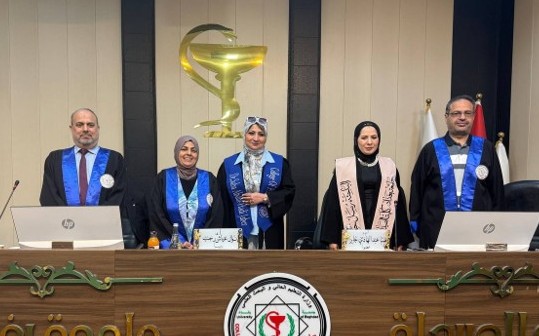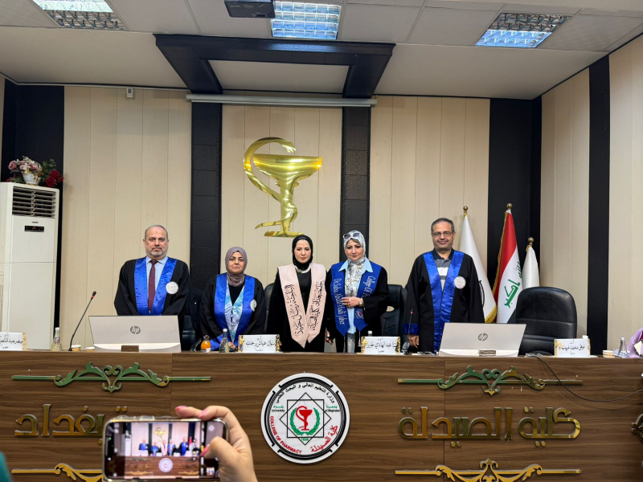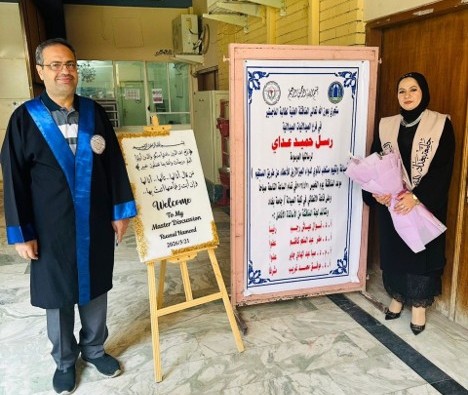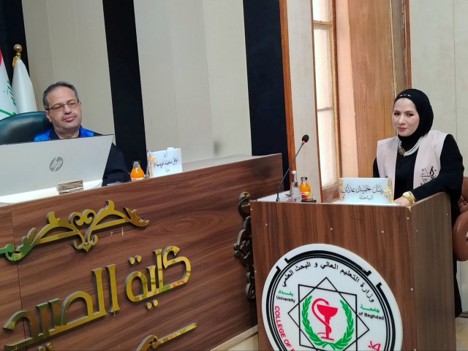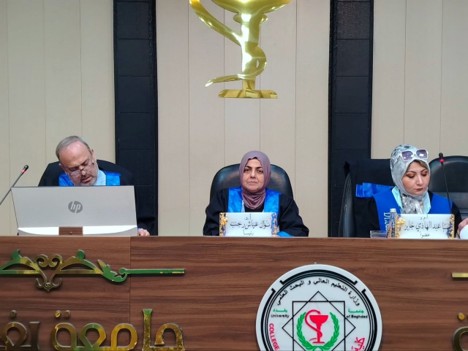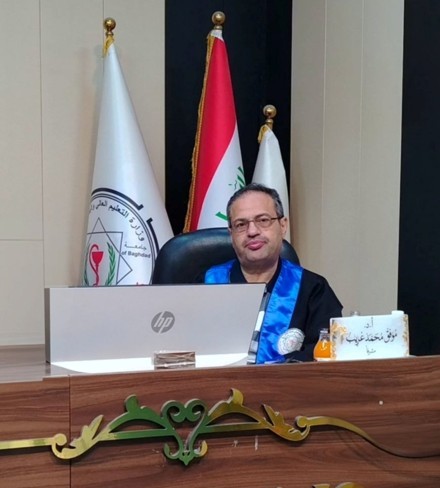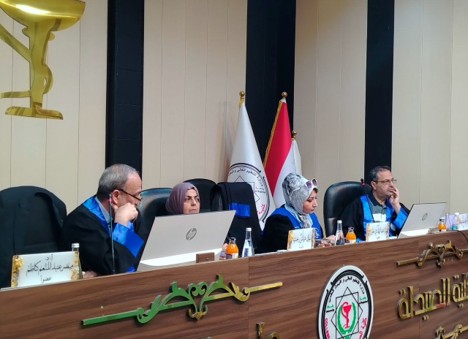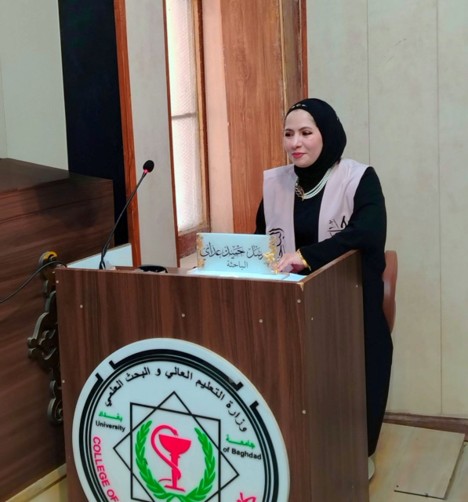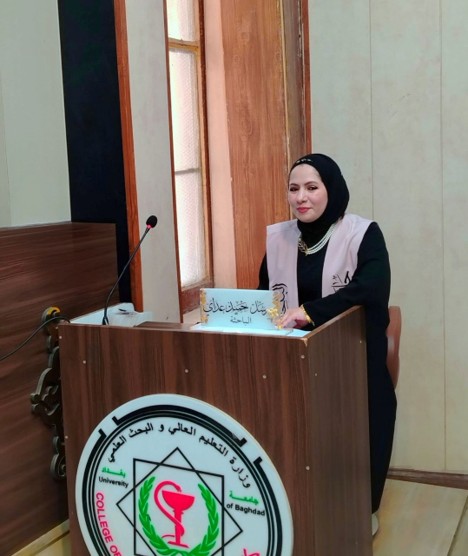
The College of Pharmacy discussed the MSc thesis entitled “Preparation and Evaluation of Mesalazine Nanoemulsion as Enema” by the student Russul Hameed Adday and the supervisor, Professor Dr. Mowafaq Mohammed Ghareeb, at the Pharmaceutics Department.
The study aimed to develop a stable mesalazine nanoemulsion enema for treating inflammatory bowel disease (IBD) by improving drug solubility, protecting it from oxidative degradation, and enhancing formulation uniformity, permeability, and colonic retention.
The study included the preparation and characterization of mesalazine nanoemulsions using the high-speed mixing technique, based on different compositions of oils, surfactants, and co-surfactants at various ratios. The study also involved pre-formulation studies to evaluate the physicochemical properties of mesalazine and confirm its purity and stability using ultraviolet spectroscopy and differential scanning calorimetry. Furthermore, the study included solubility assessment and selection of suitable components for nanoemulsion preparation, in addition to evaluating the physicochemical characteristics of the prepared formulations and conducting in vitro drug release studies.
The results demonstrated the successful preparation of mesalazine nanoemulsions with suitable characteristics for use as an enema. Pre-formulation studies confirmed the purity and stability of the drug, showing that mesalazine remained stable in oily and acidic media at room temperature. The droplet size of the prepared nanoemulsions ranged between 6 and 574 nm, with acceptable values for the polydispersity index and drug content. Moreover, the in vitro release studies revealed that drug release was influenced by formulation variables, including the type and concentration of oil and the ratios of surfactants to co-surfactants, which informed the selection of optimized formulations.
The study recommended conducting further in vivo studies to evaluate the long-term safety, pharmacokinetic properties, and therapeutic efficacy of the optimized formulations, as well as performing clinical trials in patients with IBD. It also recommended investigating formulations containing hyaluronic acid and conducting comparative studies with conventional mesalazine preparations to assess improvements in drug retention, bioavailability, and therapeutic efficacy.