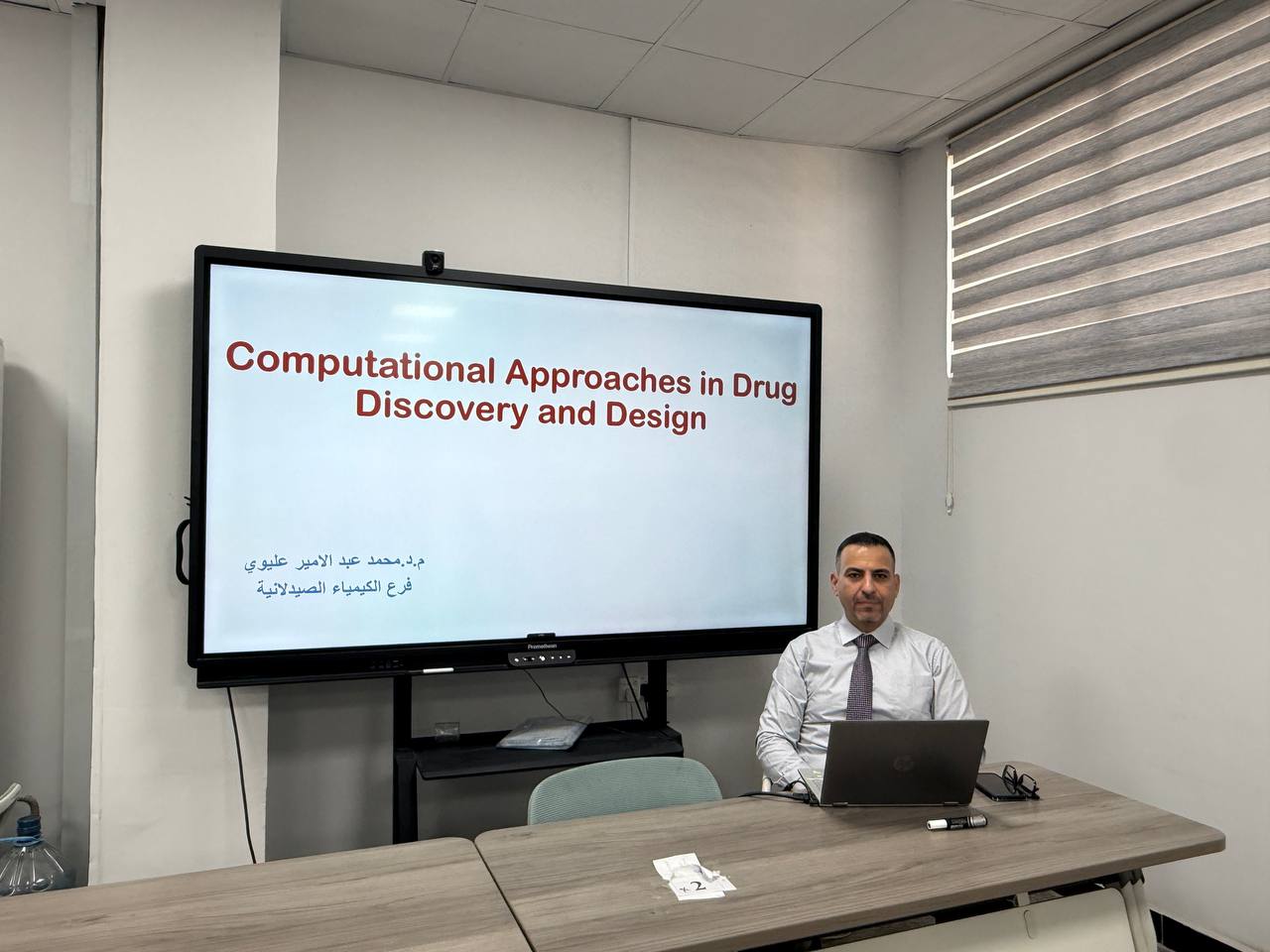

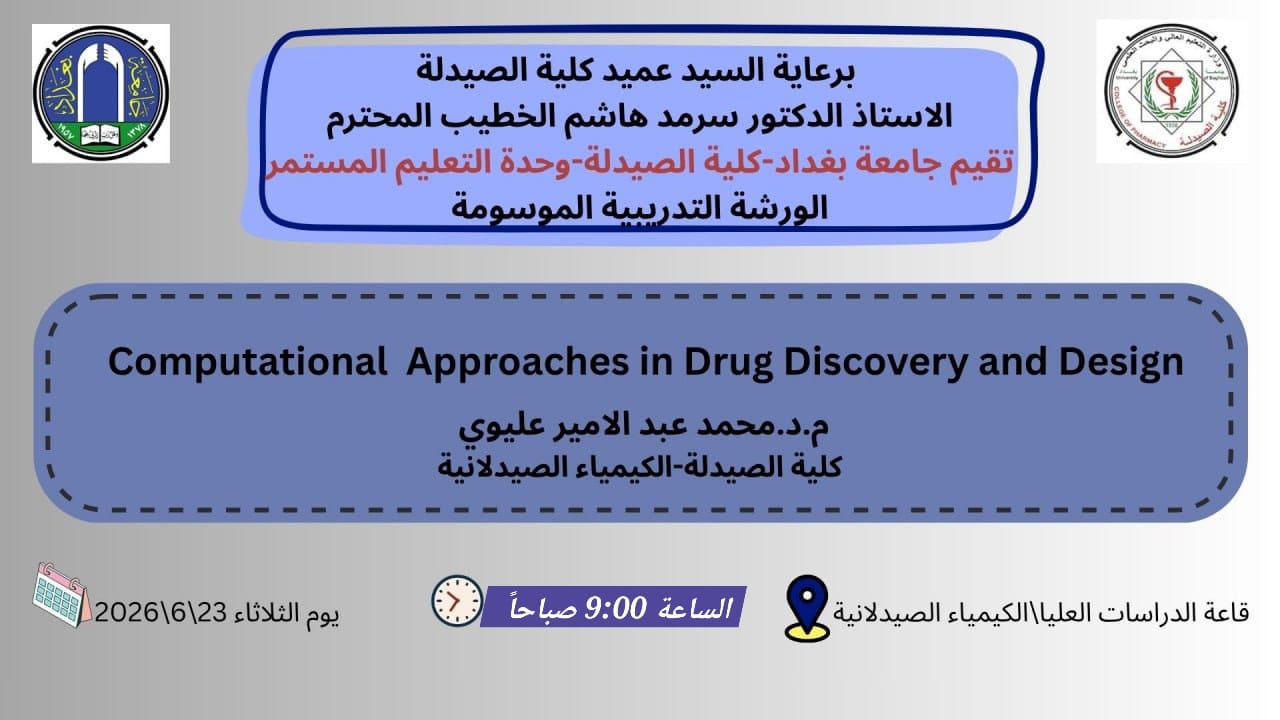
Under the supervision of the Dean of the College of Pharmacy, Professor Dr. Sarmed H. Kathem Alkhateeb, the Continuous education Unit at the University of Baghdad/College of Pharmacy, held an in-person workshop entitled “Computational Approaches in Drug Discovery and Design,” delivered by Lecturer Dr. Mohammed Abdulameer Oleiwi, a faculty member at the Pharmaceutical Chemistry Department.
The workshop aimed to introduce the importance of modern computational approaches in drug discovery and design, highlighting their role in accelerating drug development while reducing time and cost. Also, it covered the methodologies and techniques of computer-aided drug design (CADD), with particular emphasis on the role of molecular modeling and computer simulations in identifying promising drug candidates prior to experimental and clinical studies.
The workshop included several key topics, including an introduction to drug discovery and design, the challenges associated with drug development, and the role of computational techniques in accelerating this process. Also, it reviewed computer-aided drug design approaches, including structure-based and ligand-based drug design, and their applications in identifying promising drug candidates. The workshop addressed drug target identification, three-dimensional protein structure modeling, binding site prediction, molecular docking and its validation, structure–activity relationships (SAR), and the prediction of pharmacokinetic properties, including absorption, distribution, metabolism, excretion, and toxicity (ADMET).
The workshop concluded that modern computational approaches have become a cornerstone of drug discovery and design by accelerating research and development while reducing time and cost. Emphasized the importance of computer-aided drug design techniques in predicting the efficacy and pharmacological properties of drug candidates before experimental and clinical evaluation. Furthermore, integrating computational approaches with experimental studies enhances the efficiency of drug development and increases the likelihood of identifying safer and more effective therapeutic agents.