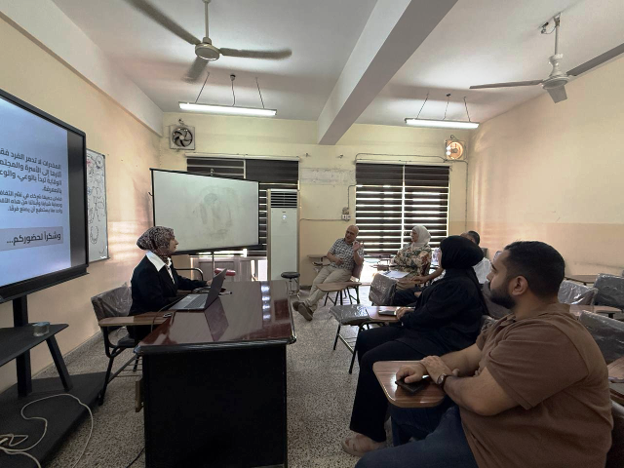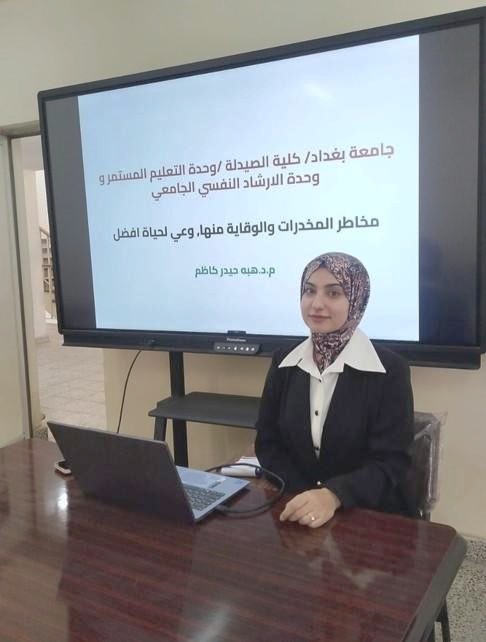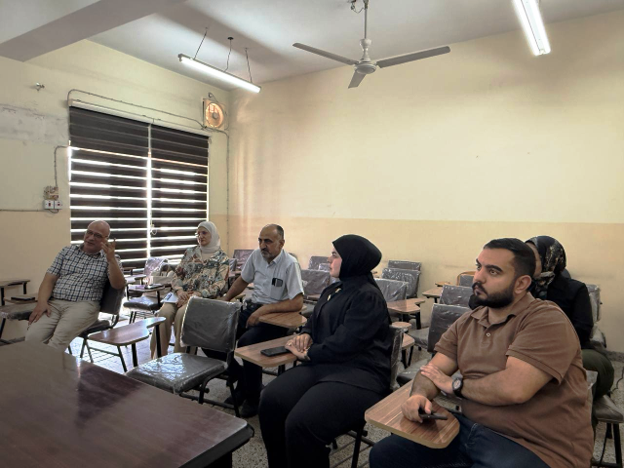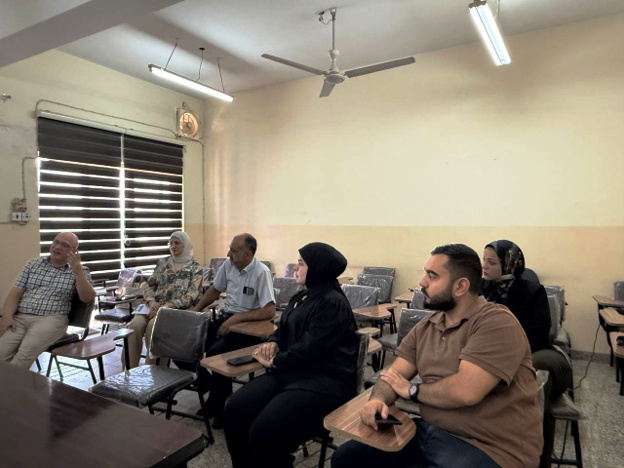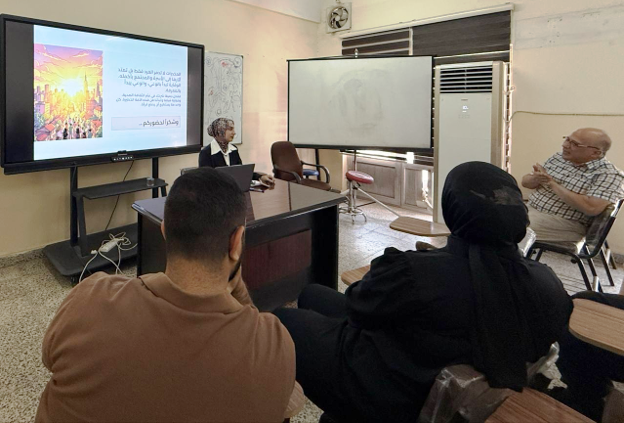
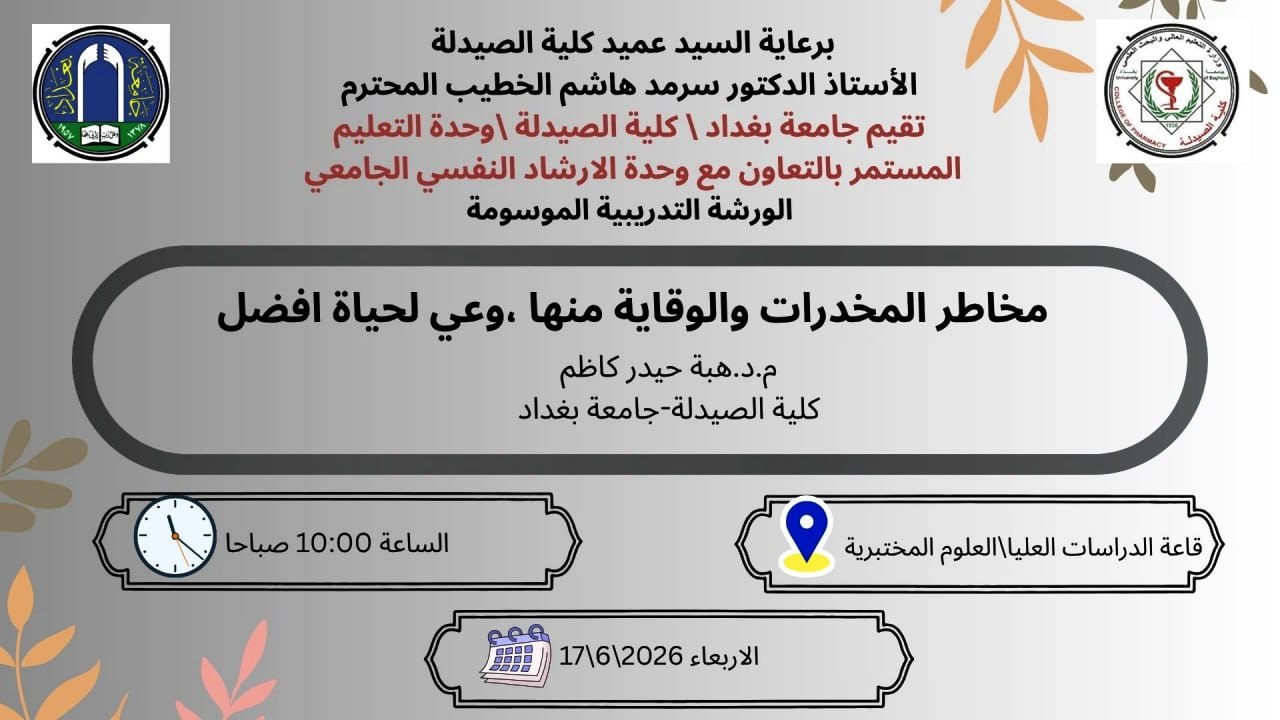
Under the supervision of the Dean of the College of Pharmacy, Professor Dr. Sarmed H. Kathem Alkhateeb, the Continuing Education Unit in collaboration with University Psychological Counseling Unit at the University of Baghdad/College of Pharmacy held an in-person workshop entitled “The Risks of Drugs and Their Prevention: Awareness for a Better Life” delivered by Lecturer Dr. Hiba Hayder Kathem, a faculty member at the Clinical Laboratory Sciences Department and Head of the Scientific Affairs Division.
The workshop aimed to enhance community awareness regarding the dangers of drug abuse and its serious health, psychological, social, and economic consequences, promote preventive behaviors that contribute to protecting individuals and society from drug use and addiction.
The workshop included several topics, including the definition, concept, and types of drugs; the causes and motives for drug abuse; the health, psychological, social, and economic risks resulting from drug abuse; methods of prevention and limiting the spread of drugs; the role of families, educational institutions, and society in raising awareness of the dangers of drugs; and the legal aspects of drug-related crimes and the penalties imposed for them. The workshop addressed the early signs that may indicate drug abuse and ways of dealing with them, the long-term effects of this problem on individuals, families, and society, and presented a number of practical guidelines and recommendations that contribute to promoting preventive awareness, encouraging young people to adopt healthy lifestyles, and strengthening the values of social responsibility to limit the spread of drugs and protect society from their harmful effects.
The workshop concluded that drugs are among the most serious health and social challenges threatening individuals and society, particularly young people. It emphasized the importance of raising awareness of their dangers, understanding the causes of drug abuse and its negative effects, and paying attention to preventive measures through the role of families, educational institutions, and society, thereby contributing to reducing the spread of this phenomenon and building a more aware and responsible society.