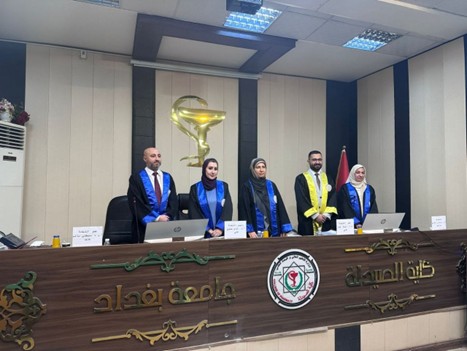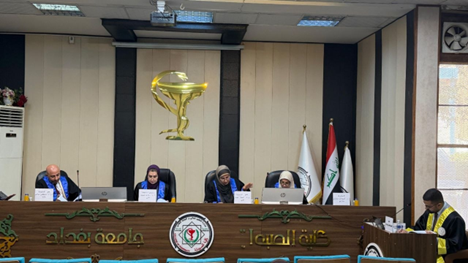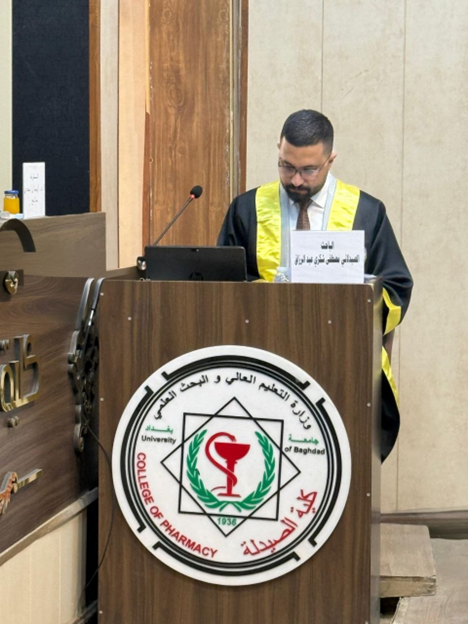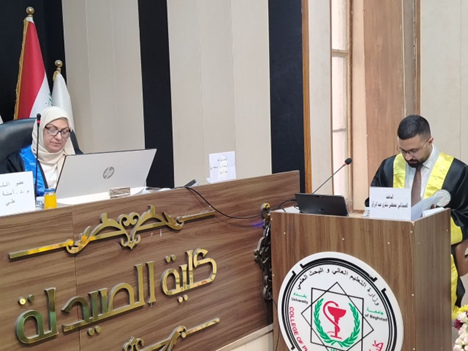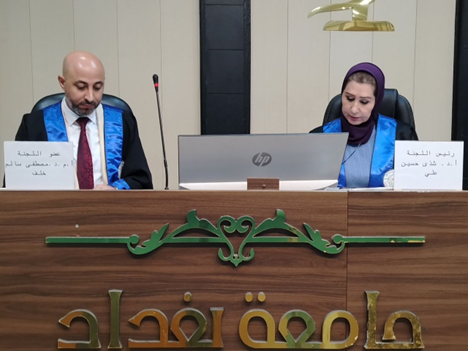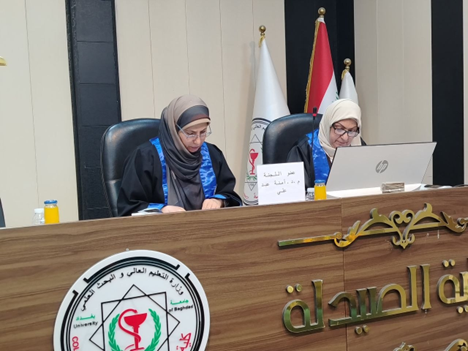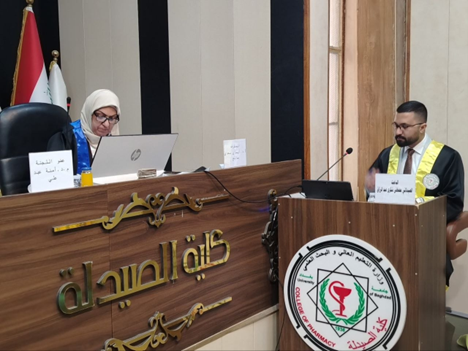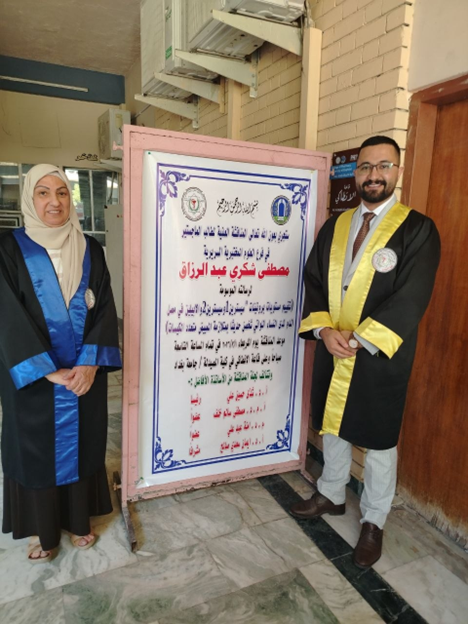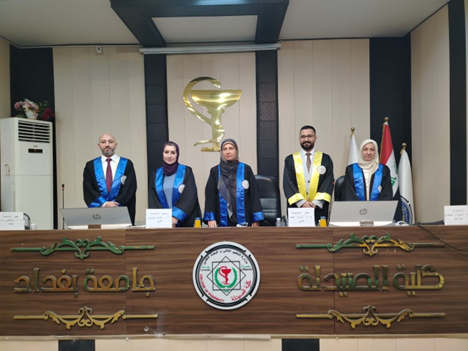
The College of Pharmacy discussed the MSC thesis entitled “Assessment of Sestrin1, Sestrin2 and Apelin Serum Levels in Newly Diagnosed Polyendocrine metabolic ovarian syndrome” by the student Mustafa Shukri Abdullrazaq and the supervisor, Professor Eman Saadi Saleh at the clinical laboratory science Department.
The study aimed to investigate the effect of polycystic ovary syndrome (PCOS) on the serum levels of Sestrin 1, Sestrin 2, and Apelin, to identify the biomarker most affected by the syndrome, and to determine the relationships between these proteins and other endogenous hormones.
The study included a comparison between 45 women newly diagnosed with PCOS and 45 healthy women without PCOS or any other medical conditions. Serum hormonal disturbances, as well as the levels of Sestrin 1, Sestrin 2, and Apelin, were measured. The mean levels of these biomarkers were compared between the two groups, and the correlations among the three proteins were also evaluated.
The results showed that Sestrin 1 levels were significantly higher in women with PCOS, regardless of body mass index (BMI). Moreover, Sestrin 1 demonstrated strong diagnostic performance, particularly in terms of specificity. In contrast, Sestrin 2 and Apelin appeared to have less diagnostic value for this patient group. However, Apelin showed a positive correlation with androgen hormone levels, suggesting that it may play a role in specific phenotypes of PCOS.
The study recommended considering Sestrin 1 as a potential novel biomarker and a possible mediator in the pathophysiology of PCOS. It emphasized the need for further investigation through larger-scale and long-term studies to validate these findings.