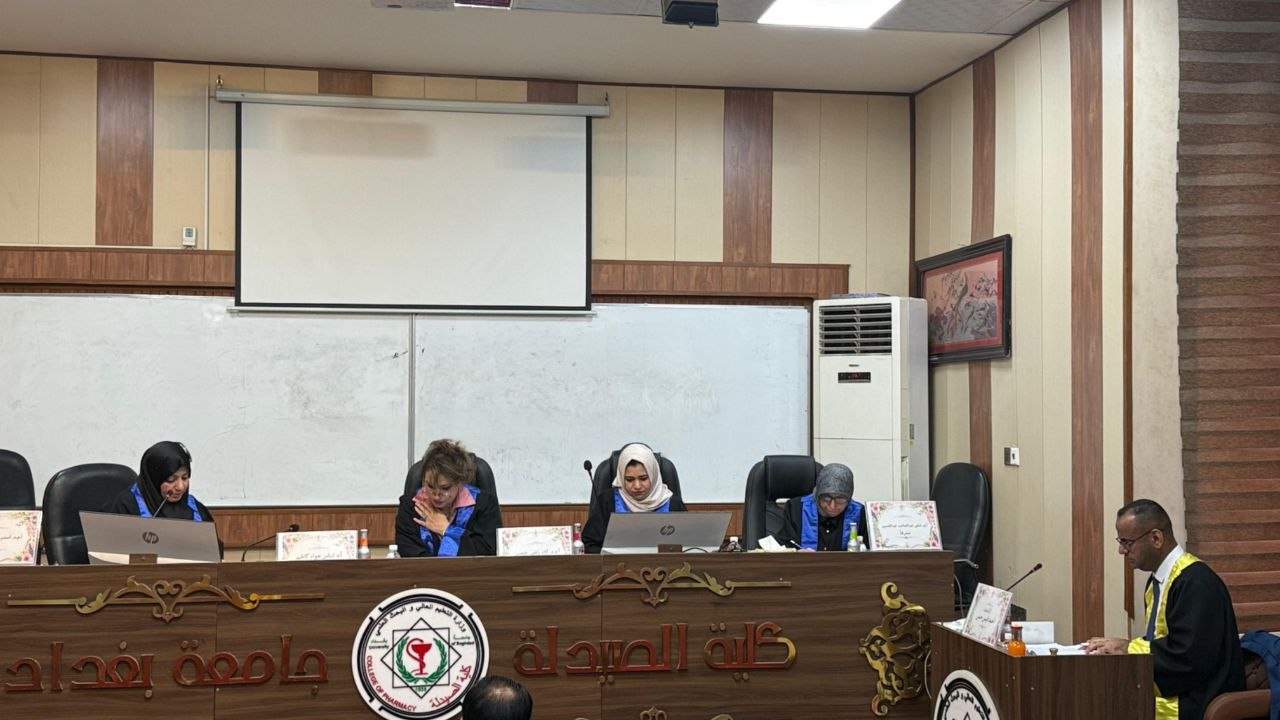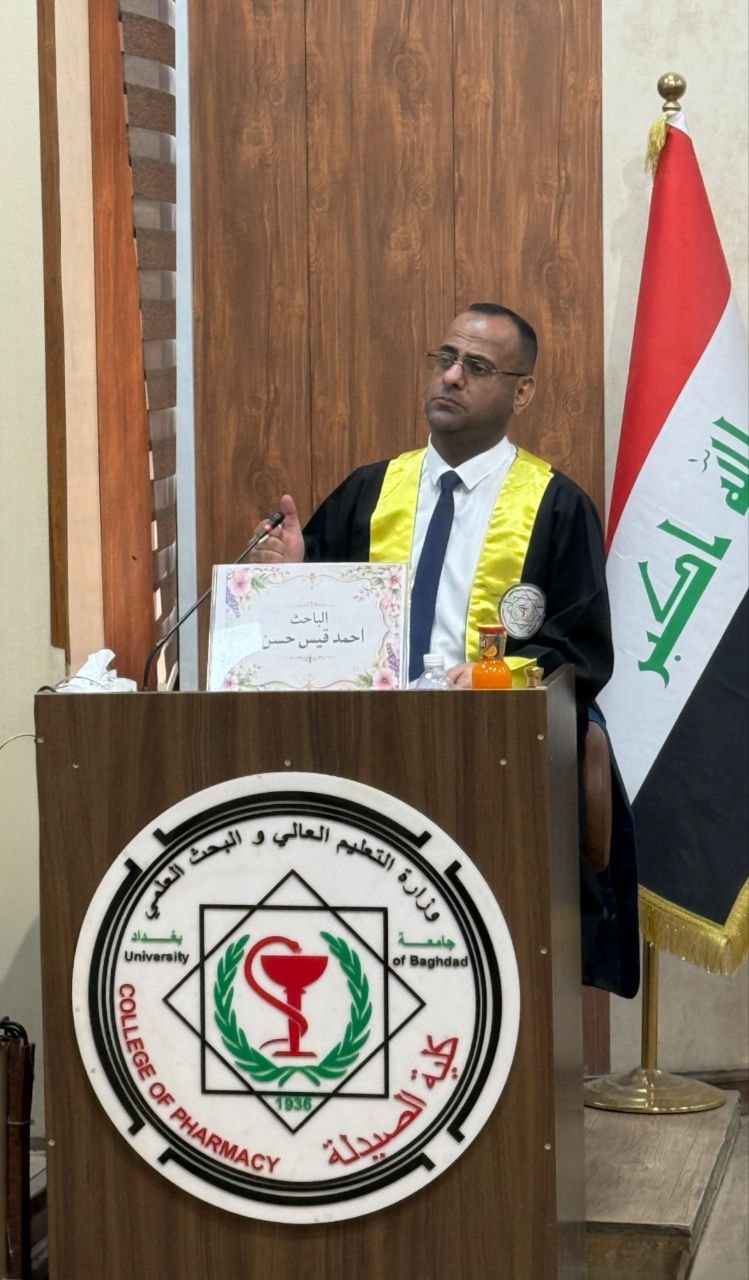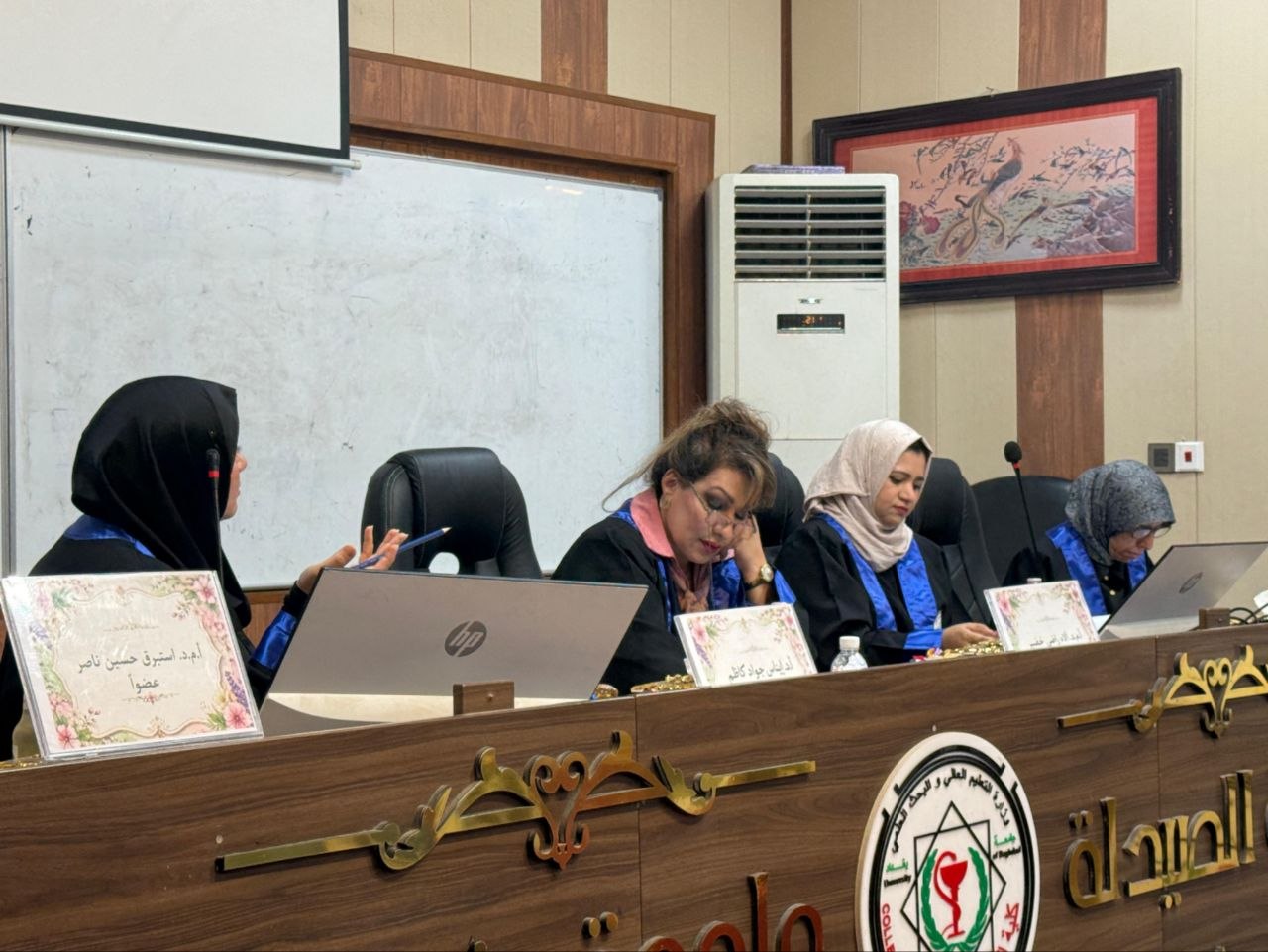
The College of Pharmacy discussed the MSc thesis entitled “Phytochemical Profiling, Green Synthesis of Silver Nanoparticles and Pharmacological Evaluation of Euphorbia microsphaera Leaves Wild Grown in Iraq” by the student Ahmed Qays Hassan and the supervisor, Assist Prof. Duha Abdul Sahib Abdul Hussein at the Pharmacognosy and Medicinal Plants Department.
The study aimed to identify the bioactive constituents of the leaves of the wild-growing Euphorbia species in Iraq and to evaluate its biological activity as a natural source of pharmacologically important compounds, with particular emphasis on its anticancer and antipsoriatic activities, as well as its potential for the green synthesis of silver nanoparticles.
The study included the extraction of the plant leaves using different solvents. The plant material was subjected to successive extraction using a Soxhlet apparatus, in addition to acid–base extraction. The isolated compounds were characterized using thin-layer chromatography (TLC), preparative thin-layer chromatography (PTLC), gas chromatography–mass spectrometry (GC–MS), high-performance liquid chromatography (HPLC), Fourier-transform infrared spectroscopy (FTIR), nuclear magnetic resonance (NMR), liquid chromatography–mass spectrometry (LC–MS), and melting point determination for the separation, detection, and confirmation of the identity of the isolated compounds. The n-hexane extract exhibited dose-dependent cytotoxic activity against MCF-7 human breast cancer cells, showing significant inhibitory effects compared with the standard drug. Molecular docking studies further supported these findings, demonstrating that the major isolated compounds interacted strongly with cancer-related molecular targets, particularly those involved in apoptosis, cell proliferation, and oxidative stress.
The results showed that chloroform extract demonstrated significant antipsoriatic activity in an imiquimod-induced mouse model, with the highest therapeutic efficacy observed at a concentration of 2.5%. This concentration produced the greatest reduction in the Psoriasis Area and Severity Index (PASI) and the most pronounced histopathological improvement. Furthermore, molecular docking analysis revealed favorable interactions between the isolated phytochemicals and psoriasis-related targets, including tumor necrosis factor-alpha (TNF-α), phosphodiesterase-4D (PDE4D), Janus kinase 2 (JAK2), interleukin-17A (IL-17A), and nuclear factor kappa B (NF-κB), providing mechanistic support for the observed biological activity. The methanolic extract acted as an effective green reducing and capping agent for the synthesis of silver nanoparticles. Nanoparticles prepared using low concentrations of silver nitrate were stable and within the nanoscale range, whereas higher silver nitrate concentrations resulted in particle aggregation. The successful synthesis and characterization of the silver nanoparticles were confirmed using ultraviolet–visible (UV–Vis) spectroscopy, dynamic light scattering (DLS), scanning electron microscopy (SEM), transmission electron microscopy (TEM), and energy-dispersive X-ray spectroscopy (EDS).
The study recommends further investigation of the wild-growing Euphorbia species as a valuable source of natural bioactive compounds because of its promising potential in anticancer and antipsoriatic therapy, as well as its application in nanotechnology, which may contribute to the development of novel pharmaceutical products in the future