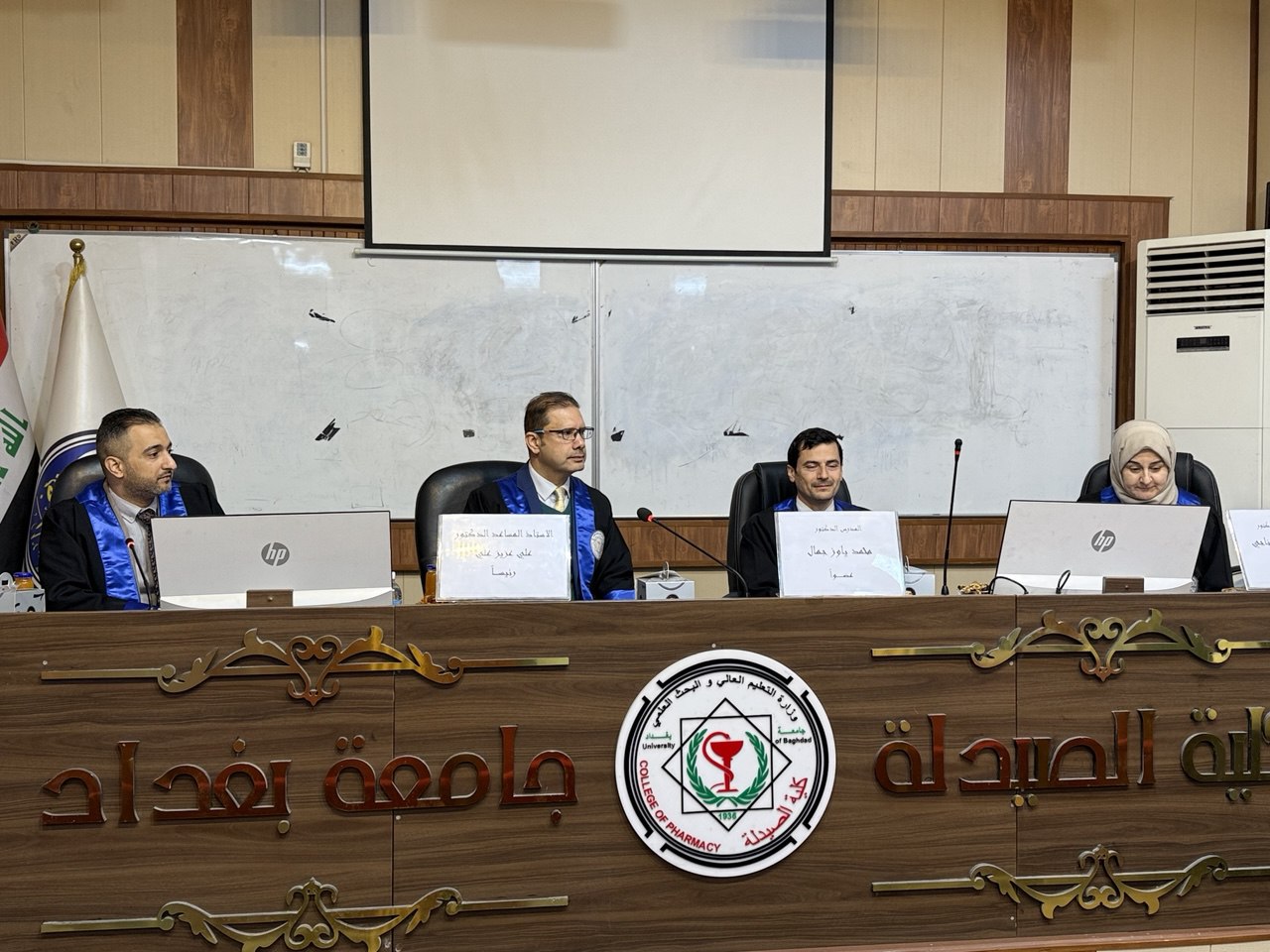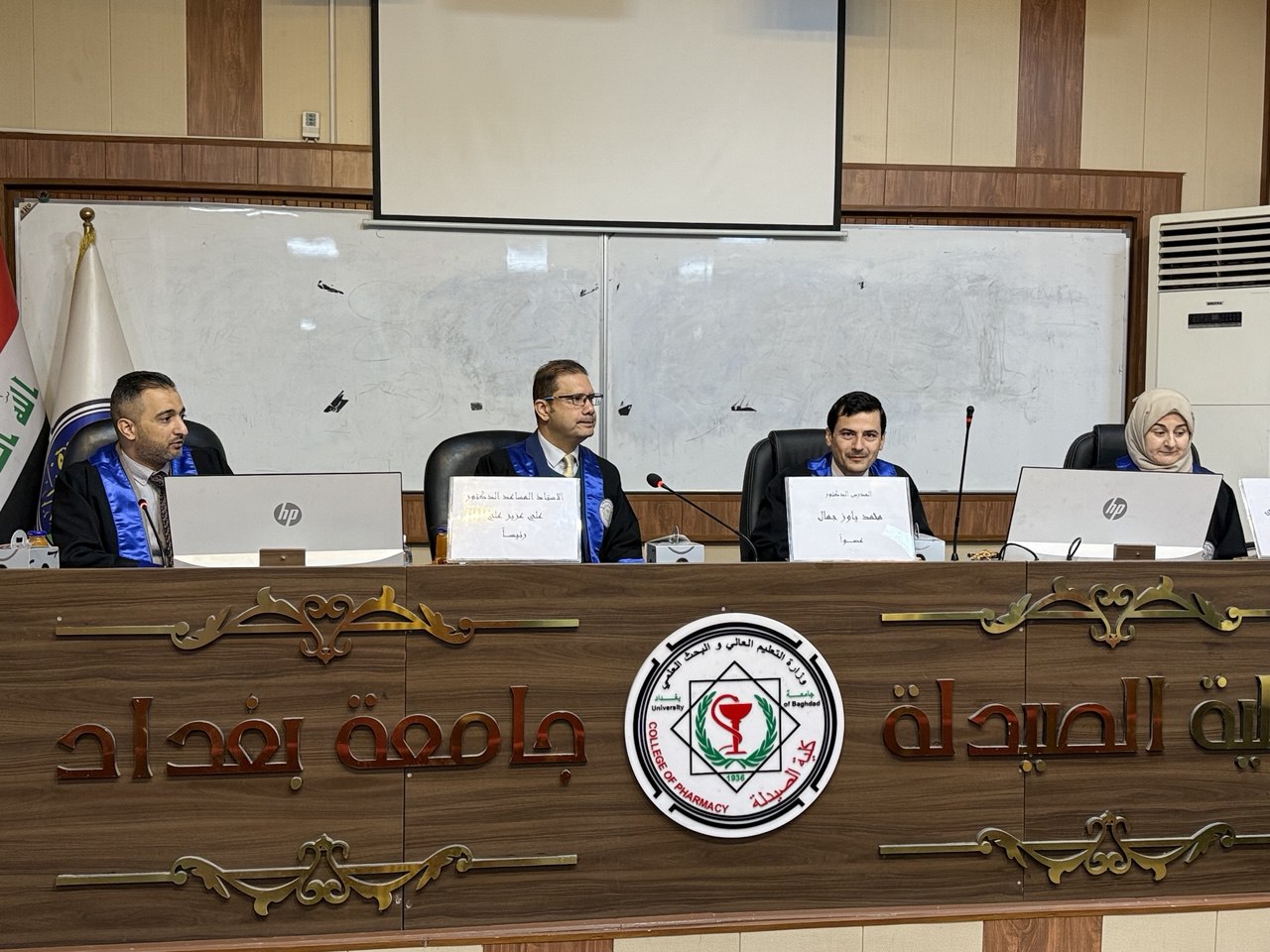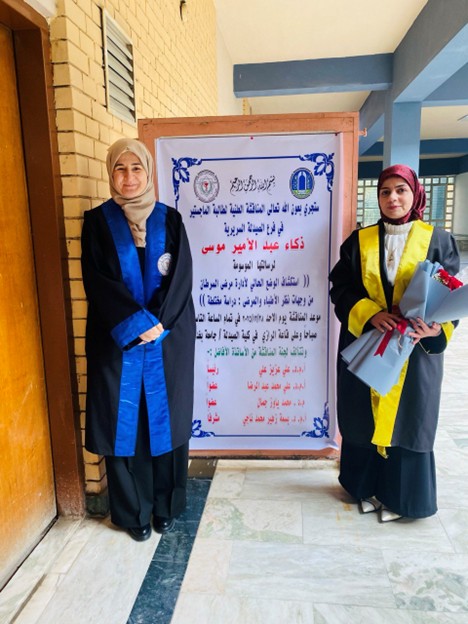
The College of Pharmacy discussed the MSc thesis entitled “Exploring the Current Situation of Cancer Patients’ Management from Physicians’ and Patients’ Perspectives: A Mixed Method Study” by the student Thukaa Abdul Ameer Mosaa. and the supervisor, Assistant Professor Dr. Basma Zuheir Al-Metwali , in the Clinical pharmacy Department.
The study aimed to explore the challenges facing cancer management from the perspectives of patients and physicians in Karbalaa and Baghdad.
A mixed-methods study was conducted between November 2024 and February 2025 at Imam Hussein (peace be upon him) Center for Cancer and Hematological Diseases and Imam Hassan Al-Mujtaba Teaching Hospital in Karbalaa Governorate, in addition to Al-Kadhimiya Medical City / Al-Jawad Center for Oncology Treatment in Baghdad Governorate.
The quantitative component of the study addressed the challenges faced by patients in cancer management through a questionnaire administered by the researchers. A convenience sample of Iraqi patients diagnosed with cancer was recruited. The qualitative component focused on the challenges faced by physicians.
In the quantitative part, 300 participants aged 41–67 years were included. The study found that breast cancer was the most commonly diagnosed cancer among participants. The four most frequently reported side effects were fatigue, loss of appetite, hair loss, and diarrhea. In addition, taxis were the primary means of transportation to treatment centers, and patients’ homes were the main place of residence during cancer management.
The qualitative part included 26 oncologists. Thematic analysis identified seven main themes: constraints within the healthcare system, strategies for managing treatment shortages, communication skills in cancer care, barriers related to patient adherence, supportive care management, the impact of challenges on cancer patient care and physicians’ recommendations for improving cancer care.
The study recommended improving healthcare infrastructure by enhancing the capacity of cancer treatment centers through the provision of modern diagnostic and therapeutic equipment, including imaging devices, radiotherapy units, and fully equipped laboratories. Continuous education and training for healthcare professionals should be ensured, along with the implementation of electronic medical documentation systems. Adequate funding for cancer centers is essential to improve service delivery. The study also strongly recommends providing health insurance coverage for cancer patients and supporting research that addresses barriers to cancer care in order to improve planning and develop appropriate interventions.