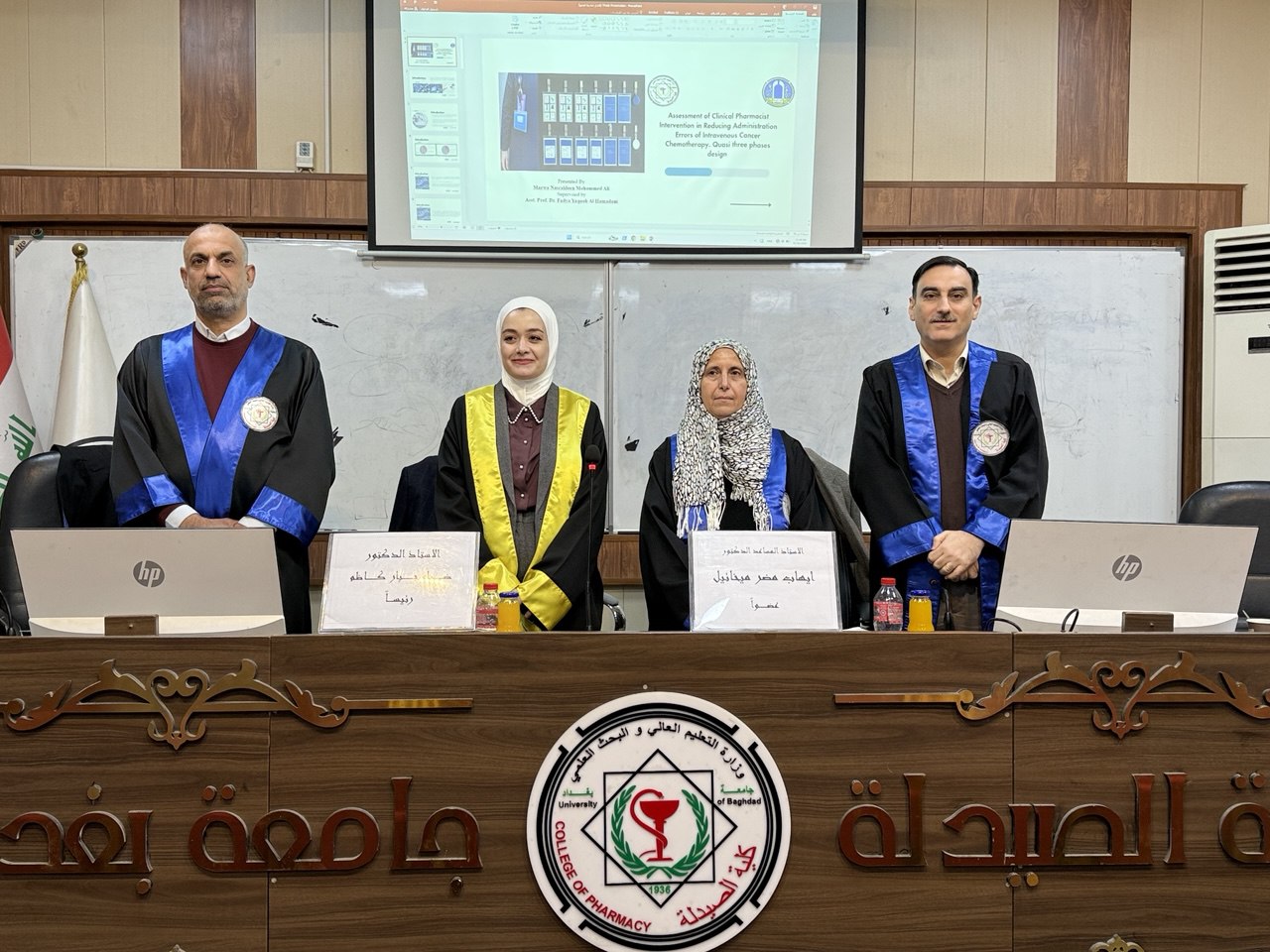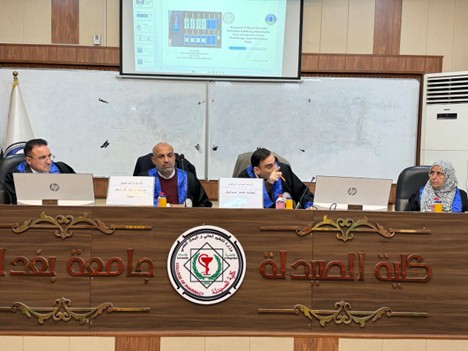
The College of Pharmacy discussed the MSc thesis entitled “Assessment of Clinical Pharmacist Intervention in Reducing Administration Errors of Intravenous Cancer Chemotherapy. Quasi three phases design.”, by the student Marwa Nasraldeen Mohammed Ali and her supervisor, Assistant Professor Dr. Fadya Yaqoob Kadhim Al-Hamadani in the Clinical Pharmacy Department.
The study aimed to assess the impact of pharmacist-led educational interventions on enhancing nurses’ knowledge and practice regarding intravenous chemotherapy administration.
The study included A quasi-experimental framework, featuring pretest and posttest evaluations. A clinical pharmacist conducted Didactic sessions that covered key topics related to the safe delivery of intravenous chemotherapy as part of the intervention. Nurses’ knowledge was assessed using a self-administered questionnaire before and after the didactic workshops. The participating nurses’ clinical practice was evaluated using validated observational checklist for intravenous chemotherapy administration.
The study concluded that educational interventions by clinical pharmacists could enhance nurses’ knowledge and, as a result, could also enhance their clinical practices of intravenous chemotherapy. The clinical pharmacist’s educational intervention resulted in a considerable influence on the clinical practices of nurses during intravenous chemotherapy administration. Furthermore, nurses’ training and their experience in oncology significantly influenced their practices during the process of administration. These findings highlight the importance of clinical pharmacists in providing specialized education to improve nursing competency, promote medication safety, and optimize patient care in oncology settings. It is recommended that oncology nursing practice be strengthened through continuous education and competency monitoring, formal integration of clinical pharmacists into multidisciplinary training and supervision, structured patient communication support, standardized safety guidelines and audits, and provision of adequate resources such PPE and spill kits.
The study recommended enhancing continuous training and education for oncology nurses to ensure the safe administration of intravenous chemotherapy, with emphasis on proper use of personal protective equipment, sterilization techniques, and procedures before, during, and after chemotherapy. It also highlights the importance of multidisciplinary collaboration, particularly involving clinical pharmacists in training and supervision. Furthermore, improving nurses’ communication and patient education skills, while considering linguistic and cultural factors, is essential. Finally, the study recommends implementing standardized institutional policies aligned with international safety guidelines, conducting regular competency evaluations, and ensuring the availability of essential resources for safe chemotherapy handling.